Starting an online store begins with one important decision. Should you choose dropshipping or invest in your own inventory? Both business models can help you sell products online, but they work in very different ways. The right choice depends on your budget, goals, and the type of business you want to build.
A dropshipping business lets you sell products without keeping stock. When a customer places an order, your supplier ships the product directly to the buyer. This keeps startup costs low and makes it easier for new entrepreneurs to enter ecommerce.
An inventory based business works differently. You buy products before selling them and store them until customers place orders. This approach requires more money upfront, but it gives you greater control over product quality, packaging, shipping, and the overall customer experience.
When comparing dropshipping vs inventory based business, there is no single answer that works for everyone. Someone looking for a simple way to test new products may prefer dropshipping, while a business owner focused on building a trusted brand may benefit from managing inventory. Understanding the strengths and limits of each model will help you choose the option that matches your business plans and supports steady growth over time.
What Is Dropshipping?
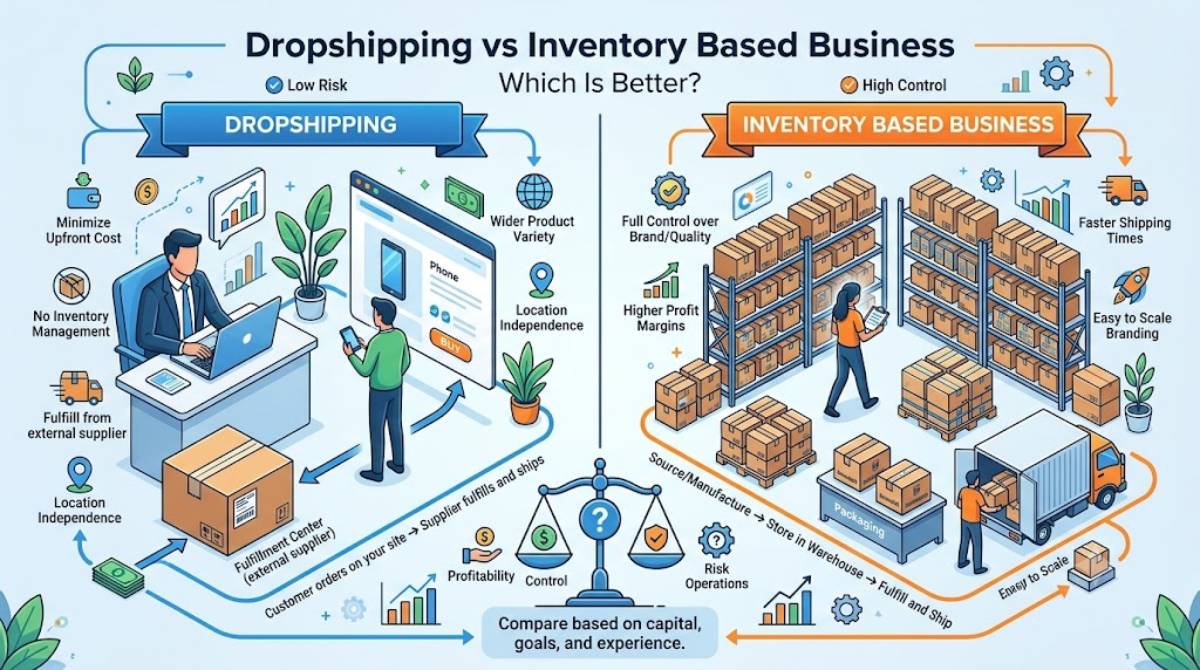
Dropshipping is an ecommerce business model where you sell products without buying or storing inventory before making a sale. Instead of keeping stock in a warehouse, you list products in your online store and send customer orders to a supplier. The supplier prepares the order and ships it directly to the customer. This makes dropshipping a popular option for people who want to start an online business with a smaller budget.
How the Dropshipping Business Model Works
The process is simple. You create an online store and choose products from a supplier. When someone places an order, you collect the payment and forward the order details to the supplier. The supplier packs the product and delivers it to your customer. Since you never handle the products yourself, you do not need storage space or a shipping team. This allows you to focus on marketing, customer support, and growing your store.
Advantages of Dropshipping
One of the biggest benefits of dropshipping is that you do not need to purchase inventory before making sales. The startup investment is much lower than many other ecommerce models. It is also easier to test new products because you can add or remove items without worrying about unsold stock. This gives new business owners a flexible way to enter the market.
Drawbacks of Dropshipping
Dropshipping also comes with limitations. Since suppliers handle product storage and shipping, you have less control over order quality and delivery times. Packaging options may also be limited, making it harder to create a unique brand experience. Profit margins are often lower because suppliers include their own costs, and strong competition can make pricing more challenging.
What Is an Inventory Based Business?
An inventory based business is an ecommerce model where you purchase products before selling them to customers. You keep those products in a warehouse, storage facility, or your own workspace until an order is placed. Once a customer buys an item, you pack it and ship it directly. This model gives you full control over your products, but it also requires more planning and a larger budget than dropshipping.
How Inventory Based Selling Works
The process starts by purchasing stock from manufacturers or wholesalers. After the products arrive, they are stored until customers place orders. You are responsible for inventory management, packing, shipping, and keeping track of stock levels. Since you own the products before selling them, you can inspect every item and make sure it meets your quality standards before it reaches the customer.
Benefits of Holding Inventory
Holding inventory gives you greater control over your business. You can ship orders more quickly, create custom packaging, and maintain consistent product quality. Buying products in larger quantities may also reduce the cost per item, which can increase your profit on each sale. This approach works well for businesses that want to build a trusted brand and deliver a reliable shopping experience.
Challenges of Managing Inventory
An inventory based business requires a higher financial commitment because you must purchase stock before making sales. You also need space for warehousing and a system to manage inventory accurately. Products that do not sell can tie up your money, and storage costs may increase over time. Careful planning and regular stock monitoring are important to keep the business running smoothly.
Dropshipping vs Inventory Based Business: Key Differences
Choosing between dropshipping and an inventory based business becomes easier when you compare how each model works in real business situations. While both allow you to sell products online, they differ in cost, control, profits, and daily responsibilities. Understanding these differences will help you select the option that matches your budget, business goals, and long term plans.
| Feature | Dropshipping | Inventory Based Business |
|---|---|---|
| Startup Costs | Low because you buy products only after a customer places an order | Higher because you purchase stock before selling |
| Profit Margins | Usually lower due to supplier pricing | Often higher when buying products in bulk |
| Inventory Risk | Very low since you do not hold stock | Higher because unsold products remain in storage |
| Shipping Speed | Depends on supplier location and processing time | Faster when products are stored locally |
| Product Quality Control | Limited because suppliers handle products | Full control before products are shipped |
| Branding Opportunities | Limited packaging and customization | Greater freedom to create a unique brand |
| Customer Experience | Can vary depending on supplier performance | More consistent because you manage fulfillment |
| Business Scalability | Easy to expand product catalog | Growth requires more storage and planning |
| Daily Operations | Focus on marketing and customer service | Manage stock, packing, shipping, and inventory |
| Cash Flow Requirements | Lower upfront spending | More working capital needed for inventory |
Startup Costs
Startup cost is one of the biggest differences between these two business models. Dropshipping requires very little money because you only pay suppliers after receiving customer orders. There is no need to buy products in advance or rent storage space.
An inventory based business requires purchasing stock before making sales. You may also need shelving, storage space, packing supplies, and shipping materials. While the initial investment is higher, owning inventory gives you complete control over your products from the start.
For example, someone launching a small online store with a limited budget may find dropshipping easier. A business owner with enough capital may prefer buying inventory to build a stronger brand.
Profit Margins
Profit margins are often different between the two models. Dropshipping suppliers include their own costs in product prices, leaving less room for profit. Strong competition can also make it harder to increase prices.
Inventory based businesses usually earn more on each sale because products can be purchased in bulk at lower prices. Lower product costs can improve profits when sales continue to grow.
Even though inventory can produce better returns, business owners should also account for storage costs, shipping supplies, and inventory management expenses.
Inventory Risk
Dropshipping removes most inventory risk because products remain with the supplier until someone places an order. If an item does not sell, you are not left with unused stock.
An inventory based business carries more risk because products are purchased before customers buy them. Slow moving products can occupy storage space and reduce available cash. Careful planning and demand forecasting become more important as inventory grows.
Shipping Speed
Shipping speed has a direct effect on customer satisfaction. Since dropshipping suppliers often operate from different locations, delivery times can vary. Delays caused by suppliers may also affect customer trust.
Inventory based businesses usually ship orders more quickly because products are already available. Businesses that store products locally can process and dispatch orders faster, giving customers a smoother buying experience.
Fast shipping can also increase repeat purchases, especially in competitive ecommerce markets.
Product Quality Control
Quality control is another major difference. With dropshipping, suppliers handle storage, packing, and shipping. This means you have fewer opportunities to inspect products before they reach customers.
An inventory based business allows you to check every product before shipping. You can replace damaged items, improve packaging, and maintain consistent quality. This level of control helps reduce customer complaints and returns.
Branding Opportunities
Building a memorable brand is often easier when you own inventory. You can use custom packaging, branded inserts, thank you cards, and other personal touches that create a better shopping experience.
Dropshipping businesses often depend on supplier packaging, which limits customization. While some suppliers offer branding services, the available options may be restricted.
Businesses planning to build long term customer loyalty often benefit from greater branding control.
Customer Experience
Customer experience depends on reliable shipping, product quality, and responsive support. Since dropshipping depends on supplier performance, service quality may vary from one order to another.
Inventory based businesses have greater control over fulfillment, making it easier to provide consistent service. Customers are more likely to trust stores that deliver products quickly and accurately.
For example, if a customer orders a birthday gift with a strict delivery date, faster fulfillment can improve satisfaction and encourage future purchases.
Business Scalability
Dropshipping allows businesses to add new products without purchasing inventory. This makes testing different categories much easier. As demand changes, products can be added or removed with minimal financial risk.
Inventory based businesses can also grow successfully, but expansion often requires additional storage, staff, and inventory management systems. Growth may take more planning because every new product requires additional investment.
Daily Operations
Daily responsibilities differ between the two models. Dropshipping business owners spend most of their time on marketing, customer service, product research, and improving their online store.
Inventory based businesses handle these tasks while also managing stock levels, packing orders, updating inventory records, and organizing warehouse operations. The workload is greater, but so is the level of operational control.
If you are new to ecommerce, you may also find our guides on inventory management, order fulfillment, and how to start an online store helpful for understanding these daily tasks.
Cash Flow Requirements
Cash flow is another important factor when comparing these business models. Dropshipping requires less money upfront because inventory is purchased only after customers pay for their orders. This helps reduce financial pressure during the early stages of a business.
An inventory based business requires enough cash to purchase products before generating sales. Money also remains tied up in stored inventory until products are sold. Businesses with steady sales and good inventory planning often manage this investment successfully, while new businesses should carefully estimate demand before purchasing large amounts of stock.
When Dropshipping Is the Better Choice
Dropshipping is a smart option for people who want to start selling online without spending a large amount of money. Since you do not need to purchase inventory before making sales, you can launch your store quickly and learn how the market responds. It also gives you the freedom to test products without filling your storage space with unsold items.
Best for Beginners
Many first time business owners choose dropshipping because it is simple to start. You do not need a warehouse or a large team to manage daily tasks. Suppliers handle product storage and shipping, allowing you to spend more time learning ecommerce, improving your website, and attracting customers. This lower operational complexity makes the business easier to manage while you build experience.
Testing New Products
Dropshipping works well for product validation. You can add different products to your store and see which ones attract buyers before investing in inventory. If one product does not perform well, you can replace it with another without worrying about leftover stock. This approach allows you to discover customer demand while keeping costs under control.
Businesses With Limited Budget
A smaller budget does not have to stop you from starting an online business. Since products are purchased only after customers place orders, you avoid spending large amounts of money on inventory. This reduces financial risk and helps protect your cash while your business begins to grow. Many entrepreneurs use this model to build sales before moving to a larger operation.
Fast Market Entry
Dropshipping makes it possible to launch an online store in a short time. After selecting reliable suppliers and listing products, you can begin accepting orders without waiting for inventory to arrive. This speed allows you to respond to market trends and seasonal demand more quickly. For anyone who wants to enter ecommerce with lower financial risk and flexible product choices, dropshipping offers a practical starting point.
When an Inventory Based Business Is the Better Choice
An inventory based business is a strong choice for entrepreneurs who want more control over every part of their ecommerce operation. While it requires a larger investment at the beginning, it gives you the ability to manage products, shipping, and customer service more closely. This model is often preferred by businesses that want steady growth, a trusted reputation, and a memorable shopping experience.
Building a Premium Brand
Owning your inventory makes it easier to create a professional brand. You can design custom packaging, include thank you cards, and check every product before it reaches the customer. This level of packaging control helps your business stand out and creates a consistent experience with every order. Customers are more likely to remember your brand when every package reflects the same level of care.
Faster Order Fulfillment
Since your products are already in stock, orders can usually be packed and shipped soon after they are placed. Reliable shipping helps customers receive their purchases on time, which can improve trust in your business. Faster delivery is especially valuable during busy shopping seasons when buyers expect quick service.
Higher Profit Potential
Buying products in larger quantities often reduces the cost of each item. These bulk purchasing benefits can increase your profit on every sale as your business grows. Although you must invest more money upfront, lower product costs can create better returns over time when inventory is managed carefully.
Better Customer Satisfaction
Managing your own inventory allows you to inspect products before shipping and respond quickly if a problem occurs. Customers receive consistent product quality, accurate orders, and dependable delivery. A positive buying experience encourages repeat customers, strengthens your reputation, and increases the chances that shoppers will recommend your store to others.
Which Business Model Makes More Money?
Many people choose between dropshipping and an inventory based business based on earning potential. The truth is that both models can be profitable when managed well. The difference comes from how much you spend, how much control you have over products, and how efficiently you run your business. Looking beyond sales numbers helps you understand which model can produce stronger returns over time.
Short Term Profit Expectations
Dropshipping usually generates lower profit margins because suppliers set product prices and handle fulfillment. While your startup costs are much lower, each sale often leaves less profit after paying supplier fees and advertising expenses. Even so, this model allows new business owners to start selling without making a large inventory investment.
An inventory based business often has higher profit margins because products can be purchased in bulk at lower prices. Although you spend more money before making sales, the cost per item is usually lower, leaving more room for profit when products sell consistently.
Long Term Growth Potential
Businesses that manage their own inventory often have more opportunities to increase earnings over time. Better control over pricing, packaging, and customer service can encourage repeat purchases and stronger customer loyalty. As sales increase, buying larger quantities may reduce product costs even further, helping profits grow.
Dropshipping can also support business growth, especially when successful products are identified early. Many entrepreneurs begin with dropshipping and later move to holding inventory once demand becomes more predictable.
Cost Factors That Affect Profit
Profit depends on more than product pricing. Marketing costs, operating expenses, shipping fees, payment processing charges, and customer support all affect your final earnings. For inventory based businesses, warehouse costs and inventory investment should also be included when calculating profit. Comparing all expenses instead of focusing only on sales revenue gives a clearer picture of which business model offers the best financial return for your goals.
How to Choose the Right Ecommerce Business Model
Choosing between dropshipping and an inventory based business depends on what you want to achieve. Both models can support a successful online store, but each works best under different circumstances. Before making your decision, think about your available budget, business goals, the amount of time you can invest, and how much control you want over your products and customer experience.
Choose Dropshipping If
Dropshipping is a good fit if you are starting with a limited budget or want to launch your store quickly. It allows you to begin selling without purchasing inventory, reducing the amount of money needed at the beginning. This model is also useful if you want to test different products before making larger investments.
Choose dropshipping if you prefer spending more time on marketing, finding winning products, and growing your online store instead of managing stock and shipping. It is also suitable for business owners with a higher risk tolerance for supplier delays but a lower risk of losing money on unsold inventory.
Choose Inventory Based Business If
An inventory based business is a better option if your goal is to build a trusted brand with greater control over every order. Owning inventory allows you to inspect products, create custom packaging, and provide faster shipping. This approach is often preferred by businesses that want a consistent customer experience and stronger brand recognition.
If you have enough budget for inventory investment and can manage storage and fulfillment, this model may offer better opportunities for steady business growth and higher profits over time.
Questions to Ask Before Deciding
Before selecting a business model, ask yourself a few simple questions. How much money can you invest? What are your business goals over the next few years? How much time can you dedicate to daily operations? Are you comfortable relying on suppliers, or do you want full control over fulfillment? What type of brand strategy do you want to build? Finally, consider your fulfillment expectations and the shopping experience you want your customers to receive. Answering these questions will help you choose the ecommerce model that best matches your needs.
Common Mistakes to Avoid
Choosing the right ecommerce business model is only the first step. Many new business owners make decisions that create unnecessary problems later. Avoiding a few common mistakes can save time, reduce costs, and help your business grow with fewer setbacks.
Choosing Based Only on Startup Cost
A low startup cost may seem attractive, but it should not be the only reason for choosing a business model. Dropshipping requires less money at the beginning, while an inventory based business needs a larger investment. Look at the full picture, including profit potential, daily responsibilities, and your long term business plans before making a decision.
Ignoring Supplier Reliability
If you choose dropshipping, your supplier becomes an important part of your business. Poor communication, shipping delays, or inconsistent product quality can damage your reputation. Take time to research suppliers, order sample products, and check their delivery performance before working with them.
Poor Inventory Planning
Businesses that keep inventory should carefully monitor stock levels. Buying too many products can leave money tied up in items that sell slowly, while buying too little may cause missed sales when products run out. Regular inventory checks and accurate sales tracking help maintain a healthy balance.
Overlooking Customer Experience
Customers remember how they are treated as much as the products they buy. Fast shipping, accurate orders, good packaging, and responsive customer support all help create a positive shopping experience. Whether you choose dropshipping or an inventory based business, meeting customer expectations can encourage repeat purchases and strengthen trust in your brand.
Final Verdict
Both dropshipping and an inventory based business offer real opportunities for building a successful ecommerce store. The best option depends on what you want to achieve and how you plan to grow your business. Dropshipping is a practical choice for beginners, business owners with a smaller budget, and anyone who wants to test products without purchasing inventory first. It offers a simple way to enter ecommerce while keeping financial risk lower.
An inventory based business requires more planning and a larger investment, but it gives you greater control over product quality, shipping, branding, and the overall customer experience. It may also produce stronger profit margins when inventory is managed carefully and sales remain consistent.
Before choosing a business model, think about your business goals, available budget, desired level of control, and the amount of time you can dedicate to daily operations. There is no single option that fits every entrepreneur. The right decision is the one that matches your current situation while leaving room for future growth.
If you are just starting, begin with the model that fits your resources and experience. As your business grows, you can always adjust your strategy or move from dropshipping to managing your own inventory when the time is right. A thoughtful decision today can create a stronger foundation for your ecommerce business tomorrow.
Frequently Asked Questions
What is the difference between dropshipping and an inventory based business?
The main difference is how products are stored and delivered. In a dropshipping business, suppliers keep the inventory and ship products directly to customers after an order is placed. You do not handle the products yourself. In an inventory based business, you purchase products before selling them, store them, and manage packing and shipping. Dropshipping requires less money at the beginning, while an inventory based business gives you greater control over product quality, delivery, and branding.
Is dropshipping more profitable than holding inventory?
Dropshipping can produce good profits, but profit margins are often lower because suppliers handle storage and fulfillment. An inventory based business usually offers higher profit per sale since products can be purchased in bulk at lower prices. However, you also need to account for storage costs, shipping supplies, and inventory investment. The most profitable option depends on sales volume, operating costs, and how well the business is managed.
Which business model is better for beginners?
Dropshipping is often the better choice for beginners because it requires less startup capital and fewer daily responsibilities. New business owners can focus on learning ecommerce, marketing products, and understanding customer demand without purchasing inventory. An inventory based business is usually a better fit after gaining experience and building a steady customer base.
Can I switch from dropshipping to an inventory based business later?
Yes. Many successful ecommerce businesses begin with dropshipping to test products and understand customer demand. Once they identify products that sell consistently, they purchase inventory to improve shipping speed, increase profit margins, and create a stronger brand. This gradual approach helps reduce financial risk while supporting business growth.
Which model offers better branding opportunities?
An inventory based business offers greater branding opportunities because you control packaging, product presentation, and the complete order fulfillment process. You can include custom boxes, thank you cards, and branded materials that leave a lasting impression. Dropshipping usually provides fewer customization options because suppliers handle packing and shipping.
How much money do I need to start an inventory based business?
The amount varies depending on the products you plan to sell, the size of your inventory, and your business goals. In addition to purchasing stock, you should budget for storage, packaging materials, shipping supplies, ecommerce software, and marketing. Starting with a smaller product range can help you manage costs while learning how your market responds before expanding your inventory.
Read More: https://coupasoftware.org/how-ai-tools-are-helping-ecommerce-stores-10x-sales/