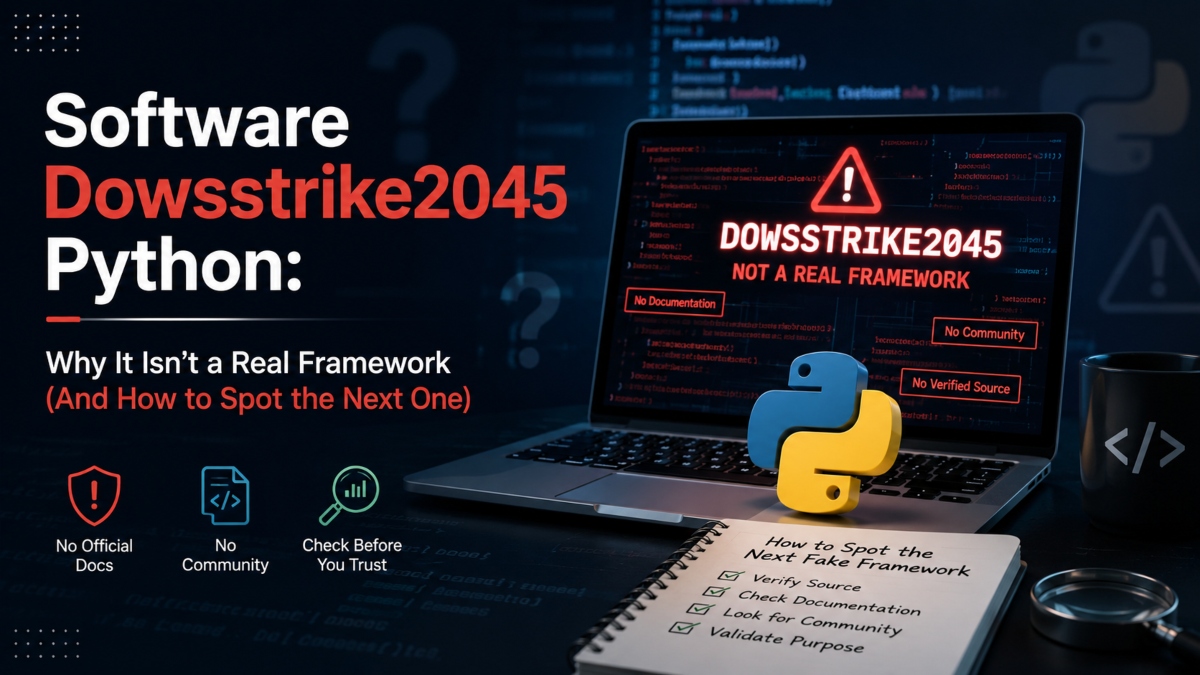
If you searched for Software Dowsstrike2045 Python expecting to find a real development framework, you are not alone, and you are right to be confused. Every article about it describes something different. One site calls it a machine learning and automation toolkit. Another says it is built for cyber operations and threat simulation. A third insists it is an AI powered code editor. There is no GitHub repository, no listing on the Python Package Index, no official documentation, and no changelog anywhere.
This article is for developers, students, and curious readers who encountered the term somewhere and want a straight answer instead of another vague pitch. The short version: Software Dowsstrike2045 Python does not appear to be a real, verifiable piece of software. What follows is an explanation of how terms like this spread, how to check any tool before you trust it, and where to find genuinely useful Python frameworks that solve the same problems this phantom tool claims to.
What the Existing Search Results Actually Say
When you look closely at the handful of pages currently ranking for this term, the inconsistency is the biggest tell. Search results describe it as everything from a general purpose automation framework to a specialized cybersecurity platform. Some claim it integrates with NumPy, Pandas, and TensorFlow. Others focus entirely on penetration testing and vulnerability scanning. A few mention an intelligent code editor with real time suggestions.
Real software, even brand new software, tends to have a consistent story. A company or an individual developer builds it, writes documentation describing what it actually does, and that description stays roughly the same across every mention. When five different sources describe five different products under the same name, that is a strong signal the name itself came first and the description was invented afterward to fill a page.
No Package, No Repository, No Maintainer
Try it yourself. A search on the Python Package Index for a package named dowsstrike2045 returns nothing. A search on GitHub for a repository with that name returns nothing meaningful either. There is no maintainer to contact, no issue tracker, no release history, and no version numbers that correspond to an actual codebase. For comparison, every legitimate Python framework you have ever used, whether it is Django, Flask, or Pandas, has all of these things in abundance.
How Terms Like This End Up Ranking on Google
Understanding why this happened is more useful than being annoyed by it. Over the past couple of years, a growing volume of web content has been generated by AI writing tools with little to no human verification behind it. The process usually looks something like this.
A content farm or an automated pipeline generates a plausible sounding but entirely fictional product name, often combining a dramatic word with a number that suggests a future version, something like Dowsstrike2045. That name gets seeded into an article, and the article is optimized with the exact keyword phrases people might search, such as software name plus Python plus update plus error. Because the term is new and has zero competition, it can rank surprisingly quickly, even though nothing behind it is real.
Once one article ranks, other AI content pipelines scrape the idea, generate their own version with a slightly different description, and publish it too. Search engines then see multiple sources appearing to corroborate each other, which can temporarily boost confidence in the topic, even though every source traces back to the same hollow premise rather than to any real software.
Why This Matters Beyond One Search Term
This pattern is not limited to Dowsstrike2045. It shows up across obscure alphanumeric product names, invented app names, and vague domain based brands. The risk is not just wasted time. Some pages built around fake software names attempt to get readers to download an installer, enter payment details, or run a script, none of which should ever be trusted when the underlying product cannot be verified through official channels.
Red Flags That a Piece of Software May Not Be Real
Before you invest time learning a new tool, installing it, or worse, running its installer, a few quick checks can save you a real headache.
Check for an Official Package Index Listing
For Python specifically, a legitimate library or framework should be installable through pip and listed on the Python Package Index. If a tool cannot be found there under its claimed name, treat that as a serious warning sign rather than a minor inconvenience.
Look for a Real Version History
Genuine software has commit histories, release notes, and version numbers that build on each other logically over time. Marketing language about an update with no actual changelog, no version diff, and no way to see what changed is a pattern worth distrusting.
Search for the Developer or Company Behind It
Every real framework has a person, a team, or a company you can identify. Search for the name attached to the tool. If every article about the software mentions the tool itself but never names who built it, that absence is meaningful.
Compare Descriptions Across Multiple Sources
If you read three articles about the same tool and get three different explanations of what it does, that inconsistency is one of the clearest signs you are looking at AI generated filler content rather than documentation of something real.
Be Wary of Vague, Universal Claims
Phrases like works for automation, testing, machine learning, and security all at once, without a single concrete code example, function name, or API reference, are a hallmark of invented software. Real frameworks are specific about what they do and, just as importantly, specific about what they do not do.
What To Do If You Landed on This Term Looking for a Solution
If you came across Software Dowsstrike2045 Python because you are trying to solve an actual development problem, whether that is automation, testing, workflow management, or security scanning, the good news is that real, well documented tools already exist for every one of those use cases.
For General Automation and Workflow Management
Tools like Apache Airflow and Prefect are widely used, well documented, and actively maintained for building and scheduling automated workflows in Python. Both have official documentation, active communities, and verifiable release histories.
For Testing
Pytest remains the standard choice for testing in Python projects. It has a stable, well documented API and a massive ecosystem of plugins built by a transparent community of maintainers.
For Security Testing and Vulnerability Scanning
Frameworks such as Bandit for static analysis and established, well known penetration testing tools maintained by identifiable security research organizations are the appropriate starting point, rather than an unverifiable tool with no public codebase.
For Machine Learning and Data Work
TensorFlow, PyTorch, and Pandas remain the reliable, thoroughly documented choices for machine learning and data analysis in Python, each backed by real organizations and enormous open source communities.
Choosing any of these means you are working with software that has documentation you can actually read, a community you can actually ask questions in, and a codebase you can actually inspect.
Frequently Asked Questions
Is Software Dowsstrike2045 Python a virus or malware?
There is no evidence that the term itself is malware, but the pattern is worth watching closely. Fake software names are sometimes used as bait in articles that eventually push a suspicious download link or installer. If you ever encounter a download prompt tied to an unverifiable tool name, do not run it, and do not enter any personal information on the page hosting it.
Why does this term appear across so many different websites?
Because it costs very little to generate an AI written article, and a brand new, uncontested keyword phrase can rank quickly on search engines even with no real content behind it. Once one site publishes something, others tend to follow with their own variation of the same invented idea.
Should I trust software update instructions I found for this tool?
No. Instructions describing how to fix errors or install updates for a tool with no verifiable package, repository, or maintainer should not be followed. Any steps involving downloading files from unfamiliar sources carry real risk.
How can I verify whether any software is legitimate before using it?
Check the Python Package Index for an official listing, look for a public and active code repository, confirm there is an identifiable developer or organization behind it, and read the documentation directly rather than relying on secondhand summaries.
Key Takeaways
Software Dowsstrike2045 Python does not correspond to any verifiable, documented Python framework. The inconsistent descriptions across search results, the absence of a package listing or repository, and the lack of any identifiable developer all point to AI generated content built around an invented name rather than a real product. If you need automation, testing, security, or machine learning tools in Python, established frameworks with real documentation and active communities already solve those problems reliably. Before trusting any new software name you encounter, a quick check for a package listing, a public repository, and a named developer will tell you almost everything you need to know.
Read Also: Droven.io USA Tech Market Updates: What They Mean for the U.S. Tech Landscape in 2026