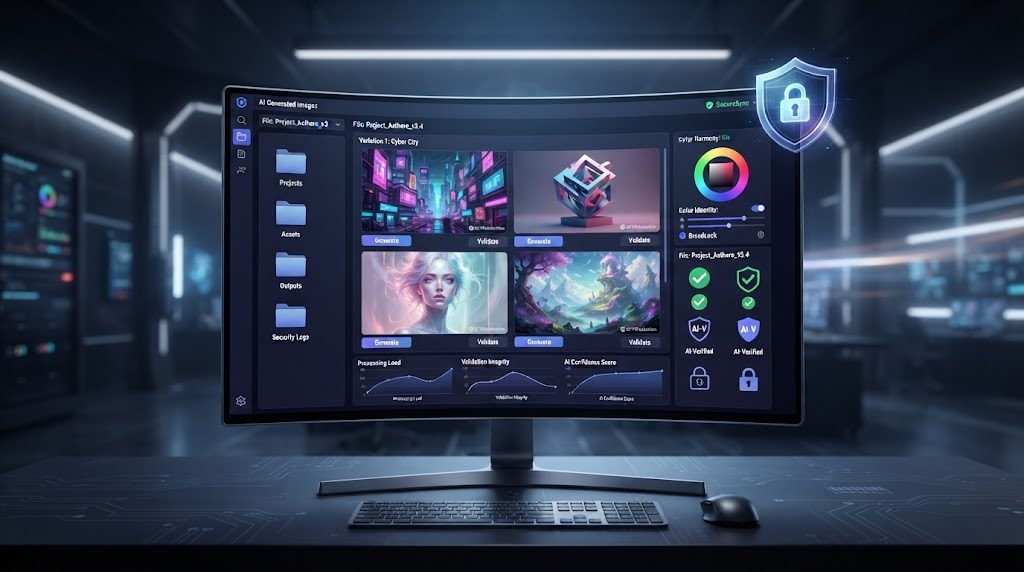
GFXRobotection AI software by GFXMaker is presented as an AI powered graphics platform designed to help users create, manage, and protect digital artwork. The software reportedly combines AI assisted graphics creation with tools for brand rules, asset validation, access control, and digital asset tracking.
Unlike a basic AI image generator that mainly focuses on creating images from text prompts, GFXRobotection is described as a broader graphics workflow platform. It reportedly helps users generate visual concepts while checking designs against brand requirements and technical file standards.
The platform is presented as useful for designers, marketing teams, agencies, game studios, ecommerce businesses, and content creators. Reported features also include digital fingerprinting, asset monitoring, version history, and secure storage.
However, independent information about GFXRobotection remains limited. Some details about its features, pricing, compatibility, security, and performance should therefore be verified directly with GFXMaker before relying on them.
What Is GFXRobotection AI Software by GFXMaker?
GFXRobotection AI software by GFXMaker is presented as an AI graphics and digital asset management platform. According to the available product information, it is designed to help users create visual content while also managing, checking, and protecting their digital assets.
The reported feature set combines AI graphic generation with brand controls, asset validation, ownership information, access management, and activity tracking. This gives the GFXRobotection software a broader purpose than simply creating images from text prompts.
GFXRobotection at a Glance
GFXMaker is associated with the GFXRobotection platform, which is presented as a tool for graphics production and asset management. Its reported functions include generating design concepts, creating visual variations, checking files against set requirements, and organizing digital assets.
The platform is reportedly aimed at freelance designers, marketing teams, advertising agencies, game studios, ecommerce businesses, and content creators. Protection features are also described as including digital fingerprints, metadata, monitoring, and asset history.
How GFXRobotection Differs From a Basic AI Image Generator
A basic AI image generator mainly focuses on turning a written prompt into an image. GFXMaker GFXRobotection is presented as a wider workflow solution.
Along with image generation, the reported system can apply brand rules, validate technical file details, store ownership information, monitor asset use, and support collaboration through permissions and shared libraries. These functions could help teams manage the full graphics process rather than only create individual images.
The platform is therefore positioned closer to AI graphics software and AI graphic design software with asset management features. Since independent product information is limited, these capabilities should be treated as reported features until confirmed through current official documentation.
What Does GFXRobotection Do?
GFXRobotection is presented as a graphics platform with two main reported functions. The first is AI assisted graphic production, which can help users create different types of visual content. The second is digital asset protection and workflow control, which focuses on managing, checking, and tracking those assets.
For teams that produce a large number of graphics, these functions could work together in one workflow. A designer could create an image with AI, check it against brand requirements, validate the file, store it in an asset library, and keep a record of its use and revisions.
AI Assisted Graphic Production
According to the available product information, GFXRobotection can reportedly assist with creating visual concepts and design variations. Potential uses include social media graphics, advertising banners, product visuals, game assets, marketing illustrations, thumbnail concepts, and campaign variations.
This type of AI assisted production may help teams create several design options from prompts or creative briefs. Users can then review the results and select or adjust the graphics that fit their needs.
Digital Asset Protection and Workflow Control
The reported workflow features focus on what happens after a graphic is created. These include asset tracking, ownership information, file validation, access permissions, version records, approval history, and web monitoring.
For example, a team could keep different versions of a campaign graphic while controlling who can view or edit the file. Reported monitoring features may also help identify possible unauthorized use of artwork.
These capabilities are based on available product descriptions and third party reports. They have not all been independently confirmed, so users should verify current features with GFXMaker before relying on them.
GFXRobotection Features
GFXRobotection is presented as more than an AI tool for creating images. Its reported feature set combines AI graphics generation with brand controls, asset checking, ownership records, online monitoring, and batch processing. This combination could make the software useful for teams that create and manage a large number of visual assets.
AI Graphic Generation
GFXRobotection reportedly allows users to create graphics from written prompts, templates, or creative briefs. Users may be able to generate several design variations and then select or adjust the option that best fits their project.
Possible uses include social media posts, advertising graphics, product visuals, game assets, marketing artwork, thumbnails, and campaign designs.
The available product information states that the software uses generative AI models. However, specific technical details about the models have not been independently confirmed through detailed technical documentation. Users should therefore treat model related claims as reported information.
Brand Rule Enforcement
Brand consistency can become difficult when many designers work on the same campaign. GFXRobotection is reportedly designed to help by applying predefined brand rules during the graphics workflow.
These rules may cover approved brand colors, typography, logo placement, layout requirements, image dimensions, content standards, and export specifications.
For example, a company could set rules for how its logo should appear on marketing graphics. The system could then check a design against those rules before it is approved or exported.
For larger creative teams, automated checks could reduce the amount of manual review required for routine brand requirements. Human review would still be useful for creative decisions and final approval.
Asset Validation
GFXRobotection is also reported to include an asset validation system. The purpose is to check whether a graphic meets technical requirements before it reaches its final destination.
Reported checks may include resolution, dimensions, file format, bleed settings, print requirements, naming conventions, metadata, and export specifications.
This can be useful when teams create graphics for different platforms or clients. A validation step may help identify an incorrect file format, unsuitable dimensions, or missing information before the asset is delivered.
The exact validation rules and supported file types should be confirmed with GFXMaker because detailed independent documentation is limited.
Digital Fingerprinting and Ownership Tagging
Another reported feature is digital fingerprinting. The system is described as using invisible identifiers, metadata, timestamps, and ownership information to create a record associated with an artwork.
These records may help users track an asset and maintain information about its creation or registration within the platform. Asset history can also provide a record of changes, versions, and other activity connected with a file.
However, digital fingerprinting should not be confused with copyright registration. A hidden identifier or timestamp does not automatically establish legal copyright ownership. Copyright rights can depend on local laws, contracts, licenses, and other evidence.
This distinction is important for anyone considering GFXRobotection as an artwork protection tool.
Web Monitoring
GFXRobotection is reportedly designed to monitor artwork across the web for possible unauthorized use. If a similar or matching image is detected, the system may provide an alert for the user to review.
Potential uses include finding unauthorized reposting, commercial use, duplicate artwork, possible copies, or visually similar images.
Such monitoring could be useful for creators whose work appears across websites, advertising campaigns, and social platforms. However, the available information does not independently confirm the system’s search coverage, detection accuracy, alert speed, or supported websites.
Users should review potential matches themselves before making a copyright claim, contacting a website owner, or taking other action.
AI Design Suggestions
The platform is also described as offering AI based design suggestions. These may include layout ideas, color recommendations, template variations, resizing assistance, mockup generation, and alternative design concepts.
These features could help designers generate more options during the early stages of a project. For example, a marketing team could create several layout variations for the same campaign and review them before choosing a final direction.
AI suggestions should still be checked by a designer for visual quality, brand consistency, readable text, originality, and suitability for commercial use.
Batch Processing
Batch processing is another reported capability that may be useful for teams handling large collections of graphics. Instead of processing each file separately, users may be able to apply certain protection, validation, metadata, or workflow actions to multiple assets.
Potential applications include ecommerce product graphics, advertising campaigns, social media libraries, game assets, and agency projects involving several clients.
For creative agencies, batch processing could also help with repetitive production tasks where many files need similar checks or asset management steps.
Overall, the reported GFXRobotection features cover both graphic creation and asset management. The platform appears to be designed around a workflow where users can create visual content, apply brand requirements, check technical details, maintain asset records, and monitor artwork after production. Since public product documentation remains limited, readers should verify the current feature set with GFXMaker before making purchasing or workflow decisions.
How Does GFXRobotection Work?
If you are wondering how does GFXRobotection work, the reported workflow combines AI assisted design creation with asset checking, protection, storage, and monitoring. The process is designed to move a graphic from its initial concept to an approved and managed digital asset.
1. Create or Upload a Graphic
The process can reportedly begin with a new design or an existing graphic. A user may upload an asset that needs validation and protection, or start a new project using the platform’s reported AI design tools.
2. Generate or Modify the Design
Users may work with written prompts, templates, or creative briefs to create a graphic or produce different design variations. The AI can reportedly assist with visual concepts and modifications, giving designers several options to review.
3. Apply Brand Rules
The reported rule system can check elements such as approved colors, typography, logo placement, layouts, dimensions, and other brand requirements. This can help teams maintain consistent design standards across multiple assets.
4. Validate the Asset
Before export, the reported asset validator can check technical details such as resolution, dimensions, file format, metadata, naming requirements, and print settings. This step may help identify production errors before a file is delivered or published.
5. Review and Approve
Human review remains an important part of the process. Designers or approved team members can inspect the generated or modified graphic and decide whether it meets creative, brand, technical, and commercial requirements.
6. Add Reported Protection and Store the Asset
Once approved, the asset may be stored in a digital library with reported metadata, provenance information, fingerprints, timestamps, and version records. Access permissions can also help control who can view, edit, or download the asset.
7. Monitor for Possible Unauthorized Use
GFXRobotection is also reported to offer web monitoring for possible unauthorized use of protected artwork. When a potential match is found, users may receive an alert for review. Detection results should be checked manually because a visual match does not automatically prove that an image has been copied or used without permission.
This workflow presents GFXRobotection as a combination of AI graphics creation and digital asset management rather than a simple image generation tool. Since some reported capabilities have limited independent verification, users should confirm the current workflow and available features with GFXMaker.
Who Can Use GFXRobotection?
GFXRobotection is presented as a graphics and digital asset platform for people and teams that create visual content regularly. Its reported combination of AI graphics creation, brand controls, asset validation, storage, permissions, and tracking may suit several types of creative users.
Freelance Designers
Freelance designers could use GFXRobotection to create design concepts, prepare client graphics, and manage completed assets. AI assisted generation may help them produce different visual options from prompts or creative briefs.
The reported asset management features may also help freelancers keep records of project files, revisions, timestamps, and ownership information. These records can be useful when organizing work for different clients or documenting the history of an asset.
Marketing Teams
Marketing teams often create graphics for campaigns, social media, advertisements, product promotions, and other channels. GFXRobotection is reportedly designed to help teams apply brand rules while producing these assets.
Teams could use predefined requirements for colors, typography, logo placement, layouts, and file specifications. Approval records and shared asset libraries may also help organize repeatable production workflows.
Advertising Agencies
Advertising agencies may manage creative work for several clients at the same time. Each client can have different visual standards, file requirements, and approval processes.
The reported GFXRobotection features could support separate brand rules, shared asset libraries, access permissions, version records, and approval tracking. These tools may help agencies keep client assets organized while controlling who can access specific projects.
Game Studios
Game studios produce many types of visual assets, including icons, textures, promotional graphics, interface elements, and marketing artwork. Managing large collections can become difficult when numerous files and versions are involved.
Reported batch processing, asset tracking, permissions, and version records could be useful for teams working with large asset libraries. AI assisted graphics creation may also help generate early concepts or promotional visuals.
E Commerce Businesses
E commerce businesses regularly need product banners, promotional graphics, category images, advertising creatives, and social media content. GFXRobotection may help these businesses create and organize graphics while checking technical requirements.
For businesses managing large product catalogs, batch processing and asset validation could be useful when many images require similar checks before publication.
Content Creators
Content creators such as YouTubers, streamers, and social media publishers may use AI graphics tools for thumbnails, promotional images, channel artwork, and social media visuals.
The reported tracking and protection features may also help creators maintain records of their artwork and monitor possible unauthorized use online. Human review remains important to make sure generated graphics fit the creator’s style and meet the requirements of each platform.
Overall, GFXRobotection may be relevant to users who need more than image creation alone. Its reported features are focused on creating, organizing, checking, tracking, and managing visual assets within a single workflow. Since some product details have limited independent verification, users should confirm the available features before adopting the platform for professional work.
GFXRobotection Security and Collaboration Features
GFXRobotection is reported to include several features designed for teams that need control over digital assets and creative projects. These features focus on user permissions, asset storage, activity records, integrations, and deployment options. They could make the platform suitable for organizations handling sensitive client or brand materials.
Role Based Access Control
Role based access control can allow administrators to give users different levels of access. For example, designers may receive editing permissions, while clients or external contributors may only be allowed to view or download selected assets.
This type of access system can help teams manage who can work with specific files and projects.
Secure Asset Storage
The GFXMaker product information reportedly describes encrypted storage for digital assets. Secure storage can be useful when teams handle confidential designs, client materials, or unreleased campaign graphics.
However, the supplied research does not include an independent security audit or technical assessment confirming these claims. Organizations should review current security documentation before storing sensitive files.
Audit Trails and Version History
Reported audit trails and version history can help teams keep track of asset activity. These records may show changes, approvals, revisions, and other actions connected with a graphic.
A clear history can make it easier for teams to identify which version was approved and understand how an asset changed over time.
API and Workflow Integrations
GFXRobotection is also reported to support APIs, command line workflows, and asset management integrations. These options could allow organizations to connect graphics processes with existing systems and automate selected tasks.
The exact integrations and supported services should be confirmed through current GFXMaker documentation.
On Premises Deployment
The available product description also reports an on premises deployment option. This could be useful for organizations that want greater control over where their creative assets and related data are stored.
For businesses with strict internal policies, private deployment may be worth evaluating alongside cloud based use. The available research does not independently verify the full security capabilities of this deployment model.
GFXRobotection Compatibility and System Requirements
GFXRobotection is reported to support several operating systems, cloud platforms, and hardware setups. The available information suggests that the software may fit both individual creative workflows and larger business environments. However, many of these specifications come from third party or product descriptions, so users should verify current requirements before purchase or deployment.
Supported Operating Systems
Reported compatibility includes Windows and macOS for creative work, along with Linux servers for server based deployments. This could give teams flexibility when designers and technical staff use different systems.
The exact operating system versions and supported releases should be confirmed with GFXMaker before installation.
Cloud and Enterprise Environments
GFXRobotection is also reported to work with cloud environments such as AWS and Microsoft Azure. Private Kubernetes deployments are mentioned as another option for organizations that want more control over their infrastructure.
These options may be relevant to larger teams that need to connect graphics workflows with existing cloud systems.
Hardware Requirements
The supplied research mentions a minimum of around 16 GB of RAM, with about 32 GB suggested for heavier workloads. Local GPU acceleration is also reported, including support for recent NVIDIA RTX and AMD GPUs.
These figures should be treated as reported specifications rather than confirmed requirements. Hardware needs can vary based on workload, asset size, AI tasks, and deployment method.
Design Application and iPad Compatibility
Some sources reference workflows involving Procreate, Photoshop, Affinity Designer, and iPad devices. However, the available research does not establish whether these connections are provided through native applications, plugins, browser based tools, exports, or another workflow.
Users who depend on a specific design application should confirm the exact integration method and supported versions before choosing GFXRobotection.
GFXRobotection Pricing and Plans
GFXRobotection pricing is not clearly documented in the supplied research. Available descriptions suggest that GFXMaker may offer different plans based on usage, team features, and enterprise requirements. The following table summarizes the reported plan structure without assigning unverified prices.
| Reported Plan | Reported Features |
|---|---|
| Starter | Limited renders and cloud credits |
| Team | More renders, shared libraries, integrations |
| Enterprise | SSO, audit exports, on premises deployment |
These reported plans suggest that access may vary based on the size of the team and the type of workflow involved. Individual users may need fewer renders and storage resources, while larger organizations may require shared libraries, integrations, access controls, and private deployment options.
Is There a Free GFXRobotection Plan?
Some available references mention the possibility of limited access or trial use, but the supplied research does not confirm a specific free plan, trial period, or exact limits.
Users should check the latest GFXMaker information to determine whether a free version or trial is currently available and what features it includes. Trial access, if offered, may also have limits on renders, cloud credits, storage, or collaboration features.
How Much Does GFXRobotection Cost?
There is no confirmed GFXRobotection price in the supplied research, so publishing a specific figure would risk giving readers outdated or incorrect information.
For the latest cost, users should verify current pricing directly through GFXMaker or contact its sales team. Before purchasing, it is also useful to confirm what each plan includes, such as render limits, storage, integrations, user accounts, support, and on premises deployment.
Advantages of GFXRobotection
GFXRobotection is presented as more than a tool for generating images. Its reported features are aimed at different parts of the graphics workflow, from creating new designs to checking files, managing revisions, and tracking digital assets. If these features work as described, they could help teams handle repeated graphics work with fewer manual steps.
Faster Graphics Production
AI assisted creation can help users produce initial concepts and design variations without building every version from scratch. For example, a marketing team could create several social media graphics, advertising visuals, or product images from an existing concept.
This can be useful when a campaign needs many visual versions for different platforms, sizes, or audiences.
Automated Brand Checks
Predefined brand rules can give teams a way to check graphics against approved colors, fonts, logo placement, layouts, and other design requirements.
For businesses with several designers, these checks may reduce the amount of manual review needed for routine brand requirements. A designer can still review the final result before it reaches a client or goes live.
Asset Validation
Automated asset checks may help identify common production problems before a file is delivered. Reported checks include resolution, file format, dimensions, naming rules, metadata, and export requirements.
This could be useful for agencies and marketing teams that regularly prepare graphics for print, websites, advertising platforms, or online stores.
Centralized Asset Management
A shared asset library can bring files, versions, permissions, and approval records into one workflow. Teams can use this setup to find current files, review previous versions, and control who can edit or access specific assets.
This can reduce confusion when several people work on the same campaign or project.
Batch Processing
Batch processing can be useful when a team needs to handle a large number of graphics at once. Ecommerce businesses, agencies, and marketing teams may use it for product catalogs, campaign variations, social media libraries, or game assets.
Instead of processing each file separately, reported batch tools may allow selected operations to be applied to multiple assets.
Reported Ownership and Tracking Features
GFXRobotection is also reported to use metadata, digital fingerprints, timestamps, and asset history to help track digital artwork. These records may help users document when an asset was created or processed and identify possible copies found through monitoring.
However, these features should not be treated as legal copyright protection. A digital fingerprint or ownership record does not by itself establish legal ownership or guarantee a successful copyright claim.
Limitations and Things to Check Before Using GFXRobotection
GFXRobotection is presented as a broad graphics and asset management platform, but readers should look beyond its feature list before using it for professional work. The available research contains several reported capabilities, while independent technical information is more limited. That makes verification an important part of evaluating the software.
Limited Public Documentation
One of the main limitations is the lack of detailed independent documentation. Information about features, performance, supported systems, security controls, integrations, and pricing is not widely available from independent technical sources.
Some product descriptions provide useful details, but users should treat those details as reported information unless they can be confirmed through current GFXMaker documentation or direct support.
Digital Fingerprinting Does Not Equal Copyright Protection
Digital fingerprinting can create a technical record connected with a digital asset. Reported features may include fingerprints, timestamps, metadata, and ownership information.
However, these records should not be confused with legal copyright protection. A fingerprint can help document or track an asset, but it does not automatically establish copyright ownership. It also cannot guarantee that a copyright claim will succeed.
Users should treat asset tracking as a technical tool and rely on applicable copyright laws and legal advice for ownership disputes.
Web Monitoring May Need Human Review
Reported web monitoring features may help identify copies or similar versions of an image online. This could be useful when a business wants to find possible unauthorized use of its graphics.
Still, image matching can produce false matches. A similar image does not always mean that someone copied an original asset. Before contacting a website, filing a complaint, or taking another action, users should review each alert and confirm the context.
AI Generated Graphics Need Human Review
AI generated graphics can speed up the early stages of design, but they should not be treated as ready for every professional use without review.
Users should check generated designs for incorrect text, visual errors, brand inconsistencies, unwanted similarities, and commercial suitability. Logos, product details, small text, human features, and other fine elements may also need manual correction.
A human approval step is especially useful when graphics represent a business or are being prepared for paid advertising and client delivery.
Privacy and Confidential Files
Businesses should also understand how GFXRobotection handles uploaded files and related information. Before using the platform for private client work, teams should review its privacy policy and available security documentation.
Key questions include how long files are retained, how data can be deleted, whether uploaded content may be used for AI training, what encryption is used, and how client data is handled.
These questions become even more relevant when designs contain unreleased products, private campaign materials, customer information, or confidential brand assets.
Compatibility Claims Should Be Verified
Reported compatibility with Windows, macOS, Linux servers, cloud platforms, design applications, GPUs, APIs, and other systems should be confirmed before purchase.
Users should check the current supported operating system versions, plugins, integrations, hardware requirements, and deployment options. This is especially important for teams with an established creative workflow, since an unsupported application or integration could require changes to the existing process.
Overall, GFXRobotection may offer a useful mix of graphics creation and asset management features, but its limited public documentation means users should verify important claims before relying on the platform for business or client work.
GFXRobotection vs Traditional Design Software
Traditional design software and GFXRobotection appear to focus on different parts of the creative process. Established design applications generally give users detailed control over drawing, photo editing, layouts, typography, and other hands on design tasks. GFXRobotection is reported to combine AI assisted graphics creation with asset management, validation, tracking, and workflow controls.
| Area | Traditional Design Software | GFXRobotection Reported Focus |
|---|---|---|
| Graphic creation | Manual design and editing | AI assisted generation |
| Brand controls | Templates and manual checks | Automated rule checks |
| Asset validation | Often manual | Reported automated validation |
| Protection | May require separate tools | Reported fingerprints and monitoring |
| Collaboration | Varies by platform | Reported permissions and shared libraries |
| Version tracking | Depends on software | Reported version history |
| High volume work | Varies | Reported batch processing |
The main difference is workflow focus. A traditional design application can provide detailed creative control, while GFXRobotection is described as connecting creation with checks, asset storage, tracking, and team management.
Can GFXRobotection Replace Photoshop or Illustrator?
The available research does not establish that GFXRobotection is a direct replacement for established applications such as Photoshop or Illustrator. Its reported feature set places considerable attention on AI assisted creation, asset management, validation, protection, and collaboration.
Designers who depend on advanced manual editing may still need dedicated professional design software. GFXRobotection can instead be viewed as a platform that may sit around parts of an existing design process rather than replacing every creative application.
When Could GFXRobotection Fit an Existing Design Workflow?
GFXRobotection could fit alongside existing design tools when a team wants to add automation and asset management to its current process. A designer might create or refine artwork in a familiar design application, then use GFXRobotection for reported validation, brand checks, asset organization, version tracking, permissions, or monitoring.
This approach may be useful for agencies, marketing teams, ecommerce businesses, and other groups that already have established design tools but need additional controls for managing large collections of visual assets.
Is GFXRobotection Legitimate?
Questions such as “Is GFXRobotection legit?” and “Is GFXRobotection safe to use?” are reasonable when a software product has limited independent documentation. The available information supports the existence of a GFXMaker product page describing GFXRobotection and its reported graphics, asset management, and protection features. However, the amount of independent information available is more limited than the product claims.
What Can Be Verified About GFXRobotection?
GFXMaker has published information describing GFXRobotection as an AI graphics and digital asset protection platform. The reported feature set includes AI assisted graphics creation, brand checks, asset validation, digital fingerprints, monitoring, permissions, version history, and asset management.
This provides a basis for describing what the product is presented as doing. It does not independently confirm that every listed feature works as described or that all reported integrations and technical specifications are currently available.
What Information Is Still Unclear?
Several areas remain difficult to verify from the available research. These include independent performance testing, exact pricing, security audits, detailed technical documentation, monitoring accuracy, full compatibility, and native support for applications such as Photoshop, Procreate, and Affinity Designer.
The available information also does not provide enough independent evidence to assess how the software performs with different workloads or how its reported protection features work in real world conditions.
What Should Users Check Before Paying?
Before purchasing GFXRobotection, users can follow this checklist:
- Confirm the current official GFXMaker product page.
- Check the latest pricing and plan limits.
- Review the privacy policy and data handling terms.
- Verify supported applications and integrations.
- Ask how long uploaded data is retained.
- Confirm the security controls used to protect stored assets.
- Request documentation for enterprise features and private deployment.
- Test the software with non sensitive assets before uploading confidential client or business files.
For a GFXRobotection review, these checks provide a more useful basis for evaluation than relying only on promotional feature lists.
Final Takeaway
GFXRobotection is presented by GFXMaker as an AI graphics and digital asset management platform that brings several parts of the creative workflow into one system. Its reported AI features include graphic creation and design variations, while brand rules and asset validation are intended to help teams check visual and technical requirements before delivery.
The platform is also reported to offer digital fingerprinting, ownership metadata, and web monitoring for digital assets. Collaboration features such as permissions, shared libraries, version history, audit records, and workflow integrations are described as part of its wider asset management approach.
At the same time, independent verification of several product claims remains limited. Users should therefore avoid treating reported features as independently confirmed facts. Before purchasing or uploading sensitive files, it is worth checking the latest pricing, supported systems and applications, security controls, privacy terms, data retention rules, and available enterprise documentation.
For anyone researching GFXRobotection AI software by GFXMaker, these checks can provide a clearer picture of how the current product fits their creative and asset management needs.
Frequently Asked Questions About GFXRobotection
What is GFXRobotection AI software by GFXMaker?
GFXRobotection AI software by GFXMaker is presented as an AI graphics and digital asset management platform. Its reported features combine AI assisted graphic creation with brand controls, asset validation, digital fingerprints, monitoring, permissions, and asset tracking. It is described as a tool for designers, creative teams, agencies, and businesses that manage large numbers of digital graphics.
What does GFXRobotection do?
GFXRobotection is reported to help users create graphic concepts and variations with AI, check assets against brand rules, validate technical file requirements, organize files, track versions, and manage permissions. Its reported protection features include digital fingerprints, ownership metadata, and online monitoring for possible unauthorized use.
Is GFXRobotection an AI image generator?
It includes reported AI assisted image and graphic creation features, but its described purpose goes beyond basic image generation. The platform is also reported to include brand checks, asset validation, storage, version tracking, permissions, monitoring, and workflow management.
Does GFXRobotection protect copyrighted images?
Reported fingerprints and metadata may help document an asset’s history and ownership information. However, these technical records do not replace legal copyright protection. A digital fingerprint does not automatically establish copyright ownership or guarantee a successful legal claim.
Does GFXRobotection monitor images online?
Yes, web monitoring is among the reported features. It is described as a way to find possible copies or similar versions of digital artwork online. Coverage, detection accuracy, alert speed, and supported websites should be confirmed before relying on the feature.
How much does GFXRobotection cost?
Confirmed public pricing was not available in the supplied research. Reported plan categories include Starter, Team, and Enterprise, but exact prices and plan limits should be checked through current GFXMaker information.
Does GFXRobotection work on Windows and macOS?
Windows and macOS support are reported, along with Linux server environments. However, users should check the latest system requirements before installation because supported versions and hardware requirements may change.
Can GFXRobotection work with Photoshop or Procreate?
Some third party sources mention workflows involving Photoshop and Procreate, as well as Affinity Designer. The available research does not confirm whether these connections use native applications, plugins, browser tools, or another method. Users should verify the exact integration before purchase.
Who is GFXRobotection designed for?
The reported target users include freelance designers, marketing teams, advertising agencies, game studios, ecommerce businesses, and content creators. It may be relevant to users who create and manage a high volume of visual assets.
Is GFXRobotection suitable for professional design teams?
Its reported combination of AI creation, brand controls, asset validation, permissions, version history, and asset management may fit teams with repeatable graphics workflows. However, professional teams should verify the current product features, integrations, security controls, and system requirements before using it for client or confidential work.
Read More: How to Install Mozillod5.2f5 Safely?