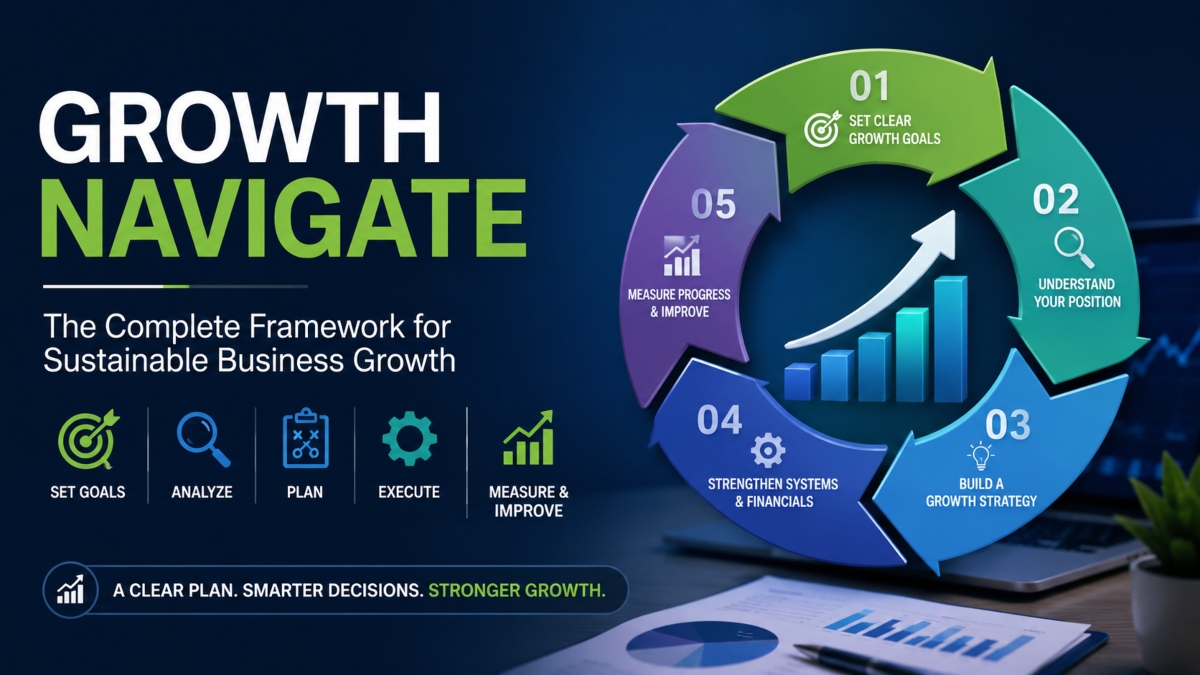
Growth Navigate is becoming a popular term because it gives people and businesses a clear way to plan for steady growth instead of relying on guesswork. It combines smart planning with consistent action so progress stays focused over time. Many founders, professionals, and growing companies use this approach to organize their goals, improve daily operations, and prepare for future opportunities. Growth Navigate can refer to both a growth strategy and a structured framework that supports personal growth, business expansion, and digital success. This guide explains what it means, how it works, and how you can use it to build lasting results.
What Is Growth Navigate?
Growth Navigate is a practical approach that helps people and businesses move toward their goals with a clear plan. Instead of chasing every new idea or trend, it focuses on choosing the right path, taking steady action, and improving along the way. The goal is to grow with purpose while keeping every step connected to a bigger vision.
Whether you are building a startup, managing a growing company, or working on personal goals, Growth Navigate gives you a simple system to stay organized and make smarter decisions. It combines planning, action, and regular reviews so progress stays on track instead of becoming scattered.
Simple Definition of Growth Navigate
Growth Navigate is a structured method for reaching growth goals through planning, execution, and continuous improvement. It helps you understand where you are today, decide where you want to go, and create a practical roadmap to get there.
The process begins with setting clear goals. Next, you review your current position, identify opportunities, and create a plan based on your strengths. As you move forward, you measure your results and make changes whenever needed. This structured approach reduces confusion and helps you focus on actions that support steady progress.
Growth Navigate can also describe a business framework that supports startups and growing companies with financial planning, operational systems, leadership, and funding preparation. In both cases, the main idea remains the same, which is building growth through a clear and repeatable process.
Why Growth Navigate Matters
Growth becomes easier to manage when every decision follows a well defined plan. Growth Navigate helps replace uncertainty with clear priorities so teams and individuals know what to work on first.
It also creates better direction by connecting daily tasks with long term goals. This keeps projects moving without losing focus or wasting resources.
Another advantage is steady progress over time. Regular reviews make it easier to spot challenges early, improve performance, and adjust plans before small issues become larger ones.
For businesses, Growth Navigate supports sustainable scaling by building stronger financial systems, organized operations, and realistic growth plans. This creates a solid foundation that can support future expansion while keeping the business stable and prepared for new opportunities.
Two Meanings of Growth Navigate
The term Growth Navigate is used in two different ways. Some people use it as a way of thinking about growth, while others use it to describe a structured business framework. Both meanings share the same goal, which is helping individuals and organizations grow with a clear plan instead of relying on chance.
How the Growth Navigate Framework Works
The Growth Navigate framework gives businesses and individuals a clear process for reaching their goals. Instead of making random decisions, it follows a series of connected steps that keep growth organized and measurable. Each step builds on the previous one, making it easier to stay focused while adapting to new opportunities and challenges.
Whether you are launching a startup, growing an existing business, or working toward personal goals, this framework helps you move forward with confidence. It starts by defining what success looks like, then builds a practical plan to reach that destination.
Step 1: Set Clear Growth Goals
Every successful growth journey begins with a clear goal. Without a specific target, it becomes difficult to measure progress or decide which actions deserve your time and resources.
Start by deciding what you want to achieve. Your goal could be increasing revenue, attracting more customers, expanding into new markets, or building valuable skills that support future success. The objective should be realistic while still encouraging meaningful progress.
For businesses, revenue goals provide a clear financial target. You may aim to increase monthly sales, improve profit margins, or grow recurring income over the next year. Having measurable numbers makes it easier to track success.
Customer goals are just as important. A business might focus on gaining new customers, improving customer retention, or increasing repeat purchases. These goals help teams focus on activities that create lasting relationships.
Growth also depends on knowledge and experience. Learning new skills, improving leadership, or developing stronger technical abilities can prepare both individuals and organizations for future opportunities.
Market expansion is another common objective. A company may enter a new region, introduce additional products, or serve a different customer group. Setting these goals early allows every later decision to support the same direction.
Step 2: Understand Your Current Position
Before moving forward, you need a clear picture of where you stand today. Understanding your current position helps you make informed decisions instead of relying on assumptions.
One useful method is a SWOT analysis. This looks at strengths, weaknesses, opportunities, and threats. Strengths show what already works well, while weaknesses reveal areas that need attention. Opportunities point to possible growth, and threats help you prepare for outside challenges.
Market trends also deserve close attention. Customer behavior, technology, industry changes, and economic conditions can all influence your future plans. Staying aware of these changes allows you to respond at the right time.
A competitor review provides another valuable perspective. Study how similar businesses attract customers, price their products, and position their brands. The goal is not to copy others but to understand where you can offer something different or better.
Finally, identify your internal strengths. These may include experienced employees, loyal customers, unique products, strong partnerships, or efficient operations. Knowing your strongest assets helps you build a strategy around what already gives you an advantage.
Step 3: Build a Growth Strategy
Once your goals are clear and you understand your current position, the next step is creating a practical growth strategy. This plan explains how you will reach your objectives while making the best use of available resources.
Many successful businesses begin by focusing on their core business. Instead of trying to do everything at once, they improve the products or services that already perform well. Strengthening the core creates a stable foundation for future growth.
After the core business becomes stronger, look for expansion opportunities. This could include launching new products, serving additional customer groups, entering new markets, or adding new sales channels. Each opportunity should support your long term goals and fit your available resources.
Your competitive strengths should guide every decision. Think about what makes your business different from others. It may be better customer service, faster delivery, specialized knowledge, product quality, or a unique solution. Building around these strengths helps create lasting value that competitors cannot easily match.
A well planned strategy keeps every department working toward the same objectives and reduces unnecessary distractions.
Step 4: Strengthen Financial and Operational Systems
Growth becomes difficult when the systems behind a business cannot keep pace. Strong financial management and organized operations create a stable environment that supports future expansion.
Cash flow planning is one of the most important responsibilities. Knowing how money enters and leaves the business helps owners prepare for expenses, invest wisely, and avoid financial pressure during periods of growth.
KPI dashboards make it easier to monitor important numbers. Businesses can track sales, customer acquisition, retention, expenses, profit, and other performance indicators from one place. Regular monitoring allows faster decisions whenever results change.
Business processes should also be reviewed and improved. Clear workflows reduce confusion, improve teamwork, and increase efficiency. As companies grow, documented procedures help maintain consistent quality across different departments.
Funding preparation is another important step for businesses planning to scale. This includes organizing financial records, preparing business plans, creating investor presentations, and understanding future funding needs. Good preparation increases confidence when speaking with lenders or investors.
Step 5: Measure Progress and Improve
Growth does not stop after a plan is created. Regular measurement ensures that every effort continues moving in the right direction.
Performance tracking should become part of normal business operations. Compare current results with your original goals and identify where progress is meeting expectations or falling behind.
Regular reviews create opportunities to discuss results, identify challenges, and celebrate achievements. Monthly or quarterly reviews often provide enough time to notice meaningful changes without waiting too long.
When something is not working, adjustments should be made quickly. You may need to improve marketing, refine products, update pricing, or reorganize internal processes. Small changes made early often prevent larger problems later.
Continuous improvement keeps the entire framework active. Every review provides new information that helps improve future decisions. Over time, this steady cycle of planning, action, measurement, and refinement creates stronger performance, healthier operations, and sustainable business growth.
Understanding these two perspectives makes it easier to see why the term has gained attention among founders, business owners, and professionals. One focuses on the mindset behind smart growth, while the other provides practical methods that support long term success.
Growth Navigate as a Strategic Mindset
As a strategic mindset, Growth Navigate encourages people to plan before taking action. It begins with setting clear goals and deciding what success looks like. Once the destination is clear, every decision becomes easier because it supports the same objective.
This approach also values careful decision making. Instead of reacting to every new opportunity, it helps people compare options, weigh the risks, and choose actions that move them closer to their goals.
Another key part of this mindset is adaptability. Markets change, customer needs shift, and new challenges appear over time. Growth Navigate encourages regular reviews so plans can be adjusted without losing sight of the bigger picture.
Continuous improvement is equally important. Rather than waiting for perfect results, businesses and individuals learn from each step, make small improvements, and build steady progress over time. This creates a reliable path toward lasting growth.
Growth Navigate as a Business Framework
Growth Navigate is also used as a business framework that helps companies build stronger foundations before expanding. It combines several core business functions into one organized process.
Financial planning is one of its main areas. Businesses review cash flow, budgets, and future spending so they can make informed decisions and prepare for growth with confidence.
The framework also encourages better operational systems. Clear workflows, performance tracking, and defined responsibilities help teams stay organized as the business grows.
Funding preparation is another important part. Startups and growing businesses can prepare financial records, business plans, and investor presentations before seeking outside capital. This improves their readiness for funding opportunities.
Leadership support completes the framework by helping business owners build stronger management skills, improve communication, and guide their teams through each stage of growth. Together, these elements create a practical system that supports steady expansion while reducing unnecessary risks.
Growth Navigate in Different Areas
Growth Navigate is a flexible approach that can be applied in many situations. While many people connect it with startups and business expansion, the same principles also work for personal development and digital growth. The process stays consistent. Set clear goals, build a practical plan, take steady action, and review progress on a regular basis.
Using the framework in different areas helps people stay focused while making better decisions over time.
Personal Growth Navigate
Personal Growth Navigate focuses on building a better future through careful planning and consistent improvement. Instead of making random career choices, it encourages you to create a clear path based on your long term goals.
Career planning is often the first step. Think about where you want to be in the next few years and identify the experience or qualifications needed to reach that position. Breaking larger goals into smaller milestones makes progress easier to manage.
Skill development also plays an important role. Learning new technical skills, improving communication, strengthening leadership, or gaining industry knowledge can open new opportunities. Continuous learning helps you stay competitive as industries change.
Goal tracking keeps your progress visible. You can review completed projects, certifications, income growth, promotions, or other personal achievements. Regular reviews help you stay motivated while identifying areas that still need attention.
A structured personal growth plan creates confidence because every action supports a larger objective instead of feeling disconnected.
Business Growth Navigate
For businesses, Growth Navigate provides a practical framework for growing without losing control. It helps companies strengthen their foundation before expanding into new opportunities.
Startup scaling is one of the most common applications. As customer demand increases, businesses need stronger systems, better teamwork, and clear processes to support continued growth. Expanding too quickly without preparation often creates unnecessary challenges.
Revenue growth is another major focus. Businesses can improve sales by attracting new customers, increasing repeat purchases, introducing new products, or entering additional markets. Every growth decision should support long term financial stability.
Operational improvements make growth easier to manage. Better workflows, defined responsibilities, and organized business processes reduce delays and improve efficiency. Teams can work together more effectively while maintaining consistent service quality.
When financial planning, operations, and leadership work together, businesses become better prepared for future expansion.
Digital Growth Navigate
Growth Navigate also supports online businesses, software companies, and digital brands. A structured approach helps improve visibility, attract qualified visitors, and build stronger customer relationships.
Search engine optimization helps websites appear for relevant searches. Creating useful content, improving website structure, and targeting valuable keywords can increase organic traffic over time.
Content marketing supports this effort by publishing helpful articles, guides, videos, and other resources that answer customer questions. High quality content builds trust while encouraging visitors to return.
Product growth focuses on improving the customer experience. Listening to user feedback, introducing useful features, and removing common frustrations can increase customer satisfaction and encourage continued use.
Analytics provide valuable information about website traffic, customer behavior, conversions, and marketing performance. Reviewing this data helps businesses understand what works well and where improvements are needed.
Customer retention completes the process. Keeping existing customers satisfied is often more valuable than constantly searching for new ones. Good support, regular communication, and continued product improvements encourage long term loyalty while creating a stable foundation for future growth.
Growth Navigate Funding Explained
Growth Navigate funding refers to a structured approach that helps businesses prepare for and secure the financial support needed for expansion. It is not only about raising money. It also focuses on building a stronger business before approaching investors or lenders. Companies with clear financial plans, organized operations, and realistic growth goals are often in a better position to receive funding.
This approach encourages business owners to understand how much capital they need, why they need it, and how they plan to use it. It also helps them present their business with confidence by showing a clear path for future growth.
What Is Growth Navigate Funding?
Growth Navigate funding combines financial planning with business strategy. Instead of looking for investment as quickly as possible, businesses first improve their financial health, organize their operations, and create a plan that supports long term growth.
The process may include reviewing cash flow, forecasting future expenses, preparing financial documents, and deciding which funding option best matches the company’s goals. Depending on the stage of the business, funding may come from investors, business loans, grants, or other financing sources.
The main objective is to secure funding that supports healthy expansion while maintaining financial stability.
Who Can Benefit?
Growth Navigate funding is valuable for startups that have validated their idea and are preparing to grow. It helps founders organize their finances and present their business in a professional way before seeking outside investment.
Growing businesses can also benefit when they need additional capital to hire employees, launch new products, expand into new markets, or improve business operations. Proper preparation increases confidence during funding discussions.
Founders often gain the most from this approach because it helps them understand both the financial and strategic sides of business growth. It also improves communication with investors by providing clear goals, realistic projections, and a well prepared business plan.
Funding Preparation Checklist
Before applying for funding, businesses should organize their financial records. Accurate income statements, cash flow reports, balance sheets, and financial forecasts help demonstrate the company’s financial position.
A strong pitch deck is also essential. It should explain the problem, the solution, the target market, the business model, financial projections, and future growth plans in a clear and simple format.
The business model should clearly explain how the company generates revenue and how it plans to increase profits over time. Investors want to understand how the business creates value and supports future growth.
Finally, focus on investor readiness. Review your financial documents, practice your presentation, prepare answers to common questions, and understand your funding goals before meeting with potential investors. Careful preparation creates a stronger first impression and increases the chances of securing the right funding for your business.
Practical Example of Growth Navigate
Understanding a framework becomes much easier when you see it in action. The following example shows how a SaaS startup can use the Growth Navigate approach to move from steady progress to organized expansion. While every business has different goals, the same process can be adapted to fit many industries.
SaaS Startup Growth Example
Imagine a SaaS startup that has a reliable product and a growing customer base. The company earns recurring monthly revenue, but growth has started to slow. The team wants to expand, yet there is no clear roadmap for reaching the next stage.
The first step is setting specific growth goals. The founders decide to increase monthly recurring revenue, attract more business customers, reduce customer churn, and launch the product in a new market within the next year. These goals give every department a shared direction.
Next, the team creates a strategy based on its strongest advantages. They improve the onboarding process for new customers, invest in search engine optimization and content marketing, release features requested by existing users, and strengthen customer support to improve satisfaction and retention.
Financial planning becomes a priority before any major expansion begins. The company prepares detailed cash flow forecasts, creates a realistic operating budget, and estimates the funding needed for product development and marketing. Performance metrics are reviewed every month to make sure spending stays aligned with business goals.
As the plan moves forward, the business measures results and makes small improvements whenever needed. Customer retention improves, recurring revenue grows, and marketing efforts generate more qualified leads. With stronger financial records and steady performance, the startup becomes better prepared to approach investors or lenders for additional funding. This example shows how Growth Navigate turns a collection of ideas into a structured plan that supports steady and sustainable business growth.
Best Practices for Using Growth Navigate
The Growth Navigate framework works best when it is supported by consistent habits and clear decision making. A good plan alone is not enough. Real progress comes from staying focused, measuring results, and making smart changes over time. These best practices can help individuals, startups, and growing businesses use the framework more successfully while avoiding common mistakes.
Focus on One Core Goal
Many businesses lose momentum because they try to achieve too many goals at the same time. Growth Navigate encourages you to choose one primary objective before adding new priorities.
Your main goal could be increasing revenue, gaining more customers, launching a new product, or entering a new market. Once the goal is clear, every project and decision should support that objective.
Keeping your attention on one priority also makes it easier to use your time, budget, and team resources wisely. When everyone works toward the same outcome, progress becomes easier to measure and manage.
Track the Right Metrics
Measuring the right data helps you understand whether your plan is working. Instead of collecting every possible number, focus on the metrics that reflect your main goal.
A business may monitor monthly recurring revenue, customer acquisition, customer retention, conversion rates, or profit margins. Personal growth may be measured through completed certifications, new skills, or career milestones.
Reviewing meaningful metrics gives you a clear picture of performance and helps you make informed decisions without unnecessary distractions.
Review Progress Regularly
Growth should be reviewed on a regular schedule instead of waiting until problems become difficult to fix. Monthly or quarterly reviews give enough time to evaluate results while keeping improvement efforts active.
During each review, compare current performance with your original goals. Celebrate achievements, identify areas that need attention, and discuss the next steps with your team.
Regular reviews also improve accountability because everyone understands their responsibilities and can see how their work contributes to the overall goal.
Improve Based on Data
Every review creates an opportunity to make better decisions. Use the information you collect to refine your strategy, improve business processes, and strengthen customer experiences.
If one marketing channel performs better than another, invest more resources there. If customer feedback identifies a common problem, make improvements that solve it. Small adjustments made consistently often produce stronger results over time.
Growth Navigate encourages continuous learning through action and measurement. By using real performance data instead of assumptions, businesses can make confident decisions that support steady progress and long term success.
Common Mistakes to Avoid
Even the best growth strategy can produce poor results when common mistakes are ignored. Many businesses focus only on getting bigger without building a strong foundation first. Growth Navigate encourages steady progress through planning, careful decision making, and regular reviews. Avoiding the following mistakes can help you build a stronger business while reducing unnecessary risks.
Growing Without a Plan
One of the biggest mistakes is trying to grow without a clear plan. Expanding into new markets, hiring more employees, or launching new products without defined goals often leads to confusion and wasted resources.
A simple roadmap gives every team member a clear direction. It also helps business owners decide which opportunities deserve attention and which ones should wait until the business is ready.
Ignoring Financial Health
Healthy finances support every stage of business growth. Without accurate budgets, cash flow forecasts, and regular financial reviews, even a successful business can face unexpected problems.
Business owners should monitor income, expenses, and available cash on a regular basis. Understanding the financial position of the company makes it easier to plan future investments and prepare for changing business conditions.
Expanding Too Quickly
Fast growth may sound exciting, but moving too quickly can place unnecessary pressure on a business. Hiring too many employees, opening new locations, or entering several markets at once may stretch available resources beyond their limits.
A better approach is to strengthen your current operations before moving to the next stage. Stable growth gives your team enough time to improve processes, maintain product quality, and deliver a better customer experience.
Tracking Too Many Metrics
Collecting large amounts of data does not always lead to better decisions. Many businesses spend time reviewing numbers that have little connection to their primary goals.
Choose a small group of key metrics that reflect business performance. Revenue, customer retention, conversion rate, customer acquisition, and profit are common examples. Focusing on meaningful data makes reviews simpler and helps leaders make better decisions with greater confidence.
Tools That Support Growth Navigate
The right tools make the Growth Navigate framework easier to use. They help businesses organize information, monitor performance, manage daily work, and build stronger customer relationships. While every company has different needs, choosing reliable software can save time and improve decision making. The goal is not to use as many tools as possible, but to select solutions that support your growth objectives.
Financial Planning Tools
Financial planning tools help businesses understand their financial position and prepare for future growth. They make it easier to create budgets, monitor cash flow, forecast revenue, and review expenses.
Many platforms also generate financial reports that help business owners make informed decisions. Keeping financial information organized supports better planning and prepares companies for future funding opportunities.
Analytics and KPI Dashboards
Analytics platforms and KPI dashboards give businesses a clear view of their performance. Instead of checking information from multiple sources, important data is displayed in one place.
Teams can monitor website traffic, sales, customer acquisition, recurring revenue, conversion rates, and customer retention. Reviewing these numbers on a regular basis helps identify successful activities and areas that need attention. Clear reporting also supports faster and more confident business decisions.
Project Management Platforms
Project management platforms help teams organize tasks, assign responsibilities, and monitor progress. As a business grows, keeping projects organized becomes more important.
These platforms improve communication by giving every team member access to deadlines, priorities, and project updates. Better organization reduces delays and keeps everyone focused on shared business goals.
CRM and Customer Analytics
Customer relationship management software helps businesses organize customer information, monitor sales activities, and improve communication throughout the customer journey.
Customer analytics tools provide useful information about customer behavior, buying patterns, and satisfaction levels. This information helps businesses improve products, strengthen customer relationships, and increase customer retention. Using both systems together creates a better understanding of customer needs while supporting long term business growth.
Final Thoughts on Growth Navigate
Growth Navigate offers a simple and practical way to build steady progress in personal, business, and digital growth. The framework begins with clear goals, followed by careful planning, organized execution, regular measurement, and ongoing improvements. Each step works together to keep your efforts focused and connected to your long term vision.
No matter the size of your business or the stage of your career, starting with a clear objective makes every decision easier. Once you know what you want to achieve, you can build a realistic plan, monitor meaningful results, and make informed changes as your situation evolves.
Lasting growth rarely happens by chance. It comes from making smart decisions, building strong systems, and reviewing progress on a regular basis. By following the Growth Navigate framework, you can create a stable foundation that supports future opportunities while keeping your goals, resources, and daily actions moving in the same direction.
FAQs
What does Growth Navigate mean?
Growth Navigate is a structured approach that helps individuals and businesses achieve steady growth through clear planning, organized execution, and regular performance reviews. It provides a practical roadmap for setting goals, making informed decisions, and improving results over time.
Is Growth Navigate a business framework or a company?
Growth Navigate can refer to both. It is widely used as a business framework that guides companies through planning, financial management, operations, and growth. It is also associated with companies and services that provide business consulting, funding support, and growth planning for startups and established businesses.
How does Growth Navigate help startups?
Growth Navigate helps startups build a stronger foundation before expanding. It encourages founders to define clear business goals, improve financial planning, organize daily operations, and prepare for future funding. This structured approach helps startups reduce risk while supporting steady business growth.
What is Growth Navigate funding?
Growth Navigate funding is a process that helps businesses prepare for investment or financing. It includes organizing financial records, creating realistic business plans, building strong financial forecasts, and preparing professional presentations for investors or lenders. The goal is to secure funding that supports healthy business expansion.
Can individuals use the Growth Navigate framework?
Yes. Growth Navigate is not limited to businesses. Individuals can use the same framework to plan their careers, build new skills, monitor personal progress, and achieve long term goals. The process encourages clear planning, consistent action, and regular reviews to support continuous improvement.
What industries benefit the most from Growth Navigate?
Many industries can benefit from Growth Navigate, including technology, software, ecommerce, healthcare, education, consulting, finance, manufacturing, and professional services. Any organization that wants structured growth, stronger operations, and better planning can apply the framework to its business.
What metrics should businesses track during growth?
The most useful metrics depend on business goals. Common examples include revenue, monthly recurring revenue, customer acquisition, customer retention, conversion rate, profit margin, operating costs, customer lifetime value, and cash flow. Tracking a focused group of metrics helps business owners evaluate performance and make better decisions.
Is Growth Navigate suitable for SaaS companies?
Yes. SaaS companies can use Growth Navigate to improve recurring revenue, reduce customer churn, strengthen onboarding, organize financial planning, and monitor business performance. The framework also supports product development, customer retention, and long term scaling, making it a practical choice for software businesses at different stages of growth.
Read More: Improve Software HCS 411gits