Remote and hybrid work have become a normal part of business operations. Teams now collaborate across cities, countries, and time zones using cloud based tools that keep projects moving and communication flowing. While this flexibility creates new opportunities, it also introduces security concerns that organizations cannot ignore.
When employees access company systems from home offices, shared workspaces, or personal devices, the number of potential entry points for cyber threats increases. Weak passwords, unsecured networks, phishing attacks, and unauthorized access attempts can expose sensitive business data to serious risks.
Traditional office security models were built around centralized networks and on site infrastructure. That approach is no longer enough when employees work from multiple locations and connect through various devices. Businesses need security that travels with their workforce rather than staying inside office walls.
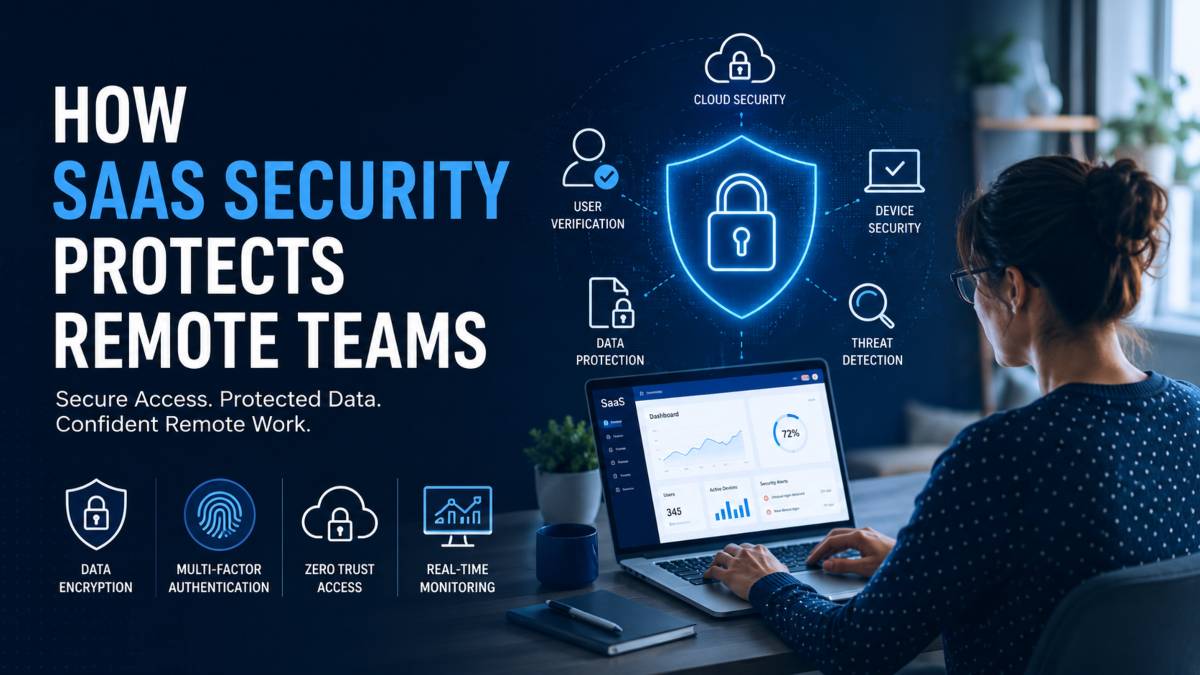
This is where SaaS security becomes essential. Modern SaaS platforms use advanced protections such as data encryption, multi factor authentication, access controls, device monitoring, and real time threat detection to keep information secure. These security layers help organizations protect remote employees, maintain compliance, and reduce the risk of costly data breaches while supporting a productive and connected workforce.
Why Remote Teams Face Greater Security Risks
Remote work offers flexibility and convenience, but it also creates security challenges that are harder to manage than those found in traditional office environments. When employees connect from different locations and devices, businesses have less control over the networks and systems used to access company data.
The Challenges of Working Outside the Office
One major concern is the security of home networks. Many employees use personal internet connections that may lack strong passwords, updated routers, or advanced security settings. These weaknesses can create opportunities for attackers to intercept data or gain access to connected devices.
Public Wi Fi networks introduce another layer of risk. Employees working from cafes, airports, hotels, or shared workspaces may connect through networks that are not properly secured. Without the right protections in place, sensitive information can be exposed during transmission.
Personal device usage also increases security concerns. Laptops, tablets, and smartphones used for both work and personal activities may not receive regular updates or security checks. This can leave vulnerabilities that cybercriminals can exploit.
Common Cyber Threats Targeting Remote Employees
Remote workers are frequent targets of phishing attacks designed to trick them into revealing passwords, financial information, or access credentials. These attacks often arrive through email, messaging platforms, or fake login pages.
Credential theft remains another common threat. If attackers obtain login details through phishing, weak passwords, or data leaks, they may gain access to critical business systems.
Malware infections can occur when employees download unsafe files, click malicious links, or install untrusted software. Unauthorized access attempts are also common as attackers look for weak accounts and poorly protected devices.
The Financial Impact of Security Breaches
Security incidents can be expensive for organizations of any size. A single data breach may result in financial losses, regulatory penalties, and recovery costs. Teams can also experience downtime that reduces productivity and delays important projects. Beyond the financial impact, security failures can damage customer trust and harm a company’s reputation, making recovery much more difficult.
What Is SaaS Security?
As businesses continue to rely on cloud applications for daily operations, protecting data, users, and systems has become a top priority. SaaS security refers to the practices, technologies, and policies used to secure Software as a Service applications and the information stored within them. Its purpose is to prevent unauthorized access, data leaks, account compromise, and other cyber threats that could disrupt business operations.
Understanding SaaS Security
SaaS security covers a wide range of protections designed to keep cloud applications safe. These protections often include data encryption, user authentication, access management, threat monitoring, and compliance controls. Since SaaS applications are accessed through the internet, security measures must protect both the platform and the users interacting with it.
Security responsibilities are typically shared between the SaaS provider and the customer. The provider is responsible for securing the underlying infrastructure, maintaining application availability, and applying security updates. Customers are responsible for managing user accounts, controlling access permissions, creating strong security policies, and educating employees on safe usage practices.
Why SaaS Security Matters for Remote Work
Remote teams depend heavily on cloud based applications to communicate, collaborate, and manage projects. SaaS platforms make it possible for employees to access work resources from virtually any location while maintaining a consistent user experience.
As organizations grow, SaaS solutions can scale to support additional users and workloads without major infrastructure changes. Many platforms also include built in security controls such as multi factor authentication, role based access permissions, activity monitoring, and automated updates. These features help businesses protect remote employees and sensitive company information while maintaining productivity across distributed teams.
Core SaaS Security Features That Protect Remote Teams
Strong SaaS security is built on multiple layers of protection that work together to keep users, devices, and data secure. These features help organizations reduce risk while allowing employees to work from anywhere without sacrificing productivity.
Data Encryption Protects Sensitive Information
Encryption is one of the most important security measures used by SaaS platforms. It converts data into unreadable code that can only be accessed with the correct decryption key.
Encryption at rest protects information stored in cloud servers, databases, and backups. Even if unauthorized individuals gain access to stored files, the data remains unreadable.
Encryption in transit protects information while it travels between a user’s device and the SaaS application. This is especially important for remote employees who may connect through home networks or public internet connections.
For remote teams, encryption provides an additional layer of protection that helps keep customer records, financial information, and internal documents secure.
Multi Factor Authentication Blocks Unauthorized Access
Passwords alone are no longer enough to protect business accounts. Multi factor authentication adds an extra verification step before access is granted.
When a user logs in, the system requires a second form of verification in addition to a password. This could be a code sent to a mobile device, a biometric scan, or an authentication app.
Even if a password is stolen through phishing or a data leak, attackers cannot easily access the account without the second verification factor.
Common MFA methods include one time passcodes, fingerprint recognition, facial recognition, security keys, and authentication applications.
Zero Trust Architecture Verifies Every Request
Zero Trust is based on a simple principle: never trust any user or device automatically.
Instead of assuming a user is safe after logging in, Zero Trust continuously checks identity, device status, location, and behavior before granting access to resources.
This approach reduces the chances of unauthorized users moving through systems unnoticed. It also limits the damage that can occur if an account becomes compromised.
Least privilege access is another key element of Zero Trust. Employees receive only the permissions required to perform their specific roles, reducing unnecessary exposure to sensitive information.
Single Sign On Simplifies Secure Access
Remote employees often use multiple applications throughout the day. Managing separate passwords for every platform can become difficult and increase security risks.
Single Sign On allows users to access approved applications through one secure login. Once authenticated, employees can move between connected systems without repeatedly entering credentials.
Centralized authentication makes account management easier for IT teams and reduces the likelihood of weak or reused passwords.
This approach also improves the user experience by reducing login friction while maintaining strong security standards.
Endpoint Security Monitors Remote Devices
Every laptop, smartphone, and tablet connected to company systems represents a potential entry point for cyber threats. Endpoint security helps protect these devices and verify that they meet security requirements.
Device health checks confirm that operating systems, security settings, and protective software are functioning properly before access is granted.
Many organizations require updated antivirus software to detect and block malicious files before they can cause damage.
Patch management is equally important. Regular updates close known vulnerabilities and help prevent attackers from exploiting outdated software.
Cloud Access Security Brokers Improve Visibility
As businesses adopt more cloud applications, maintaining visibility across those tools becomes increasingly important. Cloud Access Security Brokers, often called CASBs, help organizations monitor and control SaaS usage.
CASBs provide insight into how employees interact with cloud applications and where sensitive data is being stored or shared.
They can also help detect shadow IT, which occurs when employees use unauthorized software without approval from the organization.
By tracking application usage and data movement, businesses gain better control over their cloud environment and can respond more quickly to security concerns.
Secure Remote Access Through SASE and ZTNA
Traditional VPNs were designed for an earlier era of remote access. Modern security frameworks such as Secure Access Service Edge and Zero Trust Network Access provide more flexible protection for distributed teams.
These technologies grant access to specific applications rather than entire networks. As a result, users receive only the resources they need to perform their work.
Application focused access reduces opportunities for attackers to move between systems if a device or account becomes compromised.
The result is stronger protection, improved visibility, and a smaller attack surface across the organization.
AI Powered Threat Detection Identifies Risks Faster
Cyber threats continue to evolve, making manual monitoring increasingly difficult. AI powered security tools help organizations identify suspicious activity in real time.
User behavior analytics establish normal patterns of activity and detect unusual actions that may signal compromised accounts or insider threats.
Security systems can also identify suspicious login attempts based on factors such as unusual locations, unexpected devices, or abnormal access times.
When a threat is detected, automated alerts notify security teams immediately. Faster detection allows organizations to investigate incidents quickly and reduce potential damage before it spreads across the business.
How SaaS Security Solves Common Remote Work Challenges
Remote work gives employees greater flexibility, but it also introduces security concerns that businesses must manage carefully. SaaS security helps organizations address these challenges through advanced protections that secure users, devices, and data regardless of location.
Protecting Employees on Home Networks
Unlike office environments, home networks often lack dedicated security infrastructure. Employees may use personal routers, shared internet connections, or outdated network equipment. SaaS platforms help reduce these risks through encryption and secure access technologies that protect data while it moves between users and cloud applications. This means sensitive information remains protected even when employees work outside traditional office settings.
Securing Access Across Multiple Devices
Remote employees frequently switch between laptops, smartphones, and tablets throughout the workday. Managing security across multiple devices can become difficult without proper controls. SaaS security solutions use endpoint protection, device verification, and access policies to ensure only trusted devices can connect to company resources. This helps organizations maintain visibility while reducing security gaps.
Preventing Shadow IT Risks
Shadow IT occurs when employees use unapproved applications without the knowledge of their organization. While these tools may improve convenience, they can create serious security and compliance concerns. Cloud Access Security Brokers help businesses identify unauthorized applications, monitor usage patterns, and enforce security policies across approved software. This visibility allows organizations to maintain stronger control over their cloud environment.
Reducing the Impact of Credential Theft
Stolen passwords remain one of the most common causes of security incidents. Cybercriminals often obtain login credentials through phishing campaigns, data breaches, or weak password practices. Multi factor authentication adds an extra layer of verification that makes unauthorized access much more difficult. Even if a password is exposed, attackers still need additional verification before gaining access to business systems.
Maintaining Security Without Slowing Productivity
Strong security should not create unnecessary barriers for employees. Modern SaaS platforms combine protections such as Single Sign On, automated monitoring, and intelligent access controls to create a smoother user experience. Employees can access the tools they need while organizations maintain strong security standards in the background.
| Remote Work Challenge | SaaS Security Solution |
|---|---|
| Weak home networks | Encryption and ZTNA |
| Stolen passwords | MFA |
| Multiple devices | Endpoint security |
| Shadow IT | CASB monitoring |
| Insider threats | Zero Trust controls |
| Data leaks | Access controls and encryption |
By addressing these common challenges, SaaS security allows remote teams to work confidently while helping organizations protect critical business information from evolving cyber threats.
SaaS Security Best Practices for Remote Teams
Having secure SaaS tools is only part of the equation. Organizations must also follow security best practices to reduce risk and protect sensitive information. A strong security strategy combines technology, employee awareness, and ongoing monitoring to create a safer environment for remote teams.
Enforce Strong Authentication Policies
Authentication serves as the first line of defense against unauthorized access. Businesses should require strong passwords that are difficult to guess and encourage employees to use password managers for secure credential storage. Multi factor authentication should be enabled across all business applications to add an additional verification layer and reduce the risk of compromised accounts.
Apply Least Privilege Access Controls
Not every employee needs access to every system or piece of information. Least privilege access ensures users receive only the permissions necessary to perform their job responsibilities. Limiting access reduces the chances of accidental data exposure and minimizes potential damage if an account becomes compromised. Regular reviews of user permissions can help organizations maintain proper access levels as roles change.
Conduct Regular Security Training
Employees remain a critical part of any security strategy. Even advanced security systems cannot prevent every mistake caused by human error. Regular training helps remote workers recognize phishing attempts, suspicious links, social engineering tactics, and other common threats. Practical exercises and simulated phishing tests can strengthen awareness and encourage safer online behavior.
Monitor User Activity Continuously
Continuous monitoring helps organizations identify unusual behavior before it develops into a larger security incident. Activity logs, access reports, and automated alerts provide visibility into user actions across SaaS applications. Early detection allows security teams to investigate potential threats and respond quickly when suspicious activity occurs.
Keep Software Updated Automatically
Outdated software can contain vulnerabilities that attackers actively target. Businesses should enable automatic updates whenever possible to ensure applications receive the latest security patches and improvements. Automated updates reduce administrative workload while helping maintain a stronger security posture across remote environments.
Review Third Party Integrations Regularly
Many SaaS applications connect with other tools to improve productivity and automate workflows. While these integrations offer convenience, they can also introduce security risks if left unmanaged. Organizations should review connected applications regularly, remove unused integrations, and verify that approved tools meet security and compliance requirements.
Following these best practices helps businesses strengthen their SaaS security framework, reduce exposure to cyber threats, and create a safer remote work environment for employees and customers alike.
Key Benefits of SaaS Security for Distributed Workforces
As remote and hybrid work models continue to grow, businesses need security solutions that protect employees without limiting flexibility. SaaS security offers several advantages that help organizations secure operations, protect sensitive data, and support a productive workforce across multiple locations.
Stronger Data Protection
One of the biggest benefits of SaaS security is stronger protection for business data. Features such as encryption, access controls, and authentication safeguards help prevent unauthorized access to sensitive information. Whether employees are working from home, traveling, or connecting from shared spaces, these protections help keep company and customer data secure.
Better Compliance Management
Many industries must follow strict regulations related to data privacy and information security. SaaS platforms often include built in compliance features that support standards such as GDPR, HIPAA, SOC 2, and ISO certifications. Centralized security controls and audit logs make it easier for organizations to track activity, maintain records, and meet compliance requirements without excessive manual effort.
Improved Employee Productivity
Security measures are most successful when they support employees rather than create obstacles. Features such as Single Sign On, automated access management, and secure cloud access allow users to connect quickly to the tools they need. This reduces login frustrations and helps employees stay focused on their work while maintaining strong security standards.
Faster Threat Detection and Response
Modern SaaS security platforms use automated monitoring and intelligent threat detection to identify unusual activity as soon as it occurs. Suspicious login attempts, abnormal user behavior, and potential security incidents can be flagged immediately. Faster detection enables organizations to investigate threats quickly and reduce the likelihood of widespread damage.
Simplified Security Administration
Managing security across a distributed workforce can be complex, especially as organizations grow. SaaS security simplifies administration by centralizing user management, access permissions, policy enforcement, and monitoring tools. IT teams can manage security from a single location while maintaining visibility across multiple applications and users.
Together, these benefits help organizations create a secure, scalable, and efficient environment that supports remote work while reducing exposure to evolving cyber threats.
Future Trends in SaaS Security for Remote Teams
The security landscape continues to change as remote work becomes a permanent part of modern business operations. Organizations are investing in smarter technologies and stronger security frameworks to stay ahead of emerging threats. Several trends are expected to shape the future of SaaS security and help remote teams work more safely and efficiently.
AI Driven Security Operations
Artificial intelligence is becoming an important part of cybersecurity strategies. Modern SaaS platforms use AI to analyze large volumes of security data, identify unusual behavior, and detect threats that may go unnoticed by traditional monitoring systems. Automated threat analysis and faster incident response can help organizations reduce risk while easing the workload on security teams.
Passwordless Authentication
Passwords remain one of the weakest points in many security systems. Passwordless authentication is gaining popularity as organizations look for more secure and user friendly alternatives. Methods such as biometric verification, security keys, and device based authentication allow users to access applications without relying on traditional passwords. This approach reduces the risk of credential theft and phishing attacks.
Advanced SaaS Governance
As businesses adopt more cloud applications, managing security across those tools becomes increasingly important. Advanced SaaS governance focuses on improving visibility, controlling user permissions, monitoring third party integrations, and protecting sensitive information. Organizations are placing greater emphasis on understanding how data moves across applications and ensuring security policies are consistently enforced.
Greater Adoption of Zero Trust Models
Zero Trust continues to gain momentum as businesses move away from traditional perimeter based security. Rather than assuming users or devices are trustworthy, Zero Trust requires continuous verification before access is granted. More organizations are expected to adopt this approach to strengthen security, reduce unauthorized access, and protect remote teams from evolving cyber threats.
These trends point toward a future where SaaS security becomes more intelligent, proactive, and adaptable, helping businesses protect distributed workforces without sacrificing flexibility or productivity.
Final Thoughts
Remote work has transformed the way businesses operate, creating new opportunities for collaboration while introducing security challenges that cannot be ignored. As employees access company resources from different locations, devices, and networks, organizations need security strategies that can protect data wherever work happens.
SaaS security plays a central role in meeting this need. By combining multiple layers of protection, businesses can reduce the likelihood of unauthorized access, data breaches, and other cyber threats. Technologies such as encryption, Multi Factor Authentication, Zero Trust security frameworks, endpoint protection, and continuous monitoring work together to create a stronger defense against evolving risks.
The value of SaaS security goes beyond threat prevention. It also helps organizations maintain compliance, improve visibility across cloud applications, and provide employees with secure access to the tools they rely on every day. This balance between security and usability is especially important for distributed teams that depend on seamless collaboration.
Businesses that invest in modern SaaS security practices are better positioned to support remote work with confidence. A proactive approach to security not only protects sensitive information but also helps build trust, maintain productivity, and create a safer environment for employees, customers, and business partners.
Read More: https://coupasoftware.org/how-hr-software-simplifies-employee-management/