You have a website. You hit publish. Then nothing happens.
No clicks. No readers. No growth.
It is a common wall people run into when there is no budget for ads. Paid traffic can feel like the only way forward, but it is not the only path. In fact, many sites grow faster and stronger without spending a single dollar on ads.
The real game is organic traffic. It builds slowly, but it sticks. When done right, it brings people who are already looking for what you offer.
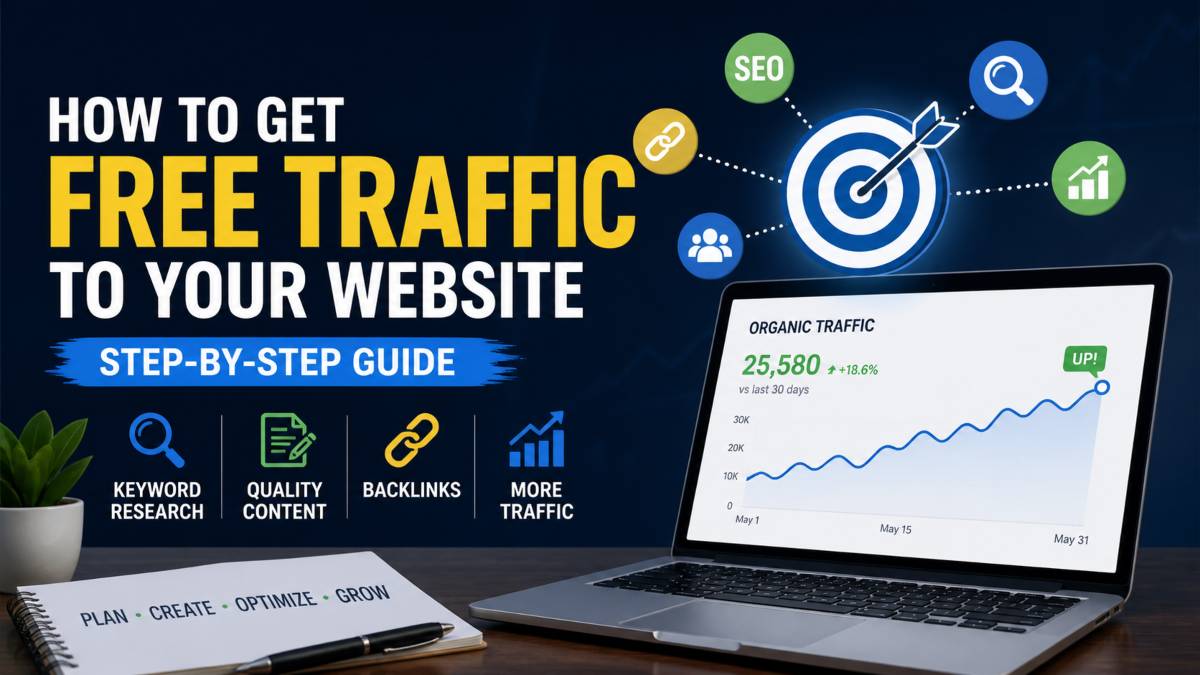
This guide shows you how to get traffic without ads using simple, practical methods. No shortcuts. Just clear steps that help you grow steady, real visitors over time.
Why Organic Traffic Works Better Over Time
Paid vs Organic Traffic Key Differences
Paid traffic is fast. You switch on ads and visitors arrive. The moment you stop paying, that traffic disappears just as quickly. It is rented attention.
Organic traffic works differently. It takes time to build, but it keeps bringing visitors long after the work is done. A well written page can attract clicks for months or even years without extra cost. Instead of renting attention, you are building an asset.
Long Term Benefits of Free Traffic Strategies
Organic growth builds momentum. Each article, each page, and each improvement adds to your total reach. Over time, this creates a steady flow of visitors who are already searching for what you offer.
There is also trust. People often skip ads and choose organic results because they feel more reliable. That trust turns into longer visits, more engagement, and better results overall.
The key is patience. Organic traffic is not instant, but once it starts, it compounds and becomes hard to stop.
Start with Keyword Research That Targets Real Searches
How to Find Low Competition Keywords
Traffic starts with knowing what people are already typing into search. Guessing does not work. You need real data.
Start with tools like Google Keyword Planner and Answer The Public. These tools show actual search queries, not assumptions.
Look for keywords with clear intent and lower competition. For example, instead of targeting a broad term like “SEO tools,” go for something more specific like “best SEO tools for small businesses” or “free SEO tools for beginners.” These phrases may have fewer searches, but the people searching them know exactly what they want.
Also pay attention to questions. Queries like “how to get traffic without ads for a new website” often signal strong intent and easier ranking opportunities.
Why Long Tail Keywords Bring Faster Results
Long tail keywords are longer, more specific phrases. They may seem small, but they bring targeted visitors who are more likely to stay and take action.
Short keywords are crowded. Big websites dominate them. Long tail keywords give smaller sites a fair chance to rank and grow.
When you target many of these specific phrases, traffic starts to build piece by piece. Over time, those small wins add up into steady, reliable growth.
Create Content That Matches Search Intent
Types of Content That Rank
Search engines favor content that answers a question clearly and fully. The format matters just as much as the topic.
Guides work well when users want step by step help. A topic like “how to get traffic without ads” fits perfectly into a detailed guide that walks through each method.
Lists are strong when users want quick options. For example, “10 ways to get website traffic for free” gives readers a fast overview with clear takeaways.
Case style content builds trust. Showing how a site grew from zero to steady traffic gives readers proof that the method works. It also adds depth that simple tips often lack.
The key is to match the format with what the reader expects when they search.
Writing Content That Keeps Readers Engaged
Clarity wins every time. Keep sentences short. Use simple words. Get to the point fast.
Start with a strong opening that tells the reader they are in the right place. Then move through the topic in a logical order. Each section should answer one clear question.
Break content into small paragraphs so it feels easy to read. Use examples to make ideas concrete. Instead of saying “use keywords,” show what that looks like in real terms.
Cut anything that does not help the reader. If a sentence does not add value, remove it.
Good content does not try to impress. It helps. When readers find exactly what they need, they stay longer, trust your site more, and come back again.
Optimize On Page SEO for Better Visibility
Where to Place Keywords for Maximum Impact
Placing keywords in the right spots helps search engines understand your page fast. You do not need to overdo it. You need to be precise.
Use this simple checklist:
Place your main keyword in the title of the page
Include it in the first paragraph so the topic is clear from the start
Add it to at least one subheading where it fits naturally
Use it in the meta description to improve clicks from search results
Keep your URL short and include the keyword
Add related terms across the content to support the main topic
Keep it natural. If it sounds forced, it probably is.
Improve Page Speed and Mobile Experience
A slow site pushes visitors away before they even read a line. Speed and mobile layout both matter.
Start with basics. Compress images so pages load faster. Use a clean theme or design that does not rely on heavy files. Remove plugins or scripts you do not need.
Make sure your site works well on phones. Text should be easy to read without zooming. Buttons should be easy to tap. Pages should load quickly even on slower connections.
Test your site using tools like Google PageSpeed Insights. It shows what needs fixing in simple terms.
Small fixes here can lead to better rankings and longer visits.
Use Internal Linking to Boost Rankings
How Internal Links Improve Site Structure
Internal links connect one page of your site to another. They guide both readers and search engines through your content.
Think of your site as a map. Each link shows a path from one topic to the next. When pages are connected in a clear way, search engines understand which content matters most and how topics relate.
For readers, this creates a smooth journey. Someone lands on one article, finds a helpful link, and continues exploring. This keeps them on your site longer and builds trust over time.
Simple Internal Linking Best Practices
Start by linking from high traffic pages to newer or less visible content. This helps those pages get attention faster.
Use clear anchor text. Instead of writing “click here,” use words that describe the page you are linking to, like “free traffic strategies” or “keyword research tips.”
Keep links relevant. Only connect pages that naturally fit together. Too many random links can confuse readers and weaken the structure.
Review your content regularly. When you publish a new article, go back and add links from older posts where it makes sense. Over time, this builds a strong, connected site that is easy to navigate.
Update Existing Content for Quick Traffic Gains
How to Refresh Old Blog Posts
Old content is often the fastest way to get more traffic. You already have pages indexed. You just need to make them better.
Start by finding posts that once performed well or still get a few visits. These are your quick wins. Update the title to make it clearer and more appealing. Rewrite the introduction so it hooks the reader right away. Add new sections if the topic feels thin or outdated.
Check your keywords. If search trends have shifted, adjust your content to match what people are searching now.
Adding New Data and Improving Structure
Fresh information signals that your content is still useful. Update stats, examples, and any outdated references. Even small updates can improve rankings.
Improve the layout as well. Break long paragraphs into shorter ones. Add subheadings so readers can scan easily. Insert internal links to guide readers to related content on your site.
Make sure the content answers the main question clearly from start to finish. When a page becomes easier to read and more useful, it often climbs in search results without needing anything new.
Build Backlinks Without Paying for Them
Guest Blogging on Niche Websites
Guest blogging is one of the most direct ways to earn links and reach a new audience. Look for blogs in your niche that accept contributions. Focus on sites with active readers, not just high numbers.
Pitch simple, useful topics that fit their audience. Keep your message short and clear. Show that you understand their content style. When your article is published, include a natural link back to your site within the content or author bio.
The goal is not just a link. It is exposure to readers who may visit your site and stay.
Broken Link Building Made Simple
Broken link building is a smart way to offer value while gaining links. Find pages in your niche that contain dead links. Then create or use existing content on your site that matches what the missing link used to provide.
Reach out to the site owner. Let them know about the broken link and suggest your content as a replacement. Keep your message polite and direct. Many site owners appreciate the help and update the link.
Creating Content That Attracts Links
Some content earns links on its own because it is useful and easy to reference. This includes checklists, step by step guides, and simple tools.
Focus on creating pages that solve a clear problem. Make them easy to read and easy to share. When your content becomes a helpful resource, other sites naturally link to it over time.
Consistent effort in these methods builds a strong backlink profile without spending money.
Promote Content Through Free Channels
Email Marketing for Repeat Traffic
Publishing is only half the job. Distribution is what brings readers in.
Email gives you direct access to people who already trust your content. Start by offering something useful in exchange for sign ups, like a checklist or short guide. Once you build a list, send simple updates when you publish new content.
Keep emails short and focused. One idea, one link, one clear reason to click. Over time, this becomes a steady source of repeat visitors.
Social Media Strategies That Work Without Ads
You do not need paid boosts to get attention on social platforms. You need consistency and clarity.
Share small pieces of your content instead of posting full links every time. Turn a blog post into short tips, quick threads, or simple visuals. This makes your content easier to consume and share.
Focus on platforms where your audience already spends time. Post regularly, reply to comments, and stay active in conversations. Visibility grows when you show up often.
Using Communities Forums Reddit LinkedIn
Communities are powerful if used the right way. Join spaces where your topic is already being discussed.
Answer questions with real value. Do not push links right away. Build trust first. When your content truly helps, you can share it as a useful resource.
Sites like Reddit and LinkedIn can drive strong traffic when you engage with intent, not promotion.
Use Rich Snippets and Schema to Stand Out
What is Schema Markup
Schema markup is a small piece of code added to your page that helps search engines understand your content better. It tells them what your page is about in a structured way.
For example, you can mark a section as a FAQ or a step by step guide. This makes your content easier to read for search engines and increases your chances of getting enhanced results on the search page.
How FAQs and How To Snippets Increase Clicks
When your content appears with extra details like questions and answers, it stands out. These enhanced results often take more space and catch attention quickly.
Add a clear FAQ section that answers common questions. Keep answers short and direct. For how to content, structure your steps in a clean, logical order.
These small changes can lead to higher click rates and more traffic without extra effort.
Track Performance and Improve Results
Monitor Traffic with Google Analytics
You cannot improve what you do not measure. Start with a few key numbers instead of trying to track everything.
Focus on total visitors, where they come from, and which pages they visit most. These metrics show what is working and where to put more effort. If a page is getting steady traffic, look for ways to expand it or link it to other content.
Also watch how long people stay on your site. If they leave quickly, your content may not match what they expected.
Use Google Search Console for SEO Insights
Search Console shows how your site appears in search results. Pay attention to impressions, clicks, and average position.
Look for keywords where your pages rank on the second page. Small updates can move them higher and bring more traffic.
Check for errors that may affect visibility, like pages not indexed or mobile issues. Fixing these problems helps your content perform better without creating anything new.
Consistency: The Real Growth Driver
How Often You Should Publish
Growth comes from showing up again and again. One strong post will not move the needle on its own. Aim for a steady rhythm you can maintain. For most sites, one to two posts each week works well.
The key is not volume alone. Each piece should solve a clear problem and match what people are searching. A smaller number of useful posts beats a large number of weak ones.
Testing and Scaling What Works
Pay attention to what brings traffic. Some topics will perform better than others. When you spot a page that gains traction, build around it. Create related content and link it together.
Try one change at a time so you can see what makes a difference. Over time, patterns appear. When you repeat what works, traffic grows in a steady and reliable way.
Conclusion
Getting traffic without ads is not about luck. It is about doing the right things, again and again.
Start with clear keyword research. Create content that answers real questions. Make your pages easy to read and easy to find. Then share that content through channels you control and communities where people are already active.
Results may feel slow at first. That is normal. Each step builds on the last. One page turns into ten. Ten turns into steady traffic that keeps growing.
Stick with the process. Focus on what works. Over time, your site becomes a reliable source of visitors without spending anything on ads.