A shopper lands on your store at 2:13 am. No sales team, no human touch, just a quiet interface. Yet within minutes, they find the right product, see a price that feels fair, get a quick answer to a question, and check out without hesitation. That sequence is not luck. It is AI at work, quietly shaping every step.
Here is the reality. Stores using AI are reporting conversion lifts above 150 percent, higher order values, and steady revenue growth that compounds over time. The phrase 10X sales sounds bold, but it is rarely a single leap. It is the result of layered improvements working together. Smarter recommendations increase basket size. Better pricing improves margins. Faster responses reduce drop offs. Each gain stacks on the next.
This is not about replacing people or chasing trends. It is about removing friction at scale and making sharper decisions using real data. AI gives ecommerce stores the ability to react instantly, learn continuously, and sell with precision. The outcome is not overnight success, but a system that grows stronger with every interaction.
Why AI Is Changing the Game for Ecommerce
From Guesswork to Data Driven Decisions
For years, ecommerce ran on instinct dressed up as strategy. Store owners picked products based on trends, set prices by watching competitors, and hoped customers would follow a predictable path. It worked, but only to a point.
AI flips that model. Instead of relying on assumptions, it reads behavior in real time. Every click, scroll, and purchase feeds a system that learns what customers want before they say it. Product recommendations adjust on the fly. Prices shift based on demand and competition. Messages land at the exact moment a buyer is ready.
The result is sharper performance across the board. Conversion rates rise because shoppers see what fits them. Average order value grows as suggestions feel relevant, not random. Retention improves because the experience feels personal without being intrusive. It is less guesswork, more precision.
The Real Impact on Revenue Growth
The numbers tell a clear story. Stores using AI driven strategies report conversion increases of over 150 percent. Revenue jumps by around 40 percent when personalization and automation work together. Average order value climbs by 15 to 30 percent through smart upselling and pricing.
These are not isolated wins. AI acts as a multiplier. Each improvement feeds the next, creating a system where small gains stack into serious growth. It is not a shortcut to success. It is a smarter way to build it.
Key AI Use Cases That Drive Sales Growth
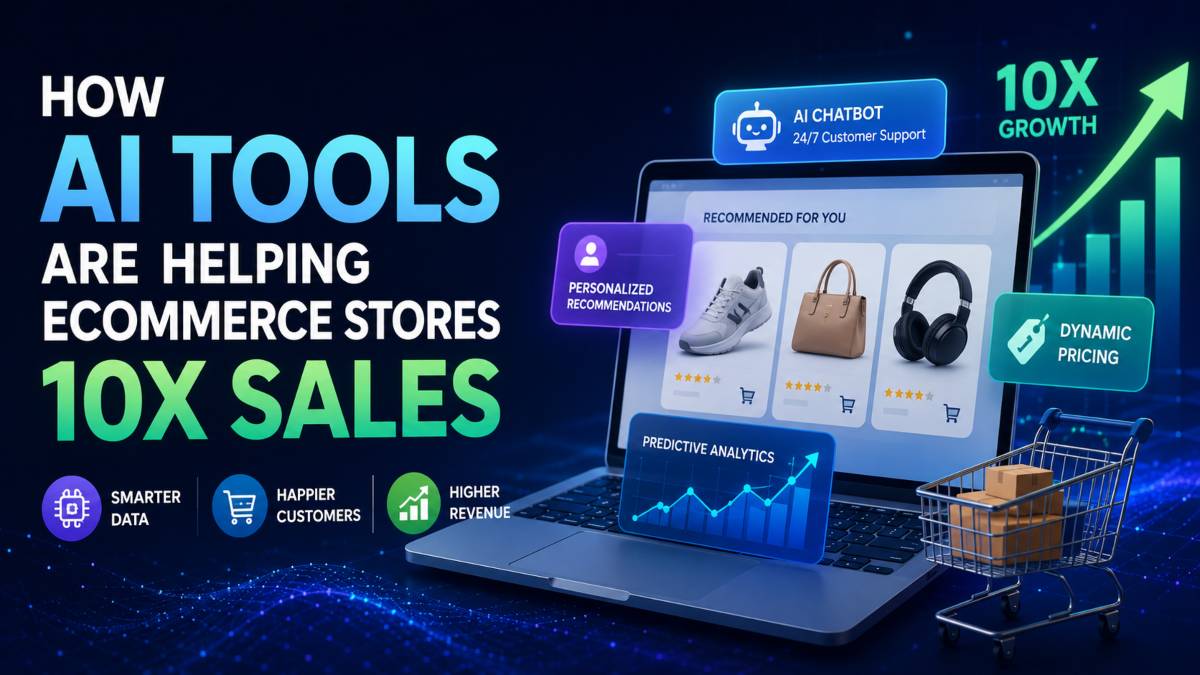
Personalized Product Recommendations
Walk into a great store and the staff seem to know exactly what you might like. AI brings that same instinct online, but at scale. It studies browsing patterns, past purchases, time spent on pages, even what a customer ignores. Then it reshapes the storefront in real time.
This is where serious revenue starts to build. Amazon attributes around 35 percent of its revenue to its recommendation engine. That is not a small lift. It is a core driver of how people discover and buy.
For smaller stores, the principle is the same. When shoppers see products that match their taste, they stay longer, explore more, and add extra items to their cart. It feels natural, not forced, and that is what increases both conversions and order value.
AI Chatbots That Convert Visitors Into Buyers
Every unanswered question is a missed sale. AI chatbots close that gap instantly. They respond in seconds, guide customers to the right product, and remove hesitation at the exact moment it appears.
This speed matters. Stores using AI chat support have seen sales rise by as much as 67 percent. Not because the chatbot is clever, but because it is always available. No delays, no lost interest, no abandoned carts due to simple confusion.
The real strength lies in reducing friction. A customer unsure about sizing, delivery, or product details gets clarity right away. That small interaction often becomes the difference between browsing and buying.
Dynamic Pricing for Competitive Advantage
Pricing used to be static. Set a number, adjust it later, hope it holds up against competitors. AI replaces that slow cycle with constant movement.
With dynamic pricing, stores can adjust prices in real time based on demand, competitor activity, and customer behavior. If demand rises, margins can increase. If competition tightens, prices can shift to stay attractive.
This is not about racing to the lowest price. It is about finding the right price at the right moment. Margins improve because decisions are based on live data, not guesswork. Over time, these small pricing shifts protect profit while still driving sales.
Predictive Analytics and Inventory Planning
Nothing kills momentum like running out of stock or overloading on products that do not sell. AI tackles both problems by looking ahead.
Predictive systems analyze past sales, seasonal trends, and current demand signals to forecast what will sell and when. That insight helps stores stock smarter, avoid shortages, and reduce excess inventory sitting idle.
The benefit goes beyond logistics. Better inventory planning means smoother cash flow and fewer missed opportunities. When the right product is available at the right time, sales follow naturally. AI does not just react to demand. It prepares for it.
Best AI Tools for Ecommerce Stores
Choosing the right tools is less about chasing trends and more about picking systems that move the numbers that matter. The strongest options focus on revenue, conversion, and customer experience, and they slot neatly into platforms like Shopify without turning your store into a technical maze.
Tools for Personalization and Recommendations
Barilliance sharpens what your customers see the moment they land. It studies behavior and serves product suggestions that feel tailored, not random. The result is simple. More clicks turn into purchases, and baskets grow without forcing the sale.
Octane AI takes a slightly different route. It uses quizzes and guided flows to learn about each shopper, then recommends products based on their answers. This approach works well for stores that want to recreate the feel of a personal shopping assistant. More engagement, stronger intent, better conversion.
Customer Support and Chat Automation
Gorgias handles a large share of customer questions before your team even sees them. Fast replies mean fewer abandoned carts and less pressure on support staff. Customers get what they need quickly, and sales keep moving.
Crescendo.ai pushes this further by acting as a live sales assistant. It answers questions, suggests products, and nudges customers toward checkout in real time. The outcome is smoother buying journeys and higher order values.
Pricing and Analytics Tools
Prisync keeps your pricing sharp without constant manual checks. It tracks competitors and market shifts, then adjusts prices to stay competitive while protecting margins. This balance is where long term profit lives.
Salesforce Einstein turns raw data into clear direction. It predicts customer behavior, identifies high value buyers, and helps you act on those signals. Better decisions lead to stronger returns across campaigns and product strategy.
Search and Discovery Optimization
Clerk.io makes it easier for customers to find what they want without friction. Its smart search and recommendation system surfaces relevant products quickly, which keeps shoppers engaged and reduces drop offs.
Across all these tools, the pattern is clear. They plug into your store, often through platforms like Shopify, and start working on the parts of your business that directly affect revenue. Not more complexity, just smarter systems that turn attention into sales.
Real Examples of AI Driving Ecommerce Growth
Case Study: 156% Conversion Growth in 92 Days
156 percent. That is how much one ecommerce platform increased its conversion rate after rolling out AI driven personalization alongside dynamic pricing. The shift was not cosmetic. It changed how customers moved through the store.
Product recommendations became sharper, matching intent in real time. Pricing adjusted based on demand and competitor signals, removing hesitation at checkout. Together, these changes lifted average order value by 67 percent and added 8.5 million dollars in new revenue within just 92 days.
The lesson is clear. When personalization and pricing work together, they do not just improve performance. They compound it. Each interaction becomes more relevant, and each purchase becomes more likely.
ROI Examples from Leading Brands
38 times return. That is what Spanx achieved by using AI powered customer engagement tools. The system handled conversations, guided shoppers, and increased conversions without adding pressure to human teams.
84 percent growth in revenue per visit. That is the result reported by Adobe after applying AI to personalize customer journeys over six months. Visitors did not just browse. They found what they wanted faster and spent more when they did.
These numbers are not outliers. They show what happens when AI is applied with focus. The gains stack, the experience improves, and growth becomes a pattern rather than a one off spike.
How to Implement AI in Your Ecommerce Store
Start With Data and Customer Behavior
Before adding any tool, get clear on what is already happening in your store. Look at your baseline metrics. Conversion rate, average order value, bounce rate, repeat purchases. These numbers tell you where the real gaps are.
Then study how customers behave. What pages do they visit most. Where do they drop off. What products get attention but not purchases. AI works best when it has clean, useful data. Without that, even the best tool will struggle to deliver results.
Focus on High Impact Areas First
Start small, but start smart. The biggest wins usually come from product recommendations and chat support. These touch the customer at key decision points.
Recommendations increase order value by showing relevant products at the right time. Chat tools remove doubt when a shopper hesitates. Together, they improve both conversion and customer experience without overcomplicating your setup.
Avoid adding too many tools at once. Focus on one or two areas where you can see clear movement in revenue.
Test, Measure, and Improve
AI is not a set and forget system. It needs testing. Run A B tests over a 90 day period to compare what works and what does not. Try different recommendation placements, pricing strategies, or chat responses.
Track the results closely. Look for steady improvements, not quick spikes. Small gains across multiple areas often lead to stronger long term growth than one big change.
Scale What Works
Once you see consistent results, scale them. Expand successful strategies across more products, more pages, or new customer segments.
This is where growth starts to build momentum. Improvements stack over time, leading to compounding gains. Many stores see returns in the range of 300 to 600 percent within the first year when they scale what works instead of constantly starting over.
Common Mistakes to Avoid
Using Too Many Tools Too Soon
It is tempting to install every new AI tool and expect a quick lift in sales. That usually backfires. Too many tools create noise, slow down your site, and make it harder to see what is actually working. Start with one or two tools that target clear problems. Get results there first, then expand with control.
Ignoring Data Quality
AI runs on data, and poor data leads to poor results. If your product details are incomplete or your tracking is messy, the system will make weak decisions. Clean product titles, accurate pricing, and proper tracking are not optional. They are the base that everything else depends on.
Expecting Instant Results
AI improves performance over time. It learns from customer behavior and gets better with each interaction. Expecting overnight growth leads to frustration and wrong decisions. Focus on steady progress. Give the system time to learn, test, and adjust. The real gains come from consistency, not quick wins.
The Future of AI in Ecommerce
Smarter Personalization at Scale
The next phase of AI in ecommerce is not louder, it is sharper. Personalization will move beyond simple product suggestions into full store experiences shaped in real time. Every visitor will see a version of your store that fits their taste, budget, and intent.
This goes deeper than showing related items. Layouts may shift, offers may adjust, and messaging may change based on how a customer behaves in the moment. What feels like a single store will quietly operate as thousands of tailored experiences. The result is higher relevance without adding complexity for the business.
Fully Automated Customer Journeys
Customer journeys are becoming more fluid. AI will connect each step, from first visit to repeat purchase, without gaps or delays.
A shopper might arrive through a search, receive tailored recommendations, get instant answers through chat, and see follow up messages that match their interests. Each step flows into the next without manual input.
This does not remove control from store owners. It removes friction from the system. The focus shifts from managing tasks to guiding strategy. As automation improves, ecommerce stores will spend less time reacting and more time growing with clarity and precision.
Conclusion
AI is not a silver bullet. It is a system builder. The stores seeing serious growth are not chasing hype, they are stacking small, smart improvements that compound over time.
Better recommendations lift order value. Faster responses reduce hesitation. Smarter pricing protects margins while staying competitive. Each layer adds weight to the next until growth stops feeling random and starts feeling controlled.
The path is clear. Start with your data. Focus on areas that directly affect revenue. Test what works, then scale it with discipline. That is how the idea of 10X sales moves from bold claim to measurable outcome.
Ecommerce has always been about understanding the customer. AI simply gives you the tools to do it with speed, precision, and consistency. The stores that lean into that shift will not just grow faster. They will build systems that keep growing long after the first gains show up.
Read More: https://coupasoftware.org/how-backlinks-help-your-website-grow/