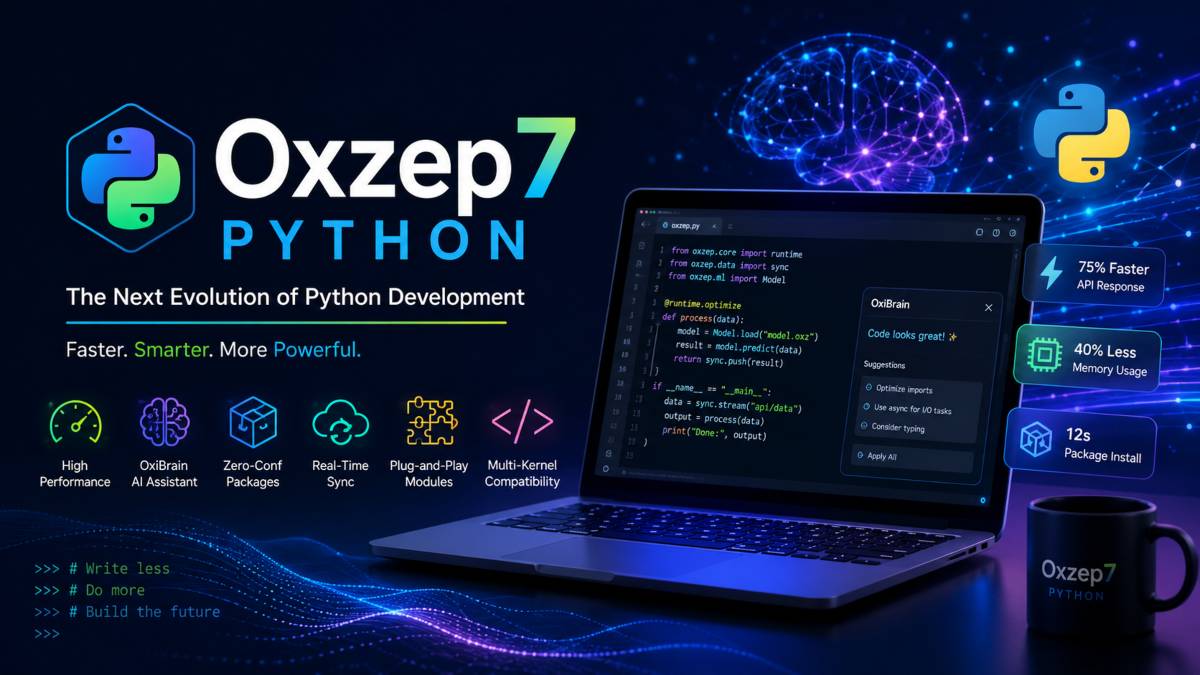
Python has remained one of the most popular programming languages for years, but modern development demands more speed, automation, and intelligent tools than ever before. As projects become larger and workflows grow more complex, developers are searching for solutions that can reduce setup time, improve performance, and simplify daily coding tasks. This is where New Software Oxzep7 Python enters the conversation.
Rather than replacing Python, Oxzep7 Python works alongside it as an advanced development toolkit designed to improve how developers build, test, and manage applications. It combines performance optimization, AI powered assistance, streamlined package management, and automation features within a single environment. The goal is simple: help developers spend less time dealing with configuration issues and more time creating software.
What has attracted attention is its ability to handle common development challenges such as dependency conflicts, resource heavy workloads, and repetitive coding tasks. With built in modules for machine learning, database management, and web development, Oxzep7 Python aims to provide a smoother experience for both beginners and experienced programmers.
Whether you are developing web applications, building AI models, automating business processes, or managing large scale software projects, Oxzep7 Python offers tools designed to increase productivity and improve efficiency. In this guide, you will learn about its core features, major benefits, practical use cases, and how it compares with traditional Python development environments.
What Is New Software Oxzep7 Python?
Understanding Oxzep7 Python
New Software Oxzep7 Python is an advanced development toolkit designed to enhance the Python programming experience. It combines performance optimization, automation features, AI powered assistance, and simplified project management into a single environment. Rather than introducing a new programming language, it builds upon Python’s existing capabilities and helps developers work more efficiently.
The primary purpose of Oxzep7 Python is to remove many of the obstacles that slow down software development. Tasks such as environment setup, package management, debugging, and performance tuning often consume valuable time. Oxzep7 Python aims to simplify these processes by offering integrated tools that work together seamlessly.
Within the Python ecosystem, Oxzep7 Python positions itself as a productivity focused platform. It works alongside Python and supports existing Python development practices while introducing additional features designed for modern applications. This makes it relevant for developers working in web development, artificial intelligence, machine learning, automation, and data analysis.
Is Oxzep7 Python a Programming Language or a Development Tool?
One of the most common misconceptions is that Oxzep7 Python is a completely new programming language. In reality, it is a development tool and enhancement layer built specifically for Python. Developers still write Python code, use Python syntax, and rely on the Python ecosystem.
What makes Oxzep7 Python different is the collection of tools and technologies operating behind the scenes. Features such as runtime optimization, AI assisted coding, advanced debugging capabilities, and intelligent package management help improve the overall development experience without requiring developers to learn a new language.
You can think of Oxzep7 Python as an upgraded workspace that helps Python developers write, manage, and execute code more efficiently while maintaining compatibility with familiar Python workflows.
Why Was Oxzep7 Python Created?
The growing complexity of software projects has exposed several limitations in traditional development environments. Developers frequently face workflow bottlenecks caused by lengthy setup procedures, repetitive configuration tasks, and inefficient project management practices. These challenges can slow development and reduce productivity.
Dependency management is another major concern. Conflicting package versions, unstable environments, and inconsistent deployments can create frustration for both individuals and development teams. Oxzep7 Python addresses these issues through a more structured package management system designed to improve consistency and reliability.
Performance has also become a key consideration. Modern applications often process large volumes of data, support numerous users, or run advanced AI workloads. Standard Python environments may require extensive optimization to meet these demands. Oxzep7 Python was created to help reduce resource consumption, improve execution speed, and simplify performance management, allowing developers to focus more on building applications and less on technical overhead.
Key Features of Oxzep7 Python
One of the biggest reasons developers are paying attention to Oxzep7 Python is its extensive feature set. The platform combines performance improvements, intelligent automation, and simplified development tools within a unified environment. These capabilities are designed to reduce manual work, improve coding efficiency, and support modern software development requirements.
Syntax Abstraction and Flexible Programming Styles
Oxzep7 Python introduces a more adaptable approach to coding by supporting multiple programming styles within the same development environment. This flexibility allows developers to choose the method that best suits their project requirements without making major structural changes.
For teams that prefer declarative development, Oxzep7 Python enables developers to focus on defining desired outcomes rather than writing extensive procedural instructions. This approach can simplify complex workflows and improve code readability.
Functional programming is also supported, making it easier to build modular and reusable code. Developers can create applications using functions as primary building blocks, which often results in cleaner logic and easier maintenance.
At the same time, traditional imperative programming remains fully available. Developers who prefer direct control over program execution can continue using familiar coding patterns. The ability to work across different styles provides greater flexibility and allows teams to adapt their coding practices to specific project needs.
Oxzep Core Runtime Engine
At the heart of the platform is the Oxzep Core Runtime Engine, which is responsible for managing code execution and system resources more efficiently.
One of its most notable functions is advanced memory management. By optimizing how resources are allocated and released, the runtime engine helps reduce memory consumption during application execution. This can be particularly useful for large scale projects and resource intensive workloads.
The engine also improves concurrent processing. Applications handling multiple operations simultaneously can benefit from reduced overhead and improved task coordination. This contributes to smoother performance under demanding conditions.
Another important capability is runtime optimization. The system continuously analyzes code execution and applies performance improvements where possible. Instead of relying solely on static optimization techniques, the runtime engine adapts dynamically to improve speed and efficiency while applications are running.
OxiBrain AI Coding Assistant
Artificial intelligence has become an important part of modern software development, and Oxzep7 Python incorporates this trend through its OxiBrain AI Coding Assistant.
OxiBrain helps developers identify potential problems before they become major issues. Through error prediction capabilities, the assistant can analyze code patterns and highlight areas that may cause failures, bugs, or inefficiencies.
The system also provides intelligent code suggestions while developers work. These recommendations can include optimized libraries, coding improvements, and alternative implementation methods that improve performance or readability.
Another valuable feature is automated refactoring. Instead of manually restructuring large portions of code, developers can rely on OxiBrain to suggest or apply improvements automatically. This can save significant time while helping maintain clean and organized codebases.
Real Time Data Synchronization
Modern applications frequently depend on live data from multiple sources. Oxzep7 Python addresses this need through its real time data synchronization capabilities.
The oxzep.data.sync functionality allows developers to connect variables directly to dynamic data sources. As information changes, linked components can update automatically without requiring extensive manual coding.
This feature simplifies API integrations by reducing the amount of boilerplate code needed to manage data updates. Developers can establish connections more quickly and maintain synchronization with external services more efficiently.
Event streaming support further expands these capabilities. Applications can respond to incoming events in real time, making the system suitable for dashboards, monitoring tools, automation platforms, and other data driven solutions.
Zero Conf Package Management System
Package management has long been a source of frustration within software development. Oxzep7 Python attempts to simplify this process through its Zero Conf Package Management System.
At the center of this system is the Portable Package System, commonly known as PPS. This framework is designed to create consistent and portable project environments that can be shared across different machines and operating systems.
Dependency tracking is another major strength. The system records package relationships and version requirements with greater precision, helping developers avoid compatibility conflicts that often occur in traditional environments.
Oxzep7 Python also focuses on reproducible environments. Teams can create identical development setups regardless of where the project is deployed. This consistency helps reduce deployment errors and makes collaboration more reliable.
Plug and Play Development Modules
Another feature that distinguishes Oxzep7 Python is its collection of ready to use modules. These built in components reduce setup time and allow developers to begin working immediately.
The oxzep.db module provides tools for database interactions. Developers can connect to databases, perform queries, and manage data without spending hours configuring external libraries.
For artificial intelligence and machine learning projects, the oxzep.ml module offers preconfigured tools that simplify model development and data processing tasks. This can help reduce preparation time and accelerate experimentation.
Web developers can benefit from the oxzep.web module, which includes utilities designed to support application development and deployment. Having these capabilities available from the start reduces complexity and streamlines project creation.
Multi Kernel Compatibility
Modern software development often involves multiple programming languages working together within the same project. Oxzep7 Python addresses this requirement through multi kernel compatibility.
Developers can interact with Rust environments directly, making it easier to combine Python’s simplicity with Rust’s performance advantages. This can be useful for applications that require speed and memory efficiency.
The platform also supports C++ integration. Performance critical components can be developed in C++ while maintaining communication with Python based systems.
JavaScript interoperability extends these capabilities even further. Developers can build solutions that connect backend and frontend technologies more smoothly, creating a more unified development workflow.
This multi language support gives teams greater flexibility when designing applications and allows them to choose the best technology for each component without sacrificing compatibility.
Together, these features position Oxzep7 Python as a modern development toolkit focused on speed, automation, flexibility, and developer productivity. From AI assisted coding and runtime optimization to package management and multi language support, the platform provides a broad set of tools aimed at simplifying complex development tasks while improving overall performance.
Performance Benchmarks of Oxzep7 Python
Performance is one of the strongest selling points of Oxzep7 Python. According to available benchmark data, the platform delivers noticeable improvements in execution speed, memory efficiency, package management, and concurrent processing when compared with traditional Python environments. These gains can help developers build faster and more scalable applications while reducing system resource consumption.
| Metric | Traditional Python | Oxzep7 Python |
|---|---|---|
| API Response Time | 180 ms | 75 ms |
| Memory Usage | 310 MB | 190 MB |
| Package Installation | 2 Minutes | 12 Seconds |
| Concurrency Overhead | 40% | 18% |
API Response Speed Comparison
Fast response times are essential for modern applications, especially those serving large numbers of users. Benchmark results show that traditional Python environments average around 180 milliseconds for API responses, while Oxzep7 Python reduces that figure to approximately 75 milliseconds.
This improvement can contribute to smoother user experiences, faster data retrieval, and better performance for web applications, cloud services, and automation systems.
Memory Consumption Analysis
Efficient memory usage becomes increasingly important as applications grow in complexity. Traditional Python environments may consume around 310 MB when running demanding workloads. Oxzep7 Python reportedly reduces memory usage to approximately 190 MB.
Lower memory requirements allow applications to run more efficiently, particularly in cloud environments where resource consumption directly affects operating costs. It can also help improve stability during long running processes.
Package Installation Speed
Setting up development environments often consumes valuable time. Installing dependencies through traditional methods can take around two minutes, especially for larger projects with multiple packages.
Oxzep7 Python significantly speeds up this process through its Portable Package System. Benchmark figures suggest package installation can be completed in as little as 12 seconds. This faster setup process helps developers start projects sooner and reduces delays when configuring new environments.
Concurrency Performance Results
Applications handling multiple requests simultaneously require efficient concurrency management. Traditional Python environments may experience overhead levels reaching 40 percent when processing large numbers of concurrent operations.
Oxzep7 Python reduces this overhead to approximately 18 percent. The result is improved handling of high traffic workloads, better resource utilization, and stronger performance under demanding conditions.
What These Numbers Mean for Developers
These benchmark results highlight Oxzep7 Python’s focus on efficiency and productivity. Faster API responses can improve application performance, while reduced memory consumption helps lower resource requirements. Quicker package installation simplifies project setup, and improved concurrency management supports scalable applications.
For developers working on web platforms, AI projects, automation systems, or enterprise applications, these improvements can translate into faster development cycles, smoother deployments, and more reliable software performance. While actual results may vary depending on project requirements and system configurations, the benchmark data suggests that Oxzep7 Python offers meaningful advantages for performance focused development.
Major Benefits of Using Oxzep7 Python
Beyond its technical features and performance improvements, Oxzep7 Python offers several practical advantages that can make day to day development more efficient. From reducing setup time to supporting artificial intelligence projects, the platform is designed to help developers focus more on building applications and less on managing technical obstacles. These benefits make it an appealing choice for individuals, startups, and development teams seeking a smoother workflow.
Faster Development Cycles
One of the most noticeable benefits of Oxzep7 Python is its ability to accelerate development. Traditional workflows often involve spending significant time configuring environments, managing dependencies, troubleshooting errors, and optimizing performance.
Oxzep7 Python simplifies many of these tasks through automation and integrated development tools. Features such as intelligent code assistance, preconfigured modules, and streamlined package management allow developers to move from idea to implementation more quickly. As a result, projects can reach testing and deployment stages in less time.
Better Resource Management
Efficient resource utilization plays an important role in modern software development. Applications that consume excessive memory or processing power can become costly to maintain and difficult to scale.
Oxzep7 Python includes optimization mechanisms that help manage system resources more effectively. Reduced memory consumption and improved execution efficiency allow applications to operate smoothly even when handling demanding workloads. This can be particularly valuable for cloud based deployments, data intensive applications, and enterprise systems where resource usage directly impacts operating expenses.
Simplified Environment Setup
Setting up a development environment can often be a frustrating process, especially when dealing with package conflicts and dependency issues. New team members may spend hours configuring tools before they can begin contributing to a project.
Oxzep7 Python addresses this challenge with its simplified environment management system. The platform reduces configuration complexity and provides a more consistent setup experience. Developers can create and share project environments more easily, helping teams maintain uniform development standards across multiple systems.
Built In AI and Machine Learning Support
Artificial intelligence and machine learning projects often require numerous libraries, frameworks, and configuration steps before development can begin. This preparation process can create unnecessary delays.
Oxzep7 Python includes built in support for AI and machine learning workflows through dedicated modules and optimized tools. Developers gain access to preconfigured resources that simplify model development, data processing, and workflow automation. This allows teams to spend more time working on solutions rather than preparing infrastructure.
Improved Stability for Large Applications
As software projects grow, maintaining stability becomes increasingly important. Large applications often process significant amounts of data, handle numerous user requests, and depend on multiple external services.
Oxzep7 Python is designed to improve reliability through better resource management and runtime optimization. These capabilities help reduce unexpected interruptions and contribute to smoother operation under heavy workloads. For organizations managing business critical systems, greater stability can lead to fewer disruptions and improved user satisfaction.
Cross Platform Compatibility
Modern development teams frequently work across different operating systems. Ensuring that applications function consistently on Windows, macOS, and Linux can sometimes present challenges.
Oxzep7 Python supports major operating systems, allowing developers to work within their preferred environments without sacrificing compatibility. This flexibility makes collaboration easier and reduces issues related to platform specific configurations.
Reduced Maintenance Effort
Long term software maintenance can consume substantial time and resources. Updating dependencies, resolving compatibility issues, and optimizing performance often require ongoing attention.
Oxzep7 Python helps reduce maintenance requirements through automated tools, intelligent dependency management, and built in optimization features. By minimizing repetitive administrative tasks, developers can dedicate more time to feature development, innovation, and improving user experiences.
Collectively, these benefits make Oxzep7 Python a practical solution for developers seeking faster workflows, improved performance, and a more streamlined approach to modern software development.
Real World Use Cases of Oxzep7 Python
The true value of any development platform becomes clear when it is applied to real projects. Oxzep7 Python is designed to support a wide range of development scenarios, from building modern web applications to managing complex artificial intelligence systems. Its combination of performance optimization, automation tools, and integrated development features makes it suitable for both individual developers and large teams.
Web Application Development
Web development is one of the most common use cases for Oxzep7 Python. Using the built in oxzep.web module, developers can create and manage web applications with less configuration and setup work.
The platform’s optimized execution engine can help improve response times and overall application performance. Combined with simplified dependency management, this allows developers to focus on building features and improving user experiences rather than spending time on infrastructure related tasks.
Artificial Intelligence Projects
Artificial intelligence development often requires powerful computing resources and extensive software configuration. Oxzep7 Python addresses these challenges by providing integrated AI tools and preconfigured resources that simplify project setup.
Developers can work with intelligent systems more efficiently while taking advantage of performance improvements that support faster processing. This makes the platform suitable for applications such as intelligent assistants, recommendation systems, natural language processing solutions, and predictive analytics tools.
Machine Learning Workflows
Machine learning projects involve multiple stages, including data preparation, model training, testing, and deployment. Managing these workflows can become complicated when using traditional development environments.
With the oxzep.ml module, Oxzep7 Python provides tools designed to streamline machine learning development. Developers can access built in resources that support model creation and data processing while reducing the amount of manual configuration required. This helps accelerate experimentation and shortens the path from concept to production.
Data Science and Analytics
Organizations increasingly rely on data driven decision making, creating a strong demand for efficient analytics tools. Oxzep7 Python supports data science workflows through optimized processing capabilities and integrated development resources.
Data scientists can work with large datasets more efficiently while benefiting from improved memory management and execution performance. Whether analyzing customer behavior, generating reports, or building predictive models, the platform provides a more streamlined environment for handling complex analytical tasks.
Process Automation
Automation has become an essential part of modern business operations. Companies use automation to reduce repetitive work, improve productivity, and minimize human error.
Oxzep7 Python is well suited for automation projects because of its intelligent tools and workflow optimization features. Developers can create scripts and automated systems that handle routine tasks such as data collection, file management, reporting, and system monitoring. Faster execution and simplified deployment further enhance its usefulness in automation focused environments.
High Traffic Applications
Applications that serve large numbers of users must maintain consistent performance under heavy demand. Traditional environments may experience increased resource consumption as traffic levels grow.
Oxzep7 Python’s optimized runtime engine and improved concurrency handling make it a strong option for high traffic applications. Lower memory usage and reduced processing overhead help maintain responsiveness even when managing large volumes of requests. This makes the platform suitable for online services, enterprise applications, and data intensive platforms.
Collaborative Development Teams
Software development is often a team effort, and maintaining consistency across multiple contributors can be challenging. Different environments, dependency conflicts, and configuration issues can slow progress and create unnecessary complications.
Oxzep7 Python helps address these challenges through its structured package management system and reproducible environments. Team members can work with consistent project configurations, reducing compatibility problems and simplifying collaboration. This creates a smoother development experience and helps teams deliver projects more efficiently.
From web applications and machine learning systems to automation platforms and enterprise software, Oxzep7 Python offers practical solutions for a variety of real world development needs. Its flexibility and performance focused design make it a versatile option for modern software projects.
Oxzep7 Python vs Traditional Python Development
For many developers, the biggest question is whether Oxzep7 Python offers meaningful advantages over a traditional Python development environment. While standard Python remains one of the most popular and reliable programming languages in the world, Oxzep7 Python introduces additional tools and optimizations designed to simplify development and improve efficiency.
The following comparison highlights some of the key differences between the two approaches.
| Aspect | Traditional Python | Oxzep7 Python |
|---|---|---|
| Setup and Configuration | Manual environment creation and package installation | Simplified setup with minimal configuration |
| Performance | Standard execution speed | Optimized runtime engine for faster execution |
| AI Capabilities | Requires separate AI tools and extensions | Built in AI assistance through OxiBrain |
| Dependency Management | Managed through external package tools | Structured package management with PPS |
| Debugging | Relies on third party tools and extensions | Advanced debugging tools integrated into the platform |
| Developer Productivity | Multiple tools often required | Centralized environment with automation features |
Setup and Configuration
Traditional Python development typically requires developers to manually create virtual environments, install dependencies, and configure project settings. While this process is familiar to experienced programmers, it can be time consuming for beginners and teams working across multiple systems.
Oxzep7 Python simplifies setup by providing a more streamlined environment. Its integrated tools reduce the amount of manual configuration required, allowing developers to start building projects more quickly.
Performance Differences
Performance is one of the areas where Oxzep7 Python aims to distinguish itself. Traditional Python environments perform well for many applications but may require additional optimization for demanding workloads.
Oxzep7 Python introduces an optimized runtime engine that focuses on improving execution speed, reducing memory consumption, and enhancing concurrency handling. These improvements can be beneficial for applications that process large datasets or support significant user activity.
AI Capabilities
Artificial intelligence has become a valuable part of modern software development. In a traditional Python setup, developers often need to install separate tools, extensions, and libraries to access AI powered features.
Oxzep7 Python includes OxiBrain, an integrated AI assistant that can suggest code improvements, identify potential issues, and assist with refactoring tasks. This built in functionality provides a more intelligent development experience without requiring additional configuration.
Dependency Management
Managing dependencies can be one of the more challenging aspects of software development. Traditional Python projects often rely on external package management tools and configuration files to maintain consistency.
Oxzep7 Python addresses this challenge through its Portable Package System. By tracking dependencies more systematically, it helps reduce version conflicts and supports more consistent project environments across different systems.
Debugging Experience
Debugging is an essential part of the development process. Traditional Python developers frequently depend on external editors, plugins, and debugging tools to identify and resolve issues.
Oxzep7 Python incorporates advanced debugging capabilities directly into its environment. This integration can simplify troubleshooting and help developers identify problems more efficiently throughout the development cycle.
Developer Productivity
Productivity often depends on how much time developers spend building features compared to managing tools and configurations. Traditional Python environments may require switching between multiple applications and utilities to complete routine tasks.
Oxzep7 Python brings many of these functions together within a single platform. Automation features, AI assistance, optimized workflows, and integrated development tools help reduce repetitive work and support a more efficient coding experience.
While traditional Python remains a dependable choice for countless projects, Oxzep7 Python offers additional functionality aimed at simplifying development and improving performance. For developers seeking a more streamlined workflow, the platform presents an interesting alternative that combines familiar Python development with modern productivity focused enhancements.
Who Should Use Oxzep7 Python?
Oxzep7 Python is designed to serve a wide range of users, from experienced software professionals to newcomers learning their first programming language. Its combination of performance improvements, AI powered tools, and simplified workflows makes it suitable for various development needs. Whether you are building applications, analyzing data, or creating automation systems, the platform offers features that can help improve efficiency and reduce complexity.
Python Developers
Python developers are among the primary users of Oxzep7 Python. Those who regularly work with web applications, backend services, data processing systems, or custom software projects can benefit from its optimized runtime engine and streamlined development environment. The platform helps reduce time spent on configuration and maintenance, allowing developers to focus more on writing and improving code.
AI and Machine Learning Engineers
Artificial intelligence and machine learning projects often involve complex environments, numerous libraries, and demanding computational workloads. Oxzep7 Python provides built in support for AI related development, making it an attractive option for engineers working with predictive models, intelligent applications, and data driven systems. Its integrated tools can help simplify setup and improve workflow efficiency.
Data Scientists
Data scientists frequently work with large datasets, analytical models, and visualization tools. Efficient resource management and faster processing capabilities can make a significant difference when handling complex analyses. Oxzep7 Python offers features that support data preparation, model development, and data processing tasks, helping professionals work more productively with large volumes of information.
Automation Specialists
Automation specialists create systems that reduce manual work and improve operational efficiency. From workflow automation to system monitoring and task scheduling, these projects often require reliable performance and minimal maintenance. Oxzep7 Python provides tools that simplify automation development while supporting scalable and efficient execution.
Development Teams
Teams working on shared projects can benefit from Oxzep7 Python’s structured environment management and dependency tracking capabilities. Consistent project configurations help reduce compatibility issues between team members and make collaboration more efficient. These advantages can be especially valuable for organizations managing large codebases or distributed development teams.
Beginners Learning Python
New programmers often struggle with environment setup, package installation, and development tool configuration. Oxzep7 Python simplifies many of these processes, making it easier for beginners to start coding without becoming overwhelmed by technical setup requirements. The platform’s user friendly approach allows learners to focus on understanding Python concepts while spending less time troubleshooting development environments.
With its broad feature set and flexible design, Oxzep7 Python appeals to both technical experts and newcomers, making it a versatile solution for modern software development.
Potential Limitations and Considerations
While Oxzep7 Python offers a variety of features designed to improve development workflows, it is important to evaluate both its strengths and its limitations. Like any emerging technology, developers should carefully consider their project requirements, team experience, and long term goals before adopting a new development platform.
Learning Curve
Although Oxzep7 Python aims to simplify development, users may still need time to become familiar with its unique tools, modules, and workflow processes. Developers who are accustomed to traditional Python environments may require an adjustment period before they can fully utilize features such as OxiBrain, the Oxzep runtime engine, and the Portable Package System.
For beginners, the simplified setup process can be helpful, but understanding the platform’s advanced capabilities may still require additional learning and practice.
Community Adoption
One factor that influences the success of any development platform is the size and activity of its user community. Traditional Python benefits from a massive global community, extensive documentation, and countless tutorials, forums, and third party resources.
As a newer platform, Oxzep7 Python may not yet offer the same level of community support. Developers could encounter fewer learning resources, smaller discussion groups, and a more limited pool of shared solutions when troubleshooting issues.
Ecosystem Maturity
The Python ecosystem has evolved over decades and includes a vast collection of mature libraries, frameworks, and development tools. Oxzep7 Python is still developing its presence within this landscape.
As the platform grows, new integrations and resources are likely to become available. However, some organizations may prefer to wait until the ecosystem becomes more established before adopting it for large scale or mission critical projects.
Compatibility Requirements
Before implementing Oxzep7 Python, developers should verify compatibility with their existing tools, libraries, and workflows. While the platform is designed to work alongside Python, certain projects may depend on specialized packages or configurations that require additional testing.
Organizations with complex infrastructures should carefully evaluate integration requirements before migrating development environments.
When Traditional Python May Still Be Suitable
Traditional Python remains an excellent choice for many projects. Applications with simple requirements, established workflows, or strict dependency on widely used Python tools may not require the additional functionality offered by Oxzep7 Python.
Teams that already have stable development processes and mature deployment pipelines may find that standard Python continues to meet their needs effectively. In these cases, the decision to adopt Oxzep7 Python should be based on whether its productivity and performance benefits justify the transition effort.
Getting Started With Oxzep7 Python
Getting started with Oxzep7 Python is designed to be straightforward, even for developers who are new to advanced development environments. With its simplified setup process and integrated tools, users can begin building applications more quickly than with many traditional workflows. Understanding the basic requirements and following a structured setup process can help ensure a smooth experience from the beginning.
System Requirements
Before installing Oxzep7 Python, it is important to confirm that your system meets the necessary requirements. The platform supports Python 3.8 and newer versions and is compatible with major operating systems, including Windows, macOS, and Linux.
For optimal performance, developers should use a modern processor, sufficient RAM for their project workload, and adequate storage space for packages and development files. Projects involving artificial intelligence, machine learning, or large datasets may benefit from more powerful hardware and GPU support where available.
Installation Process
One of the platform’s key advantages is its simplified installation experience. Unlike traditional development environments that often require extensive manual configuration, Oxzep7 Python aims to reduce setup complexity.
The general installation process involves downloading the software package, following the installation wizard, and verifying that the environment is properly configured. Once installed, developers can access the built in tools, modules, and package management system without spending significant time on additional setup tasks.
It is always recommended to review the latest installation documentation to ensure compatibility with your operating system and development environment.
First Project Setup
After installation, creating a first project is typically a simple process. Developers can initialize a new workspace, organize project files, and begin writing Python code within the Oxzep7 environment.
Built in modules such as oxzep.db, oxzep.ml, and oxzep.web can be incorporated as needed, depending on project requirements. Since the platform focuses on reducing configuration overhead, developers can spend more time building features and testing functionality rather than managing project settings.
Starting with a small sample application is often the best way to become familiar with the platform’s workflow and available tools.
Recommended Learning Resources
New users should take advantage of official documentation, installation guides, tutorials, and community resources whenever available. These materials can provide valuable guidance on platform features, project setup, package management, and workflow optimization.
Video tutorials, technical blogs, developer forums, and practical examples can also help accelerate the learning process and provide solutions to common questions.
Best Practices for New Users
To get the most value from Oxzep7 Python, new users should begin with smaller projects before moving on to larger applications. This approach allows developers to understand the platform’s capabilities without becoming overwhelmed.
It is also a good idea to explore built in modules, experiment with OxiBrain features, and become familiar with the package management system early in the learning process. Maintaining organized project structures and keeping dependencies updated can further improve long term productivity.
By following these practices, developers can build confidence with the platform and take full advantage of the tools available within the Oxzep7 Python ecosystem.
Final Thoughts
New Software Oxzep7 Python introduces a fresh approach to Python development by combining performance optimization, intelligent automation, AI powered assistance, and simplified project management within a single environment. Rather than replacing Python, it enhances the development experience and addresses many of the challenges developers encounter when managing modern software projects.
Among its most notable strengths are its optimized runtime engine, integrated OxiBrain assistant, streamlined package management system, and ready to use development modules. These features can help improve coding efficiency, reduce setup complexity, and support resource intensive applications across a variety of industries.
Oxzep7 Python appears particularly well suited for Python developers, AI and machine learning engineers, data scientists, automation specialists, and development teams seeking a more productive workflow. Beginners may also appreciate its simplified setup process and user friendly environment.
As demand continues to grow for faster development cycles and smarter coding tools, platforms like Oxzep7 Python are likely to attract increasing attention. While the ecosystem is still developing and adoption may take time, its focus on performance, automation, and developer productivity positions it as an interesting option for the future of Python based software development.
For developers looking to streamline workflows and explore modern development tools, Oxzep7 Python is certainly worth watching.
Read More: https://coupasoftware.org/how-to-build-a-lean-business-using-ai/