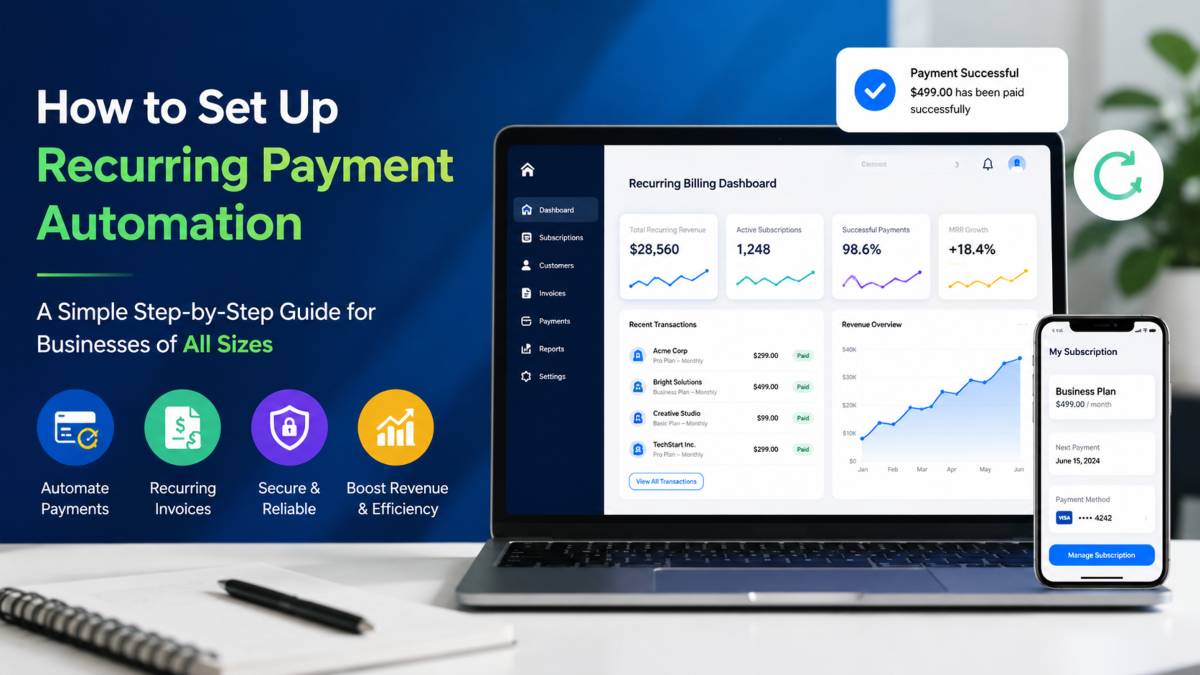
Keeping payments consistent can feel like a full time job for many businesses. Between chasing unpaid invoices, tracking due dates, and handling customer reminders, teams often lose hours on repetitive financial tasks. Late payments create pressure on cash flow, while manual invoicing increases the risk of human error. For subscription based companies, another headache appears in the form of customer churn and failed payments that quietly eat into monthly revenue.
This is where businesses are starting to automate recurring payments to simplify operations and create a smoother customer experience. Instead of sending invoices one by one every month, automated payment systems handle billing on a fixed schedule with little manual involvement. Customers are charged automatically through secure payment methods, while businesses gain more predictable income and fewer administrative tasks.
Recurring billing also helps companies stay organized as they grow. Whether it is a SaaS company, fitness studio, digital agency, or membership business, automation makes payment collection faster and more reliable. With the right setup, businesses can reduce missed payments, improve customer retention, and spend more time focusing on growth instead of chasing invoices.
What Are Recurring Payments?
Recurring payments are automatic transactions collected from customers on a fixed schedule. Instead of asking customers to make payments manually every month, businesses use recurring billing systems to charge saved payment methods automatically. This process is widely used by companies that offer ongoing services, subscriptions, or long term contracts.
For businesses, recurring payments create a more stable revenue stream and reduce time spent on repetitive billing tasks. For customers, the process feels simple and convenient because payments happen without repeated checkouts or reminders.
How Recurring Payments Work
Recurring payments rely on stored payment methods such as credit cards, debit cards, bank accounts, or digital wallets. When a customer signs up for a service, they authorize the business to securely save their payment details for future transactions.
Once the setup is complete, the automated payment system charges customers according to a scheduled billing cycle. Some businesses bill monthly, while others choose quarterly or annual plans depending on their pricing structure. Many subscription based businesses also use auto renewals, allowing customers to continue services without interruptions unless they cancel.
This setup helps businesses automate recurring payments while reducing missed invoices and delayed transactions.
Common Types of Recurring Payments
Recurring billing is used across many industries and business models. Common examples include:
- Subscription streaming services
- Membership programs and gyms
- SaaS products and software platforms
- Monthly retainers for agencies or consultants
- Utility billing such as internet, electricity, or phone services
As more businesses move online, recurring payment systems continue to become a reliable way to manage predictable revenue and improve customer convenience.
Why Businesses Are Automating Recurring Payments
More businesses are turning to recurring payment automation because manual billing no longer fits the speed of modern operations. Sending invoices one by one, tracking unpaid balances, and following up with customers consumes valuable time that could be spent on growth. Automated billing solutions simplify these processes and help companies create a more reliable payment system.
From startups to large subscription based brands, recurring billing has become a practical way to improve efficiency, stabilize revenue, and reduce payment related stress.
Better Cash Flow Predictability
One of the biggest advantages of recurring billing is predictable income. Businesses know when payments are expected to arrive, making it easier to manage expenses, payroll, and future planning.
For example, a marketing agency with 50 monthly retainer clients can estimate recurring revenue more accurately compared to relying on one time invoices. This level of consistency helps businesses make smarter financial decisions and avoid sudden cash flow gaps.
Fewer Missed or Late Payments
Manual invoicing often leads to delayed payments because customers forget due dates or ignore reminders. Automated payment systems solve this issue by charging customers automatically according to the agreed billing cycle.
This reduces unpaid invoices and improves collection rates without constant follow ups. Businesses also save time that would otherwise be spent chasing overdue payments every month.
Lower Administrative Work
Recurring payment automation removes many repetitive accounting tasks. Instead of manually creating invoices, updating payment records, and sending reminders, businesses can automate the entire billing process.
A company managing hundreds of subscribers can save several hours every week simply by using recurring billing software. Less manual work also reduces the chances of billing errors and duplicate charges.
Improved Customer Experience
Customers prefer convenience. Automatic payments allow them to continue using products or services without interruptions caused by missed invoices or expired subscriptions.
Many automated billing solutions also include customer portals where users can update payment methods, switch plans, or view billing history without contacting support teams.
Easier Revenue Forecasting
Recurring revenue management becomes much simpler when businesses can track subscription trends and payment data in real time. Automated systems provide reports that show monthly income, failed payments, customer churn, and renewal patterns.
These insights help businesses understand financial performance and make adjustments before small payment issues turn into larger revenue problems.
How to Automate Recurring Payments Step by Step
Setting up recurring billing does not have to feel complicated. With the right tools and a clear process, businesses can automate recurring payments and reduce the amount of time spent handling invoices manually. Whether you run a subscription business, service agency, membership platform, or SaaS company, the setup process usually follows the same core steps.
Choose the Right Recurring Payment Platform
The first step is selecting a payment platform that supports recurring billing and subscription management. A good system should allow businesses to schedule payments automatically, manage customer subscriptions, send invoices, and handle failed transactions.
Many businesses use platforms like Stripe, PayPal, or Chargebee because these tools simplify payment collection and integrate with other business software.
When comparing options, look for features such as:
- Automated billing
- Subscription management
- Payment reminders
- Reporting dashboards
- Failed payment recovery
- Accounting integrations
- Customer self service portals
Choosing scalable recurring billing software early can save businesses from switching systems later as customer numbers grow.
Set Up Your Billing Structure
After selecting a platform, the next step is creating a billing model that matches your business. This includes deciding how often customers will be charged and what pricing plans will be offered.
Some businesses bill customers monthly, while others prefer quarterly or annual plans. Many companies also create multiple pricing tiers such as Basic, Professional, or Enterprise packages.
At this stage, businesses should also define:
- Trial periods
- Renewal policies
- Upgrade and downgrade rules
- Cancellation terms
- Late payment handling
Clear billing rules reduce confusion for customers and help recurring payment automation run smoothly.
Collect Customer Payment Information Securely
To process automated payments, businesses need customer authorization and secure payment details. Most recurring billing platforms provide hosted checkout pages or encrypted payment forms that safely collect customer data.
Customers typically approve recurring charges by selecting a checkbox or accepting payment terms during signup. This consent step is important because it creates transparency and builds trust.
Businesses should always use PCI compliant payment systems to protect sensitive customer information and reduce security risks.
Configure Automated Billing Workflows
Once payment information is collected, businesses can configure automated billing schedules inside the platform dashboard. This tells the system when and how payments should be processed.
Businesses can automate tasks such as:
- Sending recurring invoices
- Charging customers on fixed dates
- Email payment confirmations
- Subscription renewal reminders
- Failed payment retries
Many automated billing solutions also include dunning features that retry declined payments automatically before canceling a subscription. This helps recover lost revenue without manual follow ups.
Integrate With Accounting and CRM Software
Recurring payment systems work even better when connected with accounting and customer management tools. Integrations allow payment data to sync automatically across different platforms.
For example, businesses often connect recurring billing software with QuickBooks or Xero to simplify bookkeeping and financial reporting.
CRM integrations also help support teams track customer subscriptions, payment history, and account activity from one place.
Monitor Performance and Improve the Process
Recurring payment automation is not something businesses should set up and ignore. Regular monitoring helps identify failed transactions, subscription cancellations, and customer behavior patterns.
Businesses should review reports regularly to track:
- Monthly recurring revenue
- Failed payments
- Customer churn
- Subscription renewals
- Payment success rates
These insights can help improve pricing strategies, reduce cancellations, and strengthen long term recurring revenue management.
Choose a Recurring Payment Platform
The foundation of successful recurring billing starts with choosing the right payment platform. A reliable system can automate billing, reduce failed payments, and simplify subscription management as your business grows. Whether you run a SaaS company, membership site, online store, or service based business, the platform you choose will directly affect customer experience and operational efficiency.
Most businesses use a combination of payment gateways and subscription billing software to manage automated transactions. Payment gateways process customer payments securely, while billing tools handle subscription plans, invoices, renewals, and payment schedules.
Popular platforms such as Stripe, Chargebee, ChargeOver, PayPal, and Square are widely used because they support recurring payment automation and integrate with accounting, ecommerce, and CRM systems.
When comparing recurring billing software, businesses should focus on features that improve both automation and long term scalability.
Automation Features
A strong platform should automatically handle recurring invoices, subscription renewals, payment reminders, and billing schedules. This reduces manual work and keeps payments consistent without constant monitoring.
Dunning Management
Failed payments are common in subscription businesses. Dunning tools automatically retry declined payments, notify customers about expired cards, and help recover lost revenue before subscriptions are canceled.
Analytics and Reporting
Detailed reporting tools allow businesses to monitor monthly recurring revenue, churn rates, failed transactions, and customer growth. These insights help companies improve recurring revenue management and make smarter business decisions.
Integrations
The best subscription billing software connects easily with accounting platforms, CRM systems, ecommerce tools, and customer support software. Integrations reduce duplicate work and create a smoother workflow across departments.
Choosing the right recurring payment platform early can save businesses significant time and operational costs later. A scalable system not only improves payment collection but also creates a better experience for customers who expect fast, secure, and seamless billing.
Set Up Billing Rules and Pricing Plans
After choosing a payment platform, the next step is building a billing structure that fits your business model and customer expectations. Clear billing rules help businesses avoid confusion, reduce disputes, and create a smoother payment experience for subscribers.
A strong automated recurring billing setup starts with selecting the right billing cycles. Some businesses prefer monthly billing because it lowers the upfront cost for customers and encourages faster signups. Others choose annual billing to improve cash flow and increase customer retention through long term commitments. Many companies offer both options so customers can choose the plan that works best for them.
Subscription pricing should also match the value customers receive. Tiered pricing is one of the most common approaches because it gives users flexibility while creating opportunities for revenue growth. For example, a SaaS platform might offer Basic, Professional, and Enterprise plans with different features and usage limits.
Some businesses use usage based pricing instead of fixed plans. In this model, customers pay according to how much they use a product or service. This works well for industries such as cloud software, telecommunications, and digital services where customer usage can vary significantly each month.
Trial periods are another important part of recurring billing. Free trials or discounted introductory offers give potential customers a chance to test the service before committing to a paid plan. A smooth trial experience can increase conversions and reduce hesitation during signup.
Businesses should also create clear rules for upgrades and downgrades. Customers may want to switch plans as their needs change, so the billing system should automatically adjust charges, prorate payments when necessary, and update subscription details without manual work.
Well structured subscription pricing and flexible billing cycles make recurring payment automation more reliable while improving customer satisfaction. When businesses create transparent pricing rules from the beginning, they reduce friction and make long term retention much easier.
Collect Customer Payment Authorization Securely
Before businesses can process recurring charges, they need proper customer payment authorization and a secure way to collect payment details. This step is essential for building trust, reducing disputes, and protecting sensitive financial information.
Most recurring billing platforms provide secure payment forms that allow customers to enter credit card, debit card, or bank account details safely. These forms use encryption and tokenization to protect payment data during transactions. Businesses should avoid storing raw card information themselves unless they have advanced security systems in place.
Using a PCI compliant payment system is one of the most important parts of recurring payment automation. PCI compliance refers to industry security standards designed to protect customer payment data from fraud and unauthorized access. Trusted platforms such as Stripe and PayPal handle much of this security process automatically, helping businesses lower compliance risks.
Consent also plays a major role in customer payment authorization. Customers must clearly agree to recurring charges before payments begin. Most businesses collect authorization through:
- Online checkboxes during signup
- Digital agreements
- E signatures
- Subscription confirmation pages
The payment terms should explain how often customers will be charged, the billing amount, renewal dates, and cancellation instructions. Transparent communication reduces confusion and helps prevent chargebacks or refund disputes later.
Businesses should also create simple cancellation policies that customers can access easily. Hidden cancellation rules often lead to frustration and damage customer trust. A clear and fair process improves the overall subscription experience and strengthens long term retention.
Secure payment collection is not just about compliance. It also gives customers confidence that their information is protected while making recurring billing feel smooth and professional.
Configure Automated Payment Workflows
Once customer payment details and billing rules are in place, the next step is setting up automated payment workflows. This process allows businesses to handle recurring billing with minimal manual effort while keeping payments organized and consistent.
A strong workflow begins with automated invoices. Instead of creating invoices manually every billing cycle, recurring billing software generates and sends them automatically based on the customer’s subscription plan or payment schedule. This saves time, reduces human error, and keeps billing operations running smoothly as the business grows.
Payment reminders are another important part of recurring payment automation. Businesses can schedule reminder emails before upcoming charges or notify customers about successful transactions after payments are processed. These updates help customers stay informed and reduce confusion about billing activity.
Failed payments are unavoidable in subscription businesses. Cards expire, bank accounts change, and transactions sometimes get declined for security reasons. Without an automated system, these failed payments can quickly lead to lost revenue and canceled subscriptions.
This is where dunning management becomes valuable. Dunning systems automatically respond to failed transactions by retrying payments after a specific period. Businesses can create payment retry logic that attempts the charge multiple times before marking the account as overdue or suspending the subscription.
For example, a business may retry a failed payment after three days, then again after seven days, while sending reminder emails to the customer during the process. This type of failed payment recovery helps businesses recover revenue that might otherwise disappear quietly.
Many recurring billing platforms also allow businesses to customize workflows based on customer behavior. Companies can automate account suspension warnings, renewal notices, invoice receipts, and subscription expiration alerts from a single dashboard.
Well configured automated payment workflows improve operational efficiency while creating a smoother customer experience. They also help businesses maintain stable recurring revenue without relying on constant manual follow ups.
Connect Payments With Accounting and CRM Tools
Recurring billing becomes much easier to manage when payment systems are connected with accounting and customer management platforms. Instead of updating records manually across different tools, businesses can automate data syncing and keep financial information organized in real time.
An effective accounting integration allows recurring payments, invoices, taxes, and customer transactions to flow directly into bookkeeping software. This reduces manual data entry, minimizes reporting errors, and saves valuable administrative time.
Many businesses connect recurring billing software with tools such as QuickBooks and Xero to simplify financial management. These platforms help businesses monitor incoming revenue, generate reports, reconcile transactions, and maintain accurate accounting records without extra manual work.
Recurring invoicing also becomes more efficient through automation. When a customer payment is processed, the invoice status updates automatically inside the accounting system. This keeps payment records accurate and prevents confusion between paid and unpaid accounts.
CRM integration is equally important for businesses that manage long term customer relationships. By connecting payment systems with customer management tools, support and sales teams can access subscription details, payment history, renewal dates, and account activity from one place.
This creates several operational benefits:
- Faster customer support responses
- Better visibility into subscription activity
- Easier tracking of overdue accounts
- Improved customer retention efforts
- Centralized customer records
Revenue tracking also improves when systems work together. Businesses can monitor monthly recurring revenue, subscription growth, churn rates, and payment trends through automated dashboards and reports. These insights help business owners make smarter financial decisions and identify issues before they affect cash flow.
Strong accounting integration and CRM integration turn recurring payment automation into a connected business workflow rather than a standalone billing process. The result is better accuracy, smoother operations, and a clearer picture of overall business performance.
Monitor Performance and Reduce Churn
Setting up recurring billing is only the beginning. Businesses also need to monitor payment performance regularly to keep revenue stable and reduce customer churn over time. Without proper tracking, failed payments and canceled subscriptions can slowly weaken recurring income without obvious warning signs.
One of the most important areas to monitor is failed payment reports. These reports help businesses identify payment issues such as expired cards, declined transactions, or inactive bank accounts. By reviewing failed payment trends early, companies can take action before customers cancel their subscriptions completely.
Many recurring billing platforms provide automated alerts and dashboards that highlight payment failures in real time. This allows support teams to contact customers quickly and resolve billing issues before they turn into lost revenue.
Customer retention should also remain a priority. Keeping existing subscribers is usually more affordable than constantly finding new customers. Businesses can improve subscription retention by offering flexible pricing plans, loyalty discounts, better onboarding experiences, and responsive customer support.
Plan optimization is another valuable strategy for reducing churn. Businesses should regularly review how customers interact with different pricing tiers and subscription features. If users frequently downgrade or cancel specific plans, it may signal pricing problems or missing features that need improvement.
Recurring revenue analytics gives businesses a clearer understanding of overall financial performance. Instead of relying on guesswork, companies can track important metrics such as:
- Monthly recurring revenue
- Churn rate
- Customer lifetime value
- Renewal rates
- Failed payment percentages
- Subscription growth trends
These insights help businesses make informed decisions about pricing, retention strategies, and customer experience improvements.
Recurring payment automation works best when businesses actively monitor performance and adjust their approach based on real customer behavior. Companies that consistently optimize their billing systems and customer experience are far more likely to maintain long term recurring revenue growth.
Best Tools for Recurring Payment Automation
Choosing the right recurring payment software can make a major difference in how smoothly a business handles subscriptions, invoices, and customer billing. Some platforms focus on flexibility and developer tools, while others are built for simplicity, accounting automation, or retail operations.
The best automated billing platforms usually combine payment processing, subscription management, reporting, and customer communication in one system. Businesses should compare features carefully based on their size, industry, and billing complexity before making a decision.
| Tool | Best For | Key Features |
|---|---|---|
| Stripe | SaaS and online businesses | APIs, subscription management, smart payment retries, advanced automation |
| Chargebee | Subscription companies | Billing automation, analytics, customer lifecycle management |
| PayPal | Freelancers and small businesses | Simple setup, recurring subscriptions, global payment support |
| Square | Retail and service businesses | POS integration, recurring billing, invoicing tools |
| BILL | Invoice automation | Automated invoicing, accounting workflows, payment approvals |
Stripe
Stripe is widely used by SaaS companies and online businesses because of its powerful APIs and flexible recurring billing features. Businesses can automate subscription payments, create custom billing logic, and access detailed recurring revenue analytics from one dashboard. It also includes smart retry systems that help recover failed payments automatically.
Chargebee
Chargebee focuses heavily on subscription billing software for growing businesses. It supports recurring invoicing, customer retention workflows, plan management, and detailed subscription analytics. Companies with complex pricing structures often choose Chargebee because of its flexibility.
PayPal Subscriptions
PayPal Subscriptions remains popular among freelancers and smaller businesses that want a simple way to automate recurring payments. The setup process is straightforward, and customers already trust the PayPal brand, which can improve conversion rates during checkout.
Square
Square works especially well for retail stores, salons, gyms, and service businesses that need both in person and online payment solutions. Its recurring payment tools integrate directly with point of sale systems, making it easier to manage customer billing across multiple channels.
BILL
BILL is designed for businesses focused on invoice automation and financial workflows. It simplifies recurring invoicing, payment approvals, and accounting synchronization while reducing manual bookkeeping tasks.
The best recurring payment software depends on how your business operates. Companies with subscription heavy models may prefer advanced subscription billing software like Stripe or Chargebee, while smaller businesses may benefit more from simple automated billing platforms such as PayPal or Square.
Common Challenges in Recurring Billing and How to Solve Them
Recurring billing can simplify payment collection, but businesses still face operational challenges that affect customer satisfaction and revenue stability. From failed transactions to subscription cancellations, even small payment automation problems can create long term financial issues if left unresolved.
The good news is that most recurring billing challenges can be reduced with better systems, clear communication, and regular monitoring.
Failed Transactions
Failed transactions are one of the most common subscription payment issues. Payments may fail because of expired cards, insufficient funds, or banking restrictions.
Quick Fixes:
- Use automated payment retry logic
- Send reminder emails for expired cards
- Allow customers to update payment details easily
- Enable smart dunning systems
Many recurring billing platforms automatically retry failed payments after a few days, helping businesses recover revenue without manual follow ups.
Customer Churn
Customer churn happens when subscribers cancel their plans or stop renewing services. High churn rates can quietly reduce recurring revenue over time.
Quick Fixes:
- Improve onboarding experiences
- Offer flexible pricing plans
- Provide loyalty discounts
- Monitor customer feedback regularly
Businesses that stay connected with subscribers often identify dissatisfaction early before cancellations happen.
Payment Security Risks
Customers expect businesses to protect their financial information. Weak security practices can damage trust and increase the risk of fraud or chargebacks.
Quick Fixes:
- Use PCI compliant payment systems
- Enable encrypted payment forms
- Avoid storing raw card data manually
- Use trusted payment gateways
Secure billing systems not only protect businesses but also make customers more comfortable with automated recurring payments.
Subscription Cancellations
Some cancellations are unavoidable, but confusing billing practices often increase cancellation rates unnecessarily.
Quick Fixes:
- Make cancellation policies clear
- Send renewal reminders before charges
- Offer pause options instead of full cancellation
- Provide simple account management tools
Transparency helps customers feel more in control of their subscriptions.
Billing Errors
Incorrect invoices, duplicate charges, or pricing mistakes can quickly damage customer trust and increase support requests.
Quick Fixes:
- Automate recurring invoicing
- Review billing workflows regularly
- Sync billing systems with accounting software
- Test subscription plans before launch
Accurate billing processes improve customer confidence and reduce avoidable payment disputes.
Businesses that actively monitor recurring billing performance are more likely to prevent small payment automation problems from turning into larger operational setbacks.
Best Practices for Successful Recurring Payment Automation
Setting up recurring billing is only part of the process. Businesses also need a strong payment automation strategy to keep customers satisfied and maintain steady recurring revenue. The most successful companies focus on transparency, flexibility, and proactive communication to reduce billing friction and improve long term retention.
Keep Billing Transparent
Customers should always understand what they are paying for and when charges will occur. Hidden fees, confusing subscription terms, or unclear renewal dates often lead to disputes and cancellations.
Businesses should clearly display:
- Billing frequency
- Subscription pricing
- Renewal dates
- Cancellation policies
- Refund conditions
Transparent communication builds trust and reduces payment related complaints.
Send Advance Renewal Notices
Unexpected charges are one of the fastest ways to frustrate subscribers. Sending advance renewal reminders gives customers time to review their plans, update payment details, or make changes before the next billing cycle.
Many recurring billing platforms allow businesses to automate reminder emails several days before a subscription renews. This simple step can reduce chargebacks and improve customer satisfaction significantly.
Offer Flexible Payment Methods
Customers prefer having multiple payment options. Restricting users to one payment method can increase failed transactions and reduce conversions during signup.
Businesses should support options such as:
- Credit cards
- Debit cards
- Bank transfers
- Digital wallets
- Regional payment methods where relevant
Flexible payment choices create a smoother billing experience for different customer preferences.
Use Smart Retry Logic
Failed payments are common in recurring billing, but smart retry systems can recover a large percentage of declined transactions automatically.
Instead of canceling subscriptions immediately, businesses should configure retry schedules that attempt payments again after short intervals. Combining retry logic with automated reminder emails improves recovery rates and reduces unnecessary churn.
Make Cancellation Simple
Some businesses make cancellations intentionally difficult, but this approach often damages customer trust. A simple cancellation process creates a better user experience and leaves customers with a more positive impression of the brand.
Easy cancellations also reduce support tickets and payment disputes while increasing the likelihood that customers may return later.
Following these recurring billing best practices helps businesses create smoother payment experiences, reduce operational issues, and strengthen long term customer relationships.
Final Thoughts
Recurring billing automation is no longer limited to large companies with complex financial systems. Businesses of all sizes can now automate recurring payments using tools that simplify invoicing, improve payment collection, and create more stable revenue over time.
The biggest advantage is consistency. Automated systems reduce manual work, minimize billing errors, and help businesses maintain healthier cash flow without constant follow ups. Instead of spending hours managing invoices every month, teams can focus more energy on customer growth and service quality.
Businesses do not need to build a complicated setup from day one. Starting with one recurring billing platform and expanding features gradually is often the smartest approach. As customer needs evolve, businesses can adjust pricing plans, improve workflows, and integrate additional automation tools without disrupting operations.
If your current billing process still relies heavily on manual invoicing, now is a good time to review how payments are managed. Test a recurring billing platform, compare automation tools, and identify areas where payment workflows can become faster and more reliable. Small improvements today can create stronger recurring revenue in the long run.