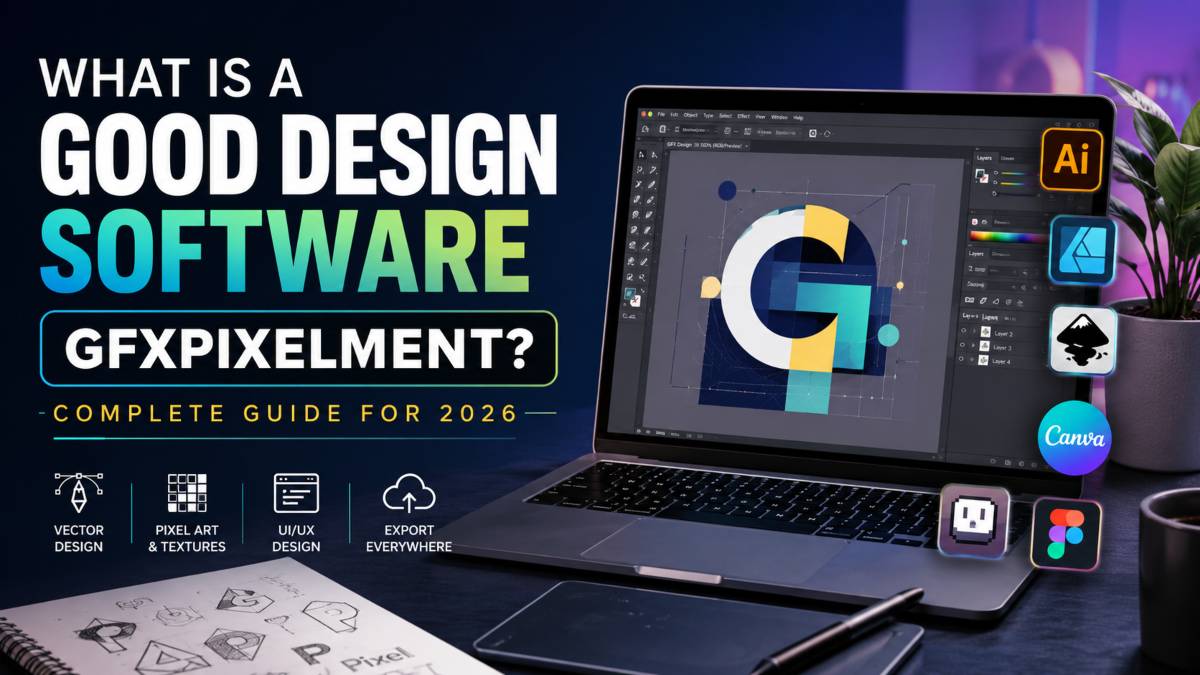
If you have searched for “what is a good design software GFXPixelment,” you are not alone. The phrase has gained attention across blogs, forums, and search engines, leaving many people wondering whether GFXPixelment is a real design tool or simply a trending term within the creative space.
The truth is that GFXPixelment is not an actual software application that you can download or purchase. Instead, it is associated with online content discussing graphic design, digital creativity, and modern design workflows. This has created confusion among beginners, freelancers, and business owners who are trying to find reliable software for creating logos, illustrations, social media graphics, user interfaces, and pixel based artwork.
So, what is a good design software GFXPixelment? In most cases, people searching for this term are actually looking for powerful graphic design tools that offer professional features, intuitive controls, and high quality output. Popular options such as Adobe Illustrator, Affinity Designer, Inkscape, Canva, Figma, and Aseprite often match those expectations.
In this guide, you will learn what GFXPixelment really is, why the term causes confusion, and which design software solutions are worth using in 2026 based on your goals, skill level, and budget.
Understanding GFXPixelment: Is It Real Software?
The term GFXPixelment has become a source of confusion for many people looking for graphic design software. A quick search often brings up articles that discuss GFXPixelment alongside popular design tools, making it seem like a software product. However, the reality is quite different.
What Is GFXPixelment?
GFXPixelment is primarily known as a website that publishes content related to technology, design, digital trends, and creative tools. It is not a graphic design application, editing platform, or downloadable software package.
Many users assume GFXPixelment is a design program because numerous articles mention it in discussions about graphic design, logo creation, pixel art, and digital creativity. This misunderstanding has spread over time, causing people to search for software that does not actually exist.
Why Are People Searching for GFXPixelment Software?
One reason behind the growing search volume is the rise of SEO focused content across the internet. Some articles use the term “GFXPixelment software” when discussing design tools, which can give readers the impression that it is a real product.
At the same time, interest in graphic design software continues to grow. Businesses, content creators, freelancers, and students are constantly searching for tools that can help them create professional graphics. When they encounter the term GFXPixelment, many naturally assume it refers to a new design platform worth exploring.
The Truth Behind the Term
After reviewing available information, there is no evidence that GFXPixelment exists as an official software product. There is no recognized developer, software company, or verified publisher connected to a downloadable application called GFXPixelment.
There is also no official download page, installation file, user documentation, or product support system. Unlike established design tools, GFXPixelment does not have verified customer reviews or a recognized user community.
For anyone searching for a good design software GFXPixelment, the better approach is to look at trusted tools such as Adobe Illustrator, Affinity Designer, Inkscape, Canva, Figma, or Aseprite. These platforms provide the features and capabilities that people are usually hoping to find when researching GFXPixelment.
What Makes a Good Design Software?
Choosing the right design software can make a huge difference in the quality of your work and the speed of your creative process. Whether you are designing logos, social media graphics, illustrations, user interfaces, or pixel art, the best tools share several important qualities. Understanding these features can help you select software that matches your goals, experience level, and budget.
Vector and Raster Editing Support
One of the most valuable features in modern graphic design software is the ability to work with both vector and raster graphics.
Vector graphics are built using mathematical paths, allowing designs to be resized without losing quality. This makes them ideal for logos, icons, and branding materials. Raster graphics, on the other hand, are made up of pixels and are commonly used for photo editing, digital painting, and detailed image work.
Software that supports both formats gives designers greater flexibility. You can create scalable graphics while also adding textures, effects, and image based elements within the same project. This reduces the need to switch between multiple applications.
Precision Design Controls
Professional quality design requires precise control over every element on the canvas. Good design software should provide tools that allow users to fine tune shapes, lines, and layouts with accuracy.
Features such as editable paths, smooth curves, masking tools, layers, alignment options, and customizable grids help designers create clean and polished work. These controls become especially important when working on branding projects, illustrations, and interface designs where even small details can affect the final result.
The more control a designer has over their artwork, the easier it becomes to produce consistent and professional visuals.
Export and File Compatibility
A design is only useful if it can be shared and used across different platforms. That is why strong export options are essential.
High quality design software should support popular file formats such as SVG, PNG, JPG, PDF, and EPS. Each format serves a different purpose. SVG files work well for scalable web graphics, PNG files preserve transparency, JPG files are commonly used for web images, while PDF and EPS formats are often required for printing and professional publishing.
Broad file compatibility ensures your designs remain accessible regardless of where they are used.
Ease of Use and Learning Curve
Not every designer has the same level of experience. Beginners often prefer software with a clean interface, guided tools, and simple workflows. Professionals may need advanced features that offer deeper customization and control.
A good design platform balances accessibility with functionality. New users should be able to learn the basics quickly, while experienced designers should have access to powerful tools that support complex projects. This balance helps software remain useful as skills develop over time.
Cross Platform Availability
Many designers work across multiple devices and operating systems. For this reason, software compatibility is an important factor.
The best graphic design tools are available on Windows, macOS, and in some cases Linux. Cross platform support allows users to work from different environments without worrying about compatibility issues. It also makes collaboration easier when team members use different systems.
Performance and Workflow Efficiency
Fast and reliable performance can significantly improve productivity. Design software should handle large files smoothly, render graphics quickly, and remain responsive during demanding projects.
Efficient file management is equally important. Features such as organized asset libraries, cloud storage integration, project folders, and quick search functions help keep workflows streamlined. When software runs smoothly and keeps projects organized, designers can spend more time creating and less time dealing with technical frustrations.
Ultimately, a good design software combines flexibility, precision, compatibility, usability, and performance. These qualities help designers work efficiently while producing professional results across a wide range of creative projects.
Best Design Software Alternatives to GFXPixelment
Since GFXPixelment is not an actual software product, anyone searching for it is usually looking for reliable graphic design tools that can handle creative projects professionally. The good news is that there are several established platforms available today, each designed for different types of users and workflows.
Whether you need advanced vector editing, social media graphics, pixel art creation, or user interface design, the following software options offer practical solutions for a wide range of creative needs.
Adobe Illustrator
Adobe Illustrator remains one of the most widely used graphic design applications in the industry. It is considered the standard choice for professional vector design and is trusted by graphic designers, branding agencies, marketing teams, and illustrators worldwide.
Illustrator allows users to create logos, icons, packaging designs, illustrations, typography, and scalable graphics with exceptional precision. Its advanced drawing tools, path editing capabilities, and extensive customization options make it suitable for complex projects.
Pros
- Industry recognized professional tool
- Powerful vector editing features
- Excellent typography controls
- Large collection of plugins and integrations
- Seamless connection with other Adobe applications
Cons
- Monthly subscription required
- Learning curve can be challenging for beginners
- Resource intensive on older systems
Pricing Overview
Adobe Illustrator is available through a subscription model. Users can purchase Illustrator individually or as part of the Adobe Creative Cloud package, which includes access to additional creative applications.
For designers who need complete control over vector graphics and branding projects, Illustrator remains one of the strongest options available.
Affinity Designer
Affinity Designer has gained a loyal following among freelancers and professionals who want advanced design capabilities without recurring subscription fees.
One of its biggest strengths is its ability to combine vector and raster workflows within a single application. Users can switch between design modes quickly, making it easier to create illustrations, logos, user interface elements, and digital artwork.
The software delivers many professional features while maintaining an accessible and streamlined interface.
Pros
- One time purchase
- Strong vector and raster editing tools
- Fast performance
- Modern and intuitive workspace
- Suitable for both beginners and professionals
Cons
- Smaller plugin ecosystem
- Fewer third party learning resources compared to Adobe products
For many designers, Affinity Designer offers an excellent balance between affordability and professional functionality.
Inkscape
For users searching for a free graphic design solution, Inkscape is often the first recommendation.
This open source vector editor provides an impressive collection of design tools at no cost. It supports professional vector creation, path editing, shape manipulation, and SVG file management.
Because the software is maintained by an active community, it continues to receive updates and improvements.
Pros
- Completely free to use
- Open source development
- Strong vector design capabilities
- Supports industry standard SVG files
- Available on multiple operating systems
Cons
- Interface feels less polished than premium competitors
- Performance may slow when working with large files
- Some advanced features require additional learning
Inkscape is a great starting point for students, hobbyists, and small businesses operating on a limited budget.
Canva
Canva has transformed graphic design by making it accessible to virtually anyone. Unlike traditional design software, Canva focuses on simplicity, speed, and ready made templates.
Users can create social media graphics, presentations, marketing materials, posters, business documents, and promotional content without extensive design experience.
Its drag and drop editor removes many technical barriers, allowing projects to be completed quickly.
Pros
- Easy to learn
- Large template library
- Cloud based accessibility
- Ideal for social media content
- Helpful collaboration tools
Cons
- Limited advanced design controls
- Not ideal for detailed vector editing
- Customization options are less flexible than professional software
Canva is particularly useful for entrepreneurs, content creators, marketers, and small business owners who need high quality visuals without investing significant time in learning complex software.
Aseprite
Aseprite serves a different audience than most graphic design platforms. It is specifically designed for pixel art creation and sprite animation.
Game developers, pixel artists, and retro design enthusiasts often choose Aseprite because it provides precise pixel level control. The software includes animation tools, layer support, timeline management, and specialized features built around pixel based artwork.
Pros
- Purpose built for pixel art
- Excellent animation features
- Lightweight and responsive
- Active creative community
- Available on major operating systems
Cons
- Limited usefulness outside pixel art projects
- Not intended for general graphic design work
If your goal is creating retro game assets, animated sprites, or detailed pixel artwork, Aseprite remains one of the most respected tools in its category.
Figma
Figma has become one of the most popular platforms for UI and UX design. Unlike traditional graphic design software, it focuses heavily on interface creation, prototyping, and collaborative workflows.
Design teams can work together in real time, making it an attractive solution for businesses, product designers, and development teams.
The platform allows users to design websites, mobile applications, dashboards, and interactive prototypes while keeping communication centralized.
Pros
- Excellent collaboration capabilities
- Browser based accessibility
- Strong UI and UX design tools
- Real time feedback and editing
- Useful prototyping features
Cons
- Requires internet access for the best experience
- Less suitable for advanced illustration work
Figma continues to dominate the interface design space because it simplifies teamwork while offering powerful design functionality.
Which Alternative Should You Choose?
The right choice depends on your specific goals.
If you need professional vector design capabilities, Adobe Illustrator remains a leading option. Designers seeking a subscription free solution often prefer Affinity Designer. Users with no budget can start with Inkscape. Canva works well for fast marketing content, while Aseprite is ideal for pixel art projects. For interface design and collaborative product development, Figma stands out as a top choice.
As you continue exploring graphic design tools, consider reviewing graphic design tutorials, logo design guides, and UI UX resources to build your skills and understand which platform best supports your creative workflow. By matching the software to your project requirements, you can work more efficiently and achieve stronger design results.
Comparing the Top Graphic Design Software
With so many graphic design tools available, choosing the right one can feel overwhelming. Each platform offers a different mix of features, pricing, and learning requirements. Some are built for professional designers, while others focus on simplicity and speed. Comparing the most popular options side by side can help you identify which software fits your needs and budget.
Feature Comparison Table
| Software | Best For | Pricing | Vector Support | Raster Support | Skill Level |
|---|---|---|---|---|---|
| Adobe Illustrator | Professional vector design, branding, illustrations | Subscription based | Yes | Limited | Advanced |
| Affinity Designer | Professional design without subscriptions | One time purchase | Yes | Yes | Intermediate |
| Inkscape | Free vector design projects | Free | Yes | Limited | Beginner to Intermediate |
| Canva | Social media graphics and marketing content | Free and paid plans | Basic | Basic | Beginner |
| Aseprite | Pixel art and sprite creation | One time purchase | No | Yes | Beginner to Intermediate |
| Figma | UI and UX design, prototyping | Free and paid plans | Yes | Limited | Beginner to Advanced |
This comparison highlights an important fact. No single tool is perfect for every type of design work. The best option depends on the projects you create most often.
Which Tool Offers the Best Value?
When evaluating value, Affinity Designer stands out as one of the strongest choices. It provides many professional features found in premium software while avoiding ongoing subscription costs. Users receive powerful vector and raster editing capabilities through a single purchase, making it attractive for freelancers, small businesses, and independent creators.
For those who want a completely free solution, Inkscape delivers impressive value. While it may lack some of the polish found in premium applications, its feature set is more than capable of handling many professional design tasks.
Adobe Illustrator remains a worthwhile investment for designers who rely on advanced tools daily and require compatibility with industry workflows.
Which Tool Is Best for Beginners?
For complete beginners, Canva is usually the easiest place to start. Its drag and drop interface, ready made templates, and intuitive design tools allow users to create attractive graphics with minimal training.
Figma is another beginner friendly option, particularly for those interested in website and application design. The platform offers a clean workspace and extensive educational resources.
As skills improve, many users transition to Affinity Designer or Adobe Illustrator for greater creative control. Starting with beginner friendly software and gradually moving to more advanced tools often provides the smoothest learning experience.
How to Choose the Right Design Software
The best design software is not necessarily the most expensive or the most popular. The right choice depends on the type of work you create, your experience level, and the features you need most. A tool that works perfectly for a logo designer may not be the best option for a social media marketer or a game artist.
Before investing time and money into any platform, it is worth identifying your primary creative goals. This makes it much easier to find software that supports your workflow and helps you produce better results.
For Logo Designers
Logo design requires precision, scalability, and strong vector editing capabilities. Since logos are used across websites, business cards, packaging, and advertising materials, they must maintain quality at any size.
Adobe Illustrator remains a leading choice for professional logo creation because of its advanced vector tools and extensive customization options. Affinity Designer is another excellent option for those seeking professional results without a recurring subscription.
If you are just getting started and want a free solution, Inkscape provides many of the essential tools needed for creating high quality logos.
For Social Media Creators
Social media content often needs to be created quickly while maintaining visual consistency across different platforms. Speed, convenience, and access to templates are usually more important than advanced editing features.
Canva is one of the strongest choices for social media creators because it simplifies the design process. Users can create posts, stories, banners, presentations, and promotional graphics within minutes.
For creators who want additional customization while maintaining efficiency, Affinity Designer can provide greater creative flexibility without becoming overly complicated.
For Freelancers and Agencies
Freelancers and agencies often manage multiple clients, projects, and design requirements at the same time. Their software needs to be versatile enough to handle branding, marketing materials, illustrations, presentations, and digital assets.
Adobe Illustrator is a popular choice among professionals because of its extensive feature set and industry recognition. Many clients and print providers already work with Adobe file formats, which helps streamline collaboration.
Affinity Designer is also a strong option for freelancers who want professional tools while keeping operating costs lower. Its combination of vector and raster capabilities makes it suitable for a wide variety of client projects.
For Pixel Artists
Pixel art requires a completely different set of tools compared to traditional graphic design. Artists working on retro games, animated sprites, and pixel based illustrations need software that offers precise control over individual pixels.
Aseprite is widely regarded as one of the best tools for this type of work. It includes animation features, layer management, color palette controls, and tools specifically built for pixel art creation.
Its focused design allows artists to create detailed pixel graphics efficiently without unnecessary features getting in the way.
For UI and UX Designers
Designing websites, mobile applications, and digital products requires software built around user experience and interface creation.
Figma has become a preferred choice for many UI and UX professionals because it supports real time collaboration, interactive prototyping, and cloud based workflows. Teams can work together on projects, provide feedback, and make revisions without constantly sharing files.
For individuals and businesses building digital products, Figma offers a practical balance between design functionality and collaboration.
For Budget Conscious Users
Not everyone has the budget for premium software, especially students, hobbyists, and small business owners. Fortunately, several capable options are available at little or no cost.
Inkscape remains one of the best free graphic design tools for vector work. Canva offers a generous free plan that covers many basic design needs, while Figma provides free access for individual users and small projects.
Those willing to make a one time investment often find Affinity Designer to be a cost effective alternative to subscription based software. By carefully evaluating your needs and budget, you can find a design solution that delivers excellent results without stretching your finances.
A Practical GFXPixelment Style Design Workflow
Although GFXPixelment is not an actual design software, the term is often associated with clean graphics, sharp details, scalable artwork, and creative pixel inspired effects. Achieving this style requires more than choosing the right software. It also depends on following an organized workflow that takes a project from concept to final delivery.
Whether you are designing a logo, social media graphic, illustration, or branding asset, the following process can help you create polished and professional results.
Step 1: Plan and Sketch Ideas
Every successful design begins with planning. Before opening any software, spend time brainstorming concepts and exploring different visual directions. Think about the purpose of the design, the target audience, and the message you want to communicate.
Start with rough sketches on paper or use a simple digital drawing tool to test multiple ideas. At this stage, focus on creativity rather than perfection. Quick sketches allow you to experiment freely and identify the strongest concept before investing time in detailed design work.
A clear plan creates a stronger foundation for the rest of the project.
Step 2: Build the Design Structure
Once you have selected a concept, move into your preferred design software and begin creating the core structure.
For logos and illustrations, vector based tools such as Adobe Illustrator, Affinity Designer, or Inkscape work particularly well. Focus on building clean shapes, balanced layouts, and strong visual hierarchy. Use grids, alignment tools, and guides to maintain consistency throughout the design.
This stage is all about creating a solid framework that can later support additional details and effects.
Step 3: Add Pixel Effects and Textures
After establishing the main structure, it is time to introduce personality and visual depth.
Depending on your project, this may involve adding pixel inspired textures, subtle grain effects, shading, or decorative details. Designers creating retro themed artwork may use dedicated pixel art tools such as Aseprite, while others may apply texture overlays within their primary design software.
The goal is to enhance the visual appeal without overwhelming the original design. Well placed textures can make artwork feel more dynamic and distinctive.
Step 4: Optimize and Export Files
Before exporting, carefully review the design for alignment issues, spacing inconsistencies, and unnecessary elements. Small adjustments at this stage can significantly improve the final result.
Export files in formats that match their intended use. SVG files are ideal for scalable graphics, PNG files work well for transparent web assets, and PDF files are commonly used for printing and professional presentations.
Keeping editable source files is equally important, as future revisions are often required.
Step 5: Prepare Assets for Web and Print
The final step is preparing your design for real world use. Web graphics should be optimized for fast loading while maintaining visual quality. Print materials should use appropriate dimensions and high resolution settings to ensure sharp output.
Organize files into clearly labeled folders and include all necessary formats for clients, team members, or future projects. A well organized delivery process saves time and helps maintain consistency across different platforms.
By following this workflow, designers can create polished visuals that combine strong structure, creative detail, and professional presentation, capturing the clean and precise aesthetic often associated with the GFXPixelment style.
Red Flags That a Design Software May Not Be Legitimate
With new design tools appearing online every year, it is important to verify whether a software product is genuine before downloading or purchasing it. Some tools are backed by established companies and active user communities, while others may exist only as marketing claims or misleading online content.
If you come across an unfamiliar design software, checking for the following warning signs can help you avoid wasting time, money, or even exposing your device to security risks.
No Official Website
A legitimate software product should have an official website where users can learn about its features, pricing, updates, and support options. The website typically serves as the main source of information for potential customers.
If a design software has no official website or only appears on third party blogs, that should raise concerns. Without an official online presence, it becomes difficult to verify who created the software or whether it actually exists as a real product.
Missing Developer Information
Trustworthy software companies are usually transparent about their identity. They provide details about the development team, company background, contact information, and support channels.
When no developer information is available, users have no way to determine who is responsible for the software. This lack of transparency can make it difficult to trust claims about features, updates, or customer support.
Before using any design tool, it is worth confirming that a legitimate company or development team stands behind it.
Lack of User Reviews
User reviews often provide valuable insight into how software performs in real world situations. Established products typically have feedback on trusted platforms, technology forums, social media communities, and software review websites.
If you cannot find authentic reviews from actual users, it may indicate that the software has little adoption or may not exist as a functioning product at all. A complete absence of user feedback should always encourage further investigation.
No Product Documentation
Most professional software includes documentation such as user guides, tutorials, frequently asked questions, and technical support resources. These materials help users understand how the software works and solve common problems.
When no documentation exists, it becomes difficult to evaluate the product’s capabilities or learn how to use it effectively. Missing documentation often signals a lack of product maturity and credibility.
Inconsistent Feature Claims
One of the clearest warning signs is when different sources describe the software in completely different ways. One article may present it as a graphic design platform, while another describes it as a pixel art editor or a completely unrelated tool.
Conflicting information often suggests that there is no verified product behind the name. Before trusting feature claims, compare information across multiple sources and look for official confirmation.
By paying attention to these warning signs, users can make smarter decisions and focus on proven design software that offers real functionality, reliable support, and a trustworthy reputation.
Final Verdict
If you searched for “what is a good design software GFXPixelment,” the most important thing to understand is that GFXPixelment is not a downloadable design application. Instead, it is a term that has become associated with discussions about graphic design tools, creative workflows, and digital design resources.
For users hoping to find a powerful design solution, the focus should shift from searching for GFXPixelment software to choosing a trusted platform that matches their specific needs.
Adobe Illustrator continues to be the industry benchmark for professional vector design. Its extensive feature set, precision tools, and widespread adoption make it a preferred choice for branding, illustration, and commercial design projects.
Affinity Designer stands out as one of the best value options available today. With its combination of vector and raster editing capabilities and one time purchase model, it offers professional functionality without ongoing subscription costs.
For users seeking a free solution, Inkscape remains one of the strongest choices. It provides robust vector editing features and an active open source community, making it suitable for students, freelancers, and small businesses.
Meanwhile, Aseprite has earned a strong reputation among pixel artists and game developers. Its specialized tools make it ideal for creating retro artwork, animated sprites, and detailed pixel based designs.
Ultimately, the best design software depends on your goals, budget, and experience level. By choosing a proven tool rather than chasing a software product that does not exist, you can invest your time in learning platforms that deliver real creative value and professional results.
Read More: https://coupasoftware.org/how-hr-software-simplifies-employee-management/