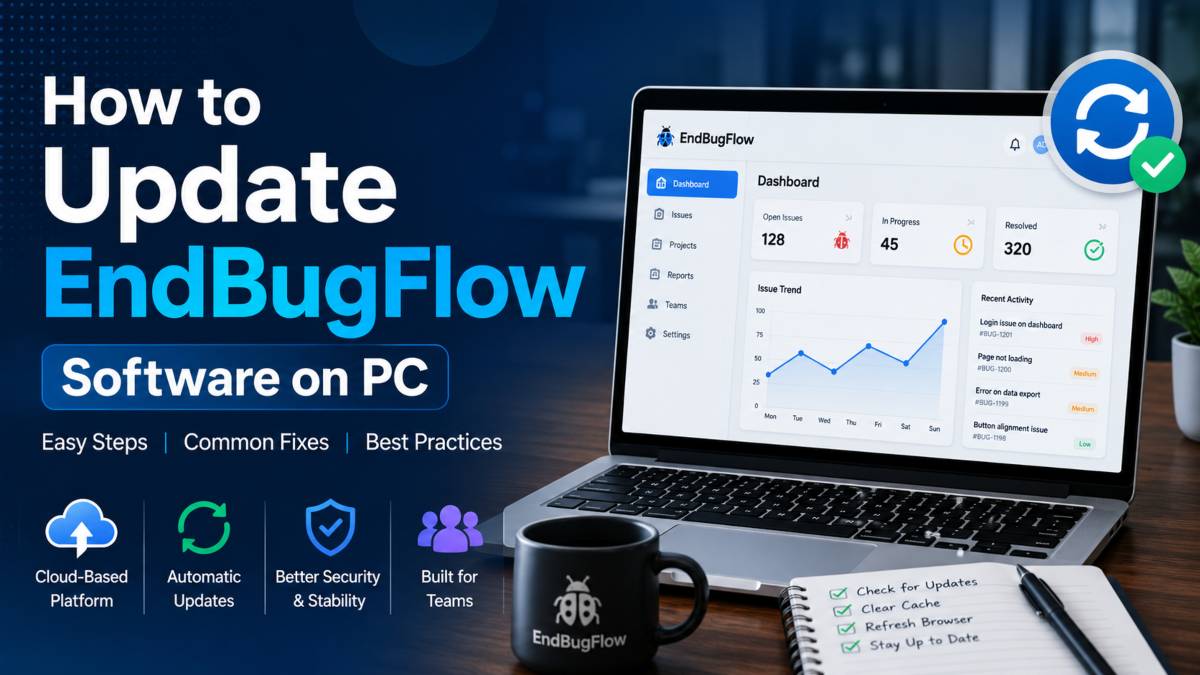
If you’re wondering how to update EndBugFlow software on PC, the first thing to know is that EndBugFlow works differently from many traditional programs. Unlike software that requires downloads and manual installations, EndBugFlow is primarily a cloud based platform accessed through a web browser. As a result, most users do not need to install updates themselves.
In most cases, EndBugFlow updates are applied automatically on the server side. When the platform receives new features, security improvements, or performance enhancements, users can access them simply by logging into their accounts through a supported browser. This means there is usually no update file to download and no installation process to complete on your computer.
If you are not seeing the latest version of EndBugFlow, a quick browser refresh or clearing your browser cache can often resolve the issue. Some organizations may also use a desktop version or custom deployment, which could include additional update options managed by an administrator.
This guide explains how EndBugFlow updates work, how to access the latest version on your PC, and what steps to take if you encounter update related issues.
What Is EndBugFlow Software?
EndBugFlow is a bug tracking and workflow management platform designed to help development teams organize, track, and resolve software issues more efficiently. It provides a centralized workspace where teams can report bugs, assign tasks, monitor progress, and manage projects from a single interface. By bringing developers, testers, and project managers together, EndBugFlow helps streamline communication and keeps issue resolution organized.
Many users search for information about installing or updating EndBugFlow because they assume it functions like a conventional desktop program. However, the platform operates differently from software that is installed directly on a computer. Understanding how EndBugFlow is delivered is essential for knowing how updates, new features, and maintenance are handled.
Is EndBugFlow a Desktop Application or Cloud Based Platform?
EndBugFlow is primarily a cloud based platform that users access through a web browser. Instead of downloading installation files and maintaining software on individual computers, users sign in through an online portal. This approach allows teams to access their projects from different devices while ensuring everyone works within the same environment.
Some organizations may use desktop shortcuts, custom launchers, or company managed solutions to access the platform. Even in these situations, the core service typically runs through the cloud rather than as a standalone desktop application.
Why Understanding This Difference Matters for Updates
Knowing that EndBugFlow is cloud based helps eliminate confusion about updates. Traditional desktop software often requires users to download patches, install new versions, and restart applications. With EndBugFlow, updates are generally applied on the server side. This means users can access the latest features and improvements simply by opening the platform in their browser, making the update process much simpler and more convenient.
Can You Update EndBugFlow Software on a PC?
Yes, you can ensure that you are using the latest version of EndBugFlow on your PC, but the process is different from updating traditional software. Many users expect to download an update package or install a new version manually. With EndBugFlow, that is usually unnecessary because the platform operates through the cloud.
When users search for how to update EndBugFlow software on PC, they are often looking for a download link or update installer. In reality, most updates happen behind the scenes, allowing users to access new features and improvements without performing a manual installation.
How Cloud Based Software Updates Work
Cloud based platforms store their applications and services on remote servers rather than individual computers. When developers release updates, they are deployed directly to the platform’s servers. Once the update is live, users can access the latest version simply by signing in through their web browser.
This approach eliminates the need for downloading files, running installers, or managing software versions across multiple devices.
Do Users Need to Install Updates Manually?
In most situations, no manual installation is required. Users only need a supported web browser and an active internet connection. If recent changes are not visible, refreshing the page or clearing the browser cache is often enough to load the newest version.
Organizations using custom setups or company managed applications may have additional update procedures, but these cases are less common.
How EndBugFlow Delivers New Features
EndBugFlow delivers new features, security improvements, and performance enhancements through server side updates. This allows all users to access the same version at the same time. Instead of waiting for downloads or software patches, teams can start using new functionality as soon as it becomes available, creating a smoother and more consistent experience across projects.
How to Update EndBugFlow Software on PC
Although EndBugFlow is primarily a cloud based platform, there are several steps you can take to ensure you are using the latest version on your PC. In most cases, updates are applied automatically, but refreshing your browser or checking your account settings can help you access newly released features and improvements.
Method 1: Access the Latest Version Through Your Browser
The simplest way to update EndBugFlow is to access the platform through a supported web browser.
Follow these steps:
- Open Google Chrome, Microsoft Edge, Mozilla Firefox, or Safari.
- Visit your organization’s EndBugFlow login page.
- Sign in using your account credentials.
- Refresh the page by pressing F5 or Ctrl + R on Windows.
Since EndBugFlow operates through the cloud, refreshing the platform often loads the newest version automatically. This method works for most users and requires only a few seconds to complete.
Method 2: Clear Browser Cache to Load New Updates
Sometimes your browser may store older files, causing the platform to display outdated content. Clearing the browser cache can help load the latest version.
To clear the cache on Windows:
- Open your browser.
- Press Ctrl + Shift + Delete.
- Select Cached Images and Files.
- Click Clear Data or the equivalent option in your browser.
- Restart the browser and sign in to EndBugFlow again.
After clearing the cache, refresh the page to ensure the newest files are loaded from the server. This step is particularly useful if you notice interface changes that are not appearing correctly.
Method 3: Check for Updates in the Desktop Application (If Available)
Some organizations may provide a desktop application or launcher for EndBugFlow. If you are using one, checking for updates manually may be possible.
Follow these steps:
- Open the EndBugFlow application.
- Navigate to Settings, Preferences, or Help.
- Look for an option labeled Check for Updates.
- Install any available updates by following the on screen instructions.
- Restart the application if prompted.
Not all users will have access to a desktop version, so this method may not apply in every environment.
Method 4: Contact Your Administrator
If your organization manages EndBugFlow internally, some updates may be controlled by an administrator or IT department.
Contact your administrator if:
- New features are missing from your account.
- You are experiencing update related issues.
- Access permissions appear outdated.
- Your company uses organization wide deployment settings.
Your administrator can confirm whether updates have been applied across the organization and provide guidance if additional action is required.
How to Check Whether You Are Using the Latest EndBugFlow Version
Because EndBugFlow is primarily a cloud based platform, users often receive updates automatically. However, there may be times when you want to confirm that you are accessing the latest version and have access to the newest features. Fortunately, there are several simple ways to verify your update status.
Check Version Information
Start by looking for version details within your EndBugFlow account. Depending on your organization’s setup, version information may be available in the Settings, About, Help, or Account section. If a version number is displayed, compare it with any release information provided by your administrator or the platform’s official announcements.
If you are using a desktop application or launcher, checking the version number can also help determine whether an update is needed.
Look for Recently Released Features
Another quick way to confirm you are using the latest version is to look for recently introduced features. New dashboards, reporting tools, workflow options, or interface improvements often indicate that your account is running the current release.
If colleagues can access features that are missing from your account, try refreshing your browser or clearing the cache before investigating further.
Verify With Your IT Team
In many organizations, EndBugFlow access and system updates are managed by an internal IT department or platform administrator. If you are unsure whether your version is current, contact your IT team and ask for confirmation.
They can verify update status, review organization wide settings, and inform you about any recently released features that may still be rolling out to users. This is often the most reliable way to confirm that you are using the latest EndBugFlow version.
Common EndBugFlow Update Problems and Fixes
Although EndBugFlow updates are typically applied automatically, users may occasionally encounter issues that make it seem like the platform has not updated correctly. Most of these problems are related to browser settings, cached files, or account permissions rather than the update itself. Below are some common issues and practical solutions.
EndBugFlow Still Shows the Old Interface
If EndBugFlow continues to display an older layout or missing features, your browser may be loading stored files from a previous session. Start by refreshing the page using F5 or Ctrl + R. If the issue remains, clear your browser cache and sign in again.
You can also try opening EndBugFlow in a different browser to determine whether the problem is browser specific. In many cases, this simple step resolves outdated interface issues.
Browser Not Loading Recent Changes
Sometimes recent updates do not appear immediately because cached data prevents the browser from downloading the newest files from the server.
To fix this problem:
- Clear cached images and files.
- Restart your browser.
- Open EndBugFlow in a private browsing window.
- Make sure your browser is updated to the latest version.
These actions force the browser to load fresh content and can restore missing changes.
Login Problems After an Update
If you experience login issues after an update, begin by checking your username and password. If your credentials are correct, clear browser cookies and try signing in again.
You should also verify that your internet connection is stable. For organization managed accounts, contact your administrator to confirm there are no permission changes or account restrictions affecting access.
EndBugFlow Not Working on PC
When EndBugFlow fails to load entirely, the issue may be related to your browser, network connection, or system settings. First, test your internet connection and restart your browser. Next, try accessing the platform from another browser or device.
If the problem continues, check whether your organization is performing maintenance or deploying updates across the system. Contact your IT team or administrator for assistance if none of the basic troubleshooting steps resolve the issue.
Benefits of EndBugFlow’s Automatic Update System
One of the biggest advantages of EndBugFlow is its automatic update system. Since the platform operates through the cloud, users do not have to spend time managing software installations or searching for update files. Updates are delivered directly through the platform, allowing teams to focus on their work rather than software maintenance.
This approach also helps organizations keep everyone on the same version, reducing confusion and improving collaboration across projects.
No Manual Downloads Required
Traditional software often requires users to download update packages, run installation files, and restart applications. With EndBugFlow, these steps are usually unnecessary. Most updates are applied on the server side, allowing users to access the latest version simply by logging in through their browser.
This saves time and eliminates the risk of users running outdated versions.
Instant Access to New Features
When EndBugFlow releases new tools, interface improvements, or workflow enhancements, users can typically access them immediately. There is no need to wait for large downloads or lengthy installation processes.
As soon as the update is available, teams can begin using the newest functionality without additional effort.
Better Security and Stability
Automatic updates help maintain a secure and reliable environment. Security improvements, bug fixes, and performance enhancements can be implemented across the platform without requiring action from individual users.
This helps reduce technical issues and keeps the platform running smoothly for everyone.
Consistent Experience Across Teams
Because updates are delivered centrally, all users within an organization generally access the same version of EndBugFlow. This creates a more consistent experience when collaborating on projects, sharing workflows, and managing tasks.
Team members can work together without worrying about compatibility issues or missing features caused by different software versions.
EndBugFlow vs Traditional Desktop Software Updates
Understanding the difference between EndBugFlow and traditional desktop software can help users avoid confusion when searching for update instructions. Most desktop applications require installation files, manual updates, and ongoing maintenance. EndBugFlow follows a different approach because it is primarily a cloud based platform accessed through a web browser.
With traditional software, users are often responsible for downloading updates, installing new versions, and ensuring compatibility with their operating system. This process can take time and may occasionally interrupt productivity. EndBugFlow simplifies the experience by delivering updates through its servers, allowing users to access the latest version without manual intervention.
The table below highlights the key differences between the two approaches.
| Feature | Traditional Software | EndBugFlow |
|---|---|---|
| Installation | Requires software installation on each device | Accessed through a web browser |
| Updates | Users download and install updates manually | Updates are delivered automatically through the platform |
| Downtime | Updates may require restarts and temporary interruptions | Minimal disruption for most users |
| Maintenance | Users manage software patches and upgrades | Maintenance is handled centrally |
| Accessibility | Often limited to installed devices | Accessible from multiple devices with internet access |
| Version Control | Different users may run different versions | Users typically access the same current version |
For most teams, EndBugFlow’s cloud based update model offers greater convenience and reduces the workload associated with software management. Instead of worrying about installations and version mismatches, users can focus on tracking issues, managing workflows, and collaborating with their teams.
Best Practices for Keeping EndBugFlow Running Smoothly
Although EndBugFlow handles most updates automatically, following a few simple maintenance practices can help ensure the platform performs reliably. These steps can reduce loading issues, improve security, and help you access new features as soon as they become available.
Keep Your Browser Updated
Since EndBugFlow is primarily accessed through a web browser, using the latest version of Chrome, Edge, Firefox, or Safari is essential. Browser updates often include security improvements, bug fixes, and compatibility enhancements that help web applications run more smoothly.
Clear Cache Periodically
Over time, your browser stores temporary files that can sometimes interfere with website performance. Clearing your cache periodically helps remove outdated data and ensures that EndBugFlow loads the most recent version of its interface and features. This can be especially useful if you notice display issues or missing updates.
Monitor Product Announcements
Stay informed about new features, system improvements, and scheduled maintenance by following official EndBugFlow announcements or updates shared by your organization. Knowing what changes have been released can help you make better use of the platform and avoid confusion when new functionality appears.
Report Technical Issues Quickly
If you encounter login errors, loading problems, or missing features, report them as soon as possible. Prompt reporting allows administrators or support teams to investigate and resolve issues before they affect productivity. Early communication can also help identify whether the issue is account specific or affecting multiple users across the organization.
Final Thoughts
Understanding how to update EndBugFlow software on PC becomes much simpler once you know how the platform operates. Unlike traditional desktop applications that require manual downloads and installations, EndBugFlow is primarily a cloud based solution that receives updates through its servers. This means most users can access the latest version simply by signing in through their web browser.
If you do not see recent changes, refreshing the platform, clearing your browser cache, or checking with your administrator can usually resolve the issue. These quick steps help ensure you are using the most current version and have access to the latest features and improvements.
For most organizations, EndBugFlow’s update model reduces maintenance requirements, improves consistency across teams, and eliminates the hassle of managing software versions manually. By following the best practices covered in this guide, you can keep EndBugFlow running smoothly and make the most of its bug tracking and workflow management capabilities.
Read More: https://coupasoftware.org/best-email-marketing-tools-for-saas-companies-in-2026/