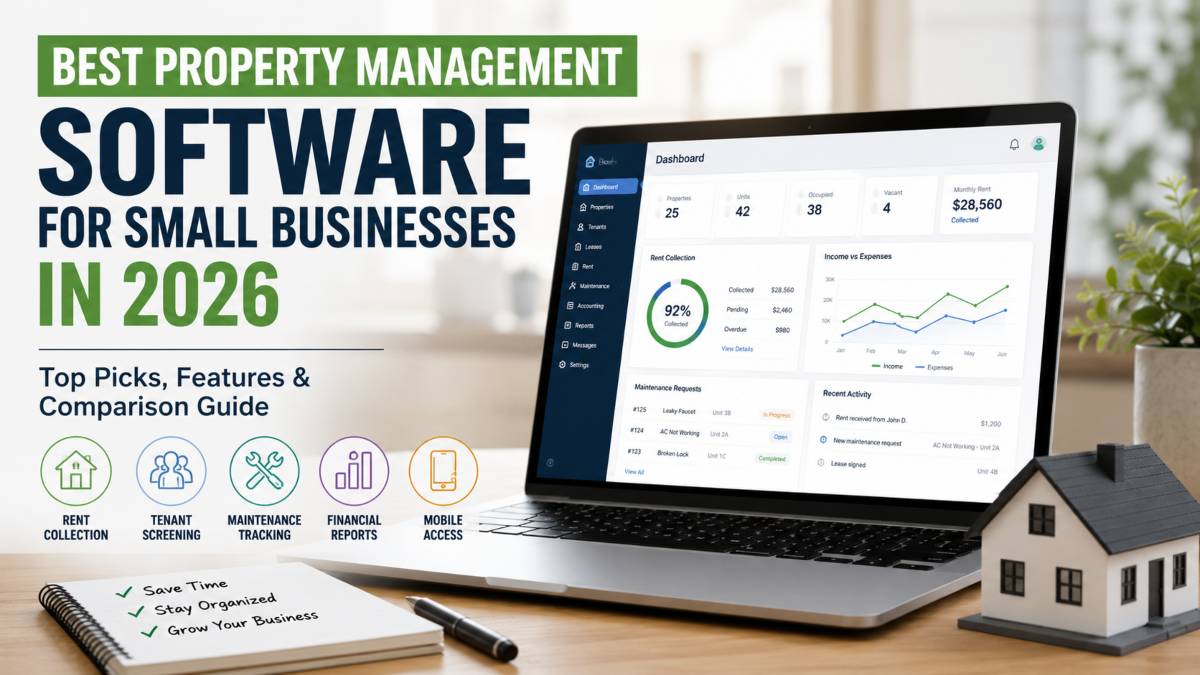
Picture this. You started with one rental. Then three. Then ten. Now your evenings disappear into spreadsheets, late rent reminders, and a dozen tabs open just to track who paid and who did not. Growth feels less like progress and more like pressure.
This is exactly where the best property management software for small businesses in 2026 steps in. Not as a luxury, but as a reset button. The right tools handle rent collection, tenant screening, and day to day operations in one place, without draining your budget or demanding a steep learning curve.
For small landlords managing one to fifty units, the focus is simple. Save time. Stay organized. Scale without chaos. The platforms ahead are built to do just that, quietly turning busywork into something that finally runs on autopilot.
What Small Businesses Need From Property Management Software
Small portfolios do not need bloated systems packed with features you will never touch. What they need is control without friction. When you are handling between one and fifty units, the goal is simple. Spend less time chasing tasks and more time running the business.
Core Features That Matter Most
Start with rent collection automation. Payments should arrive on time without awkward follow ups. A clean system sends reminders, tracks payments, and keeps records without manual input.
Tenant screening tools come next. You want quick background checks, credit insights, and rental history in one place so decisions are fast and informed.
Maintenance tracking keeps small issues from turning into expensive problems. A simple ticket system lets tenants report issues while you track progress without endless calls and messages.
Then there is accounting. Nothing fancy. Just clear income and expense tracking, basic reports, and tax ready records when you need them.
Budget vs Functionality
Free tools can work well for very small setups, especially under ten units. They cover the essentials without upfront cost. But as your portfolio grows, paid plans start to make sense. They bring stronger reporting, smoother automation, and fewer limitations.
Watch for hidden costs. Payment processing fees and paid add ons can quietly raise your monthly spend. The best choice is not the cheapest option. It is the one that fits your size today and still works when you add your next property.
Best Property Management Software for Small Businesses in 2026
Not all tools are built for small portfolios. Some feel like overkill. Others feel like spreadsheets with better branding. The sweet spot sits in the middle. Software that handles the heavy lifting without slowing you down.
Here are the platforms getting it right in 2026 for small businesses managing one to fifty units.
Buildium
If your portfolio is growing and you can feel the pressure building, Buildium is often the next step up. It is built for landlords who are moving beyond the basics and need structure that can keep up.
The strength here is accounting. You get clean financial tracking, detailed reports, and tools that make tax season far less painful. On top of that, tenant portals allow residents to pay rent, send messages, and submit requests without constant back and forth.
There is also e signing built in, which means leases can move fast without printing or scanning. Everything lives in one system, which cuts down on mistakes.
Pricing starts at a level that makes sense for serious small businesses. It is not the cheapest option, but it pays off once you move past a handful of units.
The trade off is the learning curve. It takes a bit of time to get comfortable. But once it clicks, it becomes a strong backbone for a growing portfolio.
Best fit
Landlords managing five to fifty units who want solid financial control and room to grow.
Avail
Avail feels like it was built for landlords who are just getting started or keeping things lean. It strips away the noise and focuses on what matters most.
The free plan covers up to ten units, which makes it one of the most accessible tools on the market. You can list properties, screen tenants, and collect rent without spending anything upfront.
Tenant screening is a strong point. You get reliable background checks and credit data, which helps you make better decisions without extra steps.
Rent collection is simple and direct. Tenants can pay online, and you can track everything without chasing payments manually.
Where it falls short is deeper accounting. If you need advanced financial reporting, you may outgrow it. But for smaller setups, it does the job cleanly.
Best fit
New landlords or small portfolios under ten units looking for a free and simple system.
TenantCloud
TenantCloud sits in a very practical space. It is affordable, flexible, and covers a wide range of needs without feeling overwhelming.
It starts at a low monthly price, which makes it attractive if you want more than a free tool but are not ready for higher costs. You get rent collection, tenant communication, and maintenance tracking in one place.
One standout feature is its connection with accounting tools like QuickBooks. This makes it easier to keep financial records clean without switching between systems.
It also works well for mixed portfolios. If you manage different types of properties, it adapts without much friction.
Some features sit behind paid add ons, which can increase your total cost over time. Still, the base offering is strong enough for most small businesses.
Best fit
Landlords who want a balanced mix of price and features with room to customize.
Innago
Innago takes a different angle. It keeps things free while still offering a solid set of tools that many paid platforms charge for.
You get online rent collection, tenant screening, and maintenance tracking without a monthly fee. That alone makes it attractive for small landlords watching every expense.
The interface is simple and easy to pick up. You do not need a long setup process to get started.
There are no flashy extras, and reporting stays basic. But for many small portfolios, that is enough. It handles the daily work without getting in the way.
This is one of those tools that proves you do not always need to pay to stay organized.
Best fit
Individual landlords or very small portfolios who want a no cost solution that still covers the essentials.
Landlord Studio
Landlord Studio leans into mobility. It is designed for landlords who manage everything from their phone and want quick access to financial data on the go.
Receipt scanning is a standout feature. You can snap a photo, log expenses, and keep records without waiting until you are back at a desk.
It also handles income tracking and basic reports, which makes it useful for keeping finances clean throughout the year.
This is not a full system in the same way as others on this list. It focuses more on financial tracking than complete property management.
Still, if your main challenge is staying on top of numbers while moving between properties, it fills that gap well.
Best fit
Landlords who prioritize mobile access and simple financial tracking.
Quick Take
There is no single winner for everyone. The right choice depends on where you are right now.
If you are growing fast and need structure, Buildium makes sense.
If you want something free and simple, Avail or Innago can carry you.
If you want flexibility without high cost, TenantCloud hits a strong middle ground.
If you live on your phone, Landlord Studio keeps your finances within reach.
The key is not picking the most popular option. It is choosing the one that fits your size, your workflow, and how you plan to grow next.
Buildium Best for Scaling Small Portfolios
When your portfolio starts to grow, the cracks in basic systems show fast. Buildium steps in as a structured solution that brings order to the chaos without overwhelming small teams.
Pricing starts at $58 per month, which places it within reach for landlords who are moving beyond entry level tools. What you get in return is a platform built to handle growth with confidence.
The accounting tools are one of its strongest points. Income, expenses, and reports are all tracked in a way that makes financial management feel less like guesswork. The tenant portal adds another layer of efficiency. Residents can pay rent, send messages, and manage requests without constant follow ups.
E signatures keep leasing smooth and fast. No printing, no scanning, no delays. Everything moves in one clean flow.
Buildium works best for portfolios between five and fifty units where structure becomes essential. It is not the simplest tool to learn at first. There is a bit of a learning curve. But once you settle in, it becomes a reliable system that can carry your business forward without breaking under pressure.
Avail Best Free Option for Beginners
Starting out as a landlord often means keeping costs tight while still trying to look professional. Avail fits neatly into that space. It gives you the tools to run a small operation without asking for upfront spend.
The free plan covers up to ten units, which makes it a strong entry point for new landlords or anyone managing a small portfolio on their own. You can list properties, attract tenants, and manage applications without juggling multiple platforms.
Tenant screening is one of its strongest features. Background checks and credit insights are easy to access, helping you make better decisions without slowing down the process. Rent collection is just as straightforward. Tenants can pay online, and everything is tracked in one place so you are not chasing payments or updating records by hand.
Avail works best for hands on landlords who want control without complexity. The trade off comes with accounting. The tools are basic and may not cover deeper financial needs as your portfolio grows.
For getting started, though, it keeps things simple, clean, and cost free.
Tenant Cloud Best Low Cost All in One Tool
Tenant Cloud sits in that sweet spot where price meets practicality. It gives small businesses a full set of tools without pushing them into a high monthly commitment.
Plans start from $18 per month, which makes it one of the more accessible paid options for landlords who want more than a basic free setup. From day one, you get a system that connects your workflow instead of scattering it across different apps.
The built in CRM keeps tenant communication organized. Messages, updates, and records all live in one place so nothing slips through the cracks. Maintenance tracking adds another layer of control, letting you manage requests and progress without endless calls or messy notes.
One of its strongest advantages is the ability to sync with accounting tools like QuickBooks. That connection helps keep your financial records clean without double entry or manual fixes.
TenantCloud works especially well for mixed portfolios where flexibility matters. Whether you manage a few different property types or plan to expand, it adapts without forcing a rigid structure.
The catch is that some features sit behind paid add ons. As you expand your setup, costs can creep up. Still, the base platform delivers enough value to make it a solid all round choice for small businesses looking to stay efficient without overspending.
Innago Best Completely Free Solution
If the goal is simple control without monthly costs, Innago makes a strong case. It strips property management down to what matters and keeps the door open for landlords who do not want another bill on the list.
The platform is completely free, yet it still covers the core tasks that keep a rental business running. Rent collection is handled online, which means fewer delays and less chasing. Tenant screening is built in, giving you quick access to background and credit checks when you need to make decisions. Maintenance ticketing keeps issues organized so nothing gets lost in messages or phone calls.
The setup is straightforward. You can get started quickly without a steep learning process, which makes it ideal for landlords managing properties on their own.
Where Innago holds back is in reporting. The financial insights are basic and may not give you the depth you would want as your portfolio grows.
Still, for individual landlords or very small portfolios, it delivers exactly what is needed. Clean, simple, and cost free management that keeps everything in one place.
Landlord Studio Best for Mobile Financial Tracking
Some landlords run their business from a desk. Others run it from their phone between property visits, tenant calls, and quick inspections. Landlord Studio is built for the second group.
Its strength sits firmly in financial tracking. Receipt scanning turns a quick photo into a logged expense, which means no more piles of paper or forgotten costs at the end of the month. Everything is recorded as it happens, not later when details get blurry.
Tax reports are another key feature. Instead of scrambling through records, you have organized data ready when it counts. Income and expenses stay clear, which makes financial management far less stressful.
This tool works best for landlords who care about staying on top of numbers in real time. It keeps finances tight and visible without needing a full desktop setup.
The limitation is simple. It is not a complete property management system. You will not get the same range of features found in larger platforms.
But if your main focus is clean financial tracking on the go, it does that job with speed and simplicity.
Feature Comparison Table
Choosing the right tool often comes down to a quick side by side view. Here is how the top options stack up for small businesses managing up to fifty units.
| Software | Starting Price | Key Features | Best For | Limitations |
|---|---|---|---|---|
| Buildium | $58 per month | Accounting, tenant portal, e signing | Growing portfolios with 5 to 50 units | Takes time to learn |
| Avail | Free up to 10 units | Tenant screening, listings, rent collection | New landlords and small DIY setups | Basic accounting tools |
| TenantCloud | From $18 per month | CRM, QuickBooks sync, maintenance tracking | Mixed portfolios needing flexibility | Extra cost for add ons |
| Innago | Free | Rent collection, screening, maintenance tickets | Individual landlords | Limited reporting depth |
| Landlord Studio | Varies by plan | Receipt scanning, tax reports | Finance focused landlords on mobile | Not a full system |
This table keeps things simple. Each tool has a clear role. The right choice depends on how many units you manage and how much control you need over finances and daily tasks.
How to Choose the Right Property Management Software
Picking the right software is less about chasing features and more about knowing how you actually run your business. For small portfolios, the wrong tool can slow you down just as much as no tool at all.
Match Software to Portfolio Size
Start with your current size. If you manage one to ten units, you likely need something simple that covers rent collection and tenant screening without extra layers. Free or low cost tools can handle this stage well.
Once you move closer to fifty units, things change. You need stronger tracking, better reporting, and systems that keep everything organized without constant checking. Choose a platform that can grow with you, not one you will need to replace in a few months.
Check Integration Needs
Your software should not work in isolation. If you already use accounting tools, make sure your property management system connects smoothly. Syncing with tools like QuickBooks can save hours and reduce errors.
Payment systems also matter. Look for options that make it easy for tenants to pay online while keeping records accurate.
Watch for Hidden Costs
The price you see at signup is not always the full story. Some platforms charge extra for payment processing, premium features, or added units. These costs can build up quickly as your portfolio grows.
Always check what is included in the base plan and what sits behind an upgrade.
Ease of Use Matters
A powerful tool is useless if it slows you down. Look for clean layouts, simple navigation, and a setup process that does not feel like a project on its own.
You should be able to log in, find what you need, and take action in minutes. If it feels confusing from the start, it will only get worse over time.
In the end, the best choice is the one that fits your current workflow while giving you space to grow without friction.
Match Software to Portfolio Size
Start with where you are, not where you think you might be in two years. If you manage one to ten units, keep it lean. You need fast rent collection, basic screening, and clear records. Free or low cost tools will carry you without adding pressure.
Move into the ten to fifty unit range and the game changes. Volume brings complexity. You need stronger tracking, better reporting, and a system that keeps everything in one place. At this stage, paying for a more structured platform saves time and reduces mistakes.
Check Integration Needs
Your software should fit into your existing setup, not replace everything overnight. If you already use accounting tools like QuickBooks, make sure your property management system connects without friction.
Payment gateways matter just as much. Tenants expect simple online payments. You need accurate records without manual updates. A good integration keeps money moving and data clean.
Watch for Hidden Costs
The price you see at the start is rarely the full picture. Transaction fees on rent payments can add up fast, especially as your portfolio grows.
Then there are upgrade traps. Some features look included but sit behind higher plans or paid add ons. Before you commit, check what you actually get at your level and what will cost extra later.
Ease of Use Matters
Time is your most limited resource. A complex system that slows you down is not worth it, no matter how many features it offers.
Look for software that feels natural from the first login. Clear menus, simple workflows, and quick actions make a real difference day to day.
If it takes too long to learn, it will take even longer to use. The best tools stay out of your way while keeping everything under control.
Free vs Paid Property Management Software
The choice between free and paid software is not about which one is better. It is about what fits your current setup without slowing you down later. Each comes with clear strengths and limits. The key is knowing when each one works in your favor.
When Free Tools Make Sense
Free tools are a strong starting point if you manage a small number of units and want to keep costs tight. They handle the basics well. Rent collection, tenant screening, and simple tracking can all run smoothly without monthly fees.
If you are managing under ten units and doing most tasks yourself, free software keeps things simple. It reduces upfront risk and lets you build your workflow without pressure. For many small landlords, this is enough to stay organized and in control.
When Paid Tools Are Worth It
As your portfolio grows, the cracks in free tools start to show. More tenants mean more data, more payments, and more moving parts. This is where paid software earns its place.
You get stronger reporting, smoother automation, and tools that handle larger workloads without friction. Features like detailed accounting, better integrations, and advanced tracking save time and reduce errors.
The shift to paid software is not about spending more. It is about gaining back time and avoiding problems that come with growth. When your system starts to feel stretched, that is your signal to upgrade.
Common Mistakes Small Landlords Make When Choosing Software
Choosing software should feel like gaining control, not adding friction. Yet many small landlords rush the decision and end up with tools that do not fit how they actually work. The result is wasted time, messy systems, and the need to switch platforms later.
Choosing Based on Price Alone
It is tempting to go straight for the cheapest option or anything labeled free. That works at the start, but price alone rarely tells the full story. A low cost tool that lacks key features can create more work in the long run.
If you spend extra hours fixing gaps or juggling multiple tools, you are paying in time instead of money. The better move is to weigh cost against what the software actually handles for you day to day.
Ignoring Scalability
Many landlords pick software that fits their current size but breaks the moment they grow. Adding more units should not mean starting over with a new system.
A good platform supports your next step, not just your current one. Even if your portfolio is small today, choose something that can handle more tenants, more payments, and more data without slowing down.
Overlooking Support and User Experience
Features look great on paper, but daily use is what matters. If the system feels confusing or takes too long to learn, it will slow everything down.
Support is just as important. When something goes wrong, you need fast answers, not endless waiting. A clean interface and reliable support can make the difference between a tool that helps and one that frustrates.
Avoid these mistakes, and the right choice becomes much clearer.
Final Thoughts
The best property management software for small businesses in 2026 is not about picking the most popular name. It is about choosing a tool that fits how you actually operate.
Start with your portfolio size. A smaller setup needs simplicity, while a growing one needs structure. Then look at your budget, not just what you can afford today, but what makes sense as you add more units. Finally, focus on your workflow. The right software should make daily tasks faster, not more complicated.
Get this balance right and everything else falls into place. Payments run smoothly, records stay clean, and your time shifts back to what matters most, growing your business without the chaos.