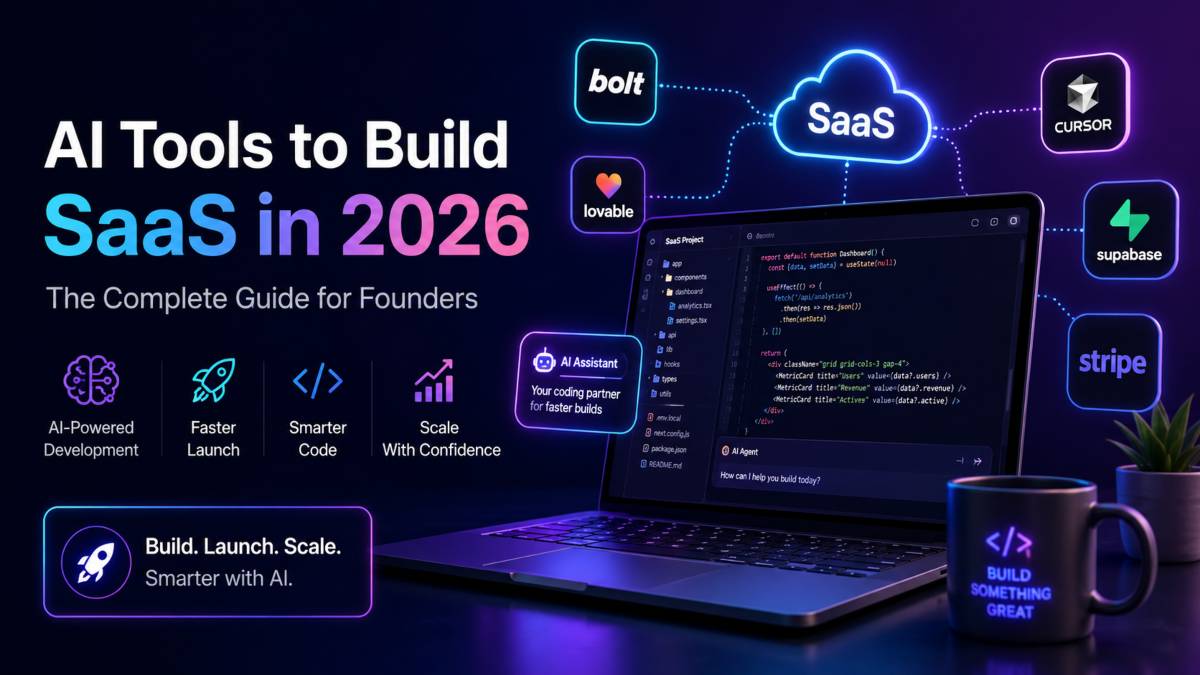
There was a time when building a SaaS product meant long nights, large teams, and months of work before anything real could be tested. That version of the internet feels distant now. In 2026, AI tools have changed the rhythm of creation. What once took quarters can now take days.
For founders, this shift is more than convenience. It changes who gets to build. You no longer need a full engineering team to launch an idea. A single person with the right tools can move from concept to working product in a single week. That speed opens the door to faster testing, quicker feedback, and smarter decisions.
Developers are not left behind either. AI coding assistants handle repetitive work, suggest cleaner solutions, and help manage complex systems with less friction. The result is not just faster output, but sharper focus on what actually matters.
This guide walks through the tools shaping modern SaaS development. Whether you write code every day or have never touched it, the landscape has shifted in your favor.
Why AI Is Changing How SaaS Gets Built
From Months to Days: The New Build Cycle
The old playbook for building SaaS was slow and heavy. You planned, hired, built, tested, and only then saw if the idea worked. That timeline has collapsed.
AI tools now handle the parts that used to eat weeks. Writing boilerplate code, setting up APIs, shaping interfaces, even wiring databases can happen in a single session. What matters is not just speed, but momentum. You can test an idea while the energy is still fresh.
For solo founders, this is a shift in power. You no longer wait on a team or a budget to get started. A rough idea in the morning can turn into a working MVP by the weekend. That means faster feedback, faster mistakes, and faster wins.
Who Benefits Most from AI SaaS Tools
The biggest winners are the builders who move quickly.
Indie hackers can launch products without outside help. They can test ten ideas instead of betting everything on one. Speed becomes their edge.
Startup teams gain a different advantage. They can cut development cycles and focus more on product and growth. Smaller teams can do work that once needed an entire department.
Developers also see a shift. AI tools handle repetitive tasks, which leaves more room for solving real problems. At the same time, non coders now have a way in. They can build, ship, and learn without waiting for technical support.
The gap between idea and execution has never been smaller.
AI Coding Assistants for SaaS Development
What AI Coding Assistants Actually Do
AI coding assistants sit inside your editor and work beside you like a fast thinking partner. They do not just suggest code. They understand patterns, context, and intent.
Autocomplete is the entry point. You start a function, and the assistant fills in the rest with clean, usable code. It saves time, but more than that, it keeps your flow intact.
Refactoring goes deeper. These tools can rewrite messy logic into something tighter and easier to maintain. You can ask for cleaner structure, better naming, or improved performance, and get results in seconds.
Multi file changes remove one of the biggest bottlenecks in development. Instead of editing files one by one, you can update entire sections of your project in a single move. This is where real speed shows up.
Codebase awareness ties it all together. Modern assistants understand how your project is structured. They can reference existing functions, follow dependencies, and suggest changes that fit your system rather than breaking it.
Top AI Coding Tools in 2026
A few tools have pulled ahead in this space, each with its own edge.
Cursor stands out for its ability to work across large codebases. It can edit multiple files at once and handle complex SaaS logic without losing context.
GitHub Copilot remains a favorite for everyday development. It integrates smoothly into popular editors and offers reliable inline suggestions that speed up routine work.
Claude Code takes a different route. It works through the terminal and handles larger tasks like rewriting backend systems or restructuring services with minimal input.
Windsurf focuses on rapid prototyping. It supports agent driven workflows and connects well with modern deployment setups, making it useful when speed matters.
When to Use Coding Assistants vs Other Tools
AI coding assistants shine when you need control. If your SaaS product has custom logic, complex workflows, or unique integrations, these tools give you the flexibility to build exactly what you need.
They are also the right choice when your app starts to grow. Scaling a SaaS product means dealing with performance, structure, and long term maintenance. Coding assistants help you manage that complexity without slowing down.
No code tools can get you to a working product quickly. Coding assistants take you further. They help you shape, refine, and expand your SaaS without hitting hard limits.
No Code and Low Code Platforms for SaaS
Building SaaS Without Writing Code
Not long ago, building software without code sounded like a shortcut with tradeoffs. In 2026, it feels more like a new lane entirely. No code and low code platforms let you turn ideas into working products using plain language and visual tools.
Prompt based app generation sits at the center of this shift. You describe what you want, a dashboard, a login flow, a billing system, and the platform builds a working version in minutes. It is not perfect, but it is fast enough to test real ideas.
Visual builders make the process even more direct. You drag components, connect logic, and shape your product like you are arranging blocks. For many founders, this removes the biggest barrier to entry. You do not need to think like a developer to ship something useful.
Best No Code AI Tools for SaaS in 2026
A new wave of tools is pushing this space forward, each with its own style.
Bolt is built for speed. You can go from idea to full stack app with a simple prompt. It works well for quick MVPs where time matters more than fine control.
Lovable leans into design. It creates clean, polished interfaces and connects easily with backend services. If your product needs to look sharp from day one, it earns its place.
Replit Agent offers more flexibility. It blends coding and automation, giving you room to adjust things when the default output is not enough.
Vercel v0 focuses on interface building. It generates components that fit modern frontend stacks, which makes it useful for shaping the look and feel of your app.
Base44 targets non developers. It creates full apps with built in deployment and even mobile support, which keeps the process simple from start to finish.
Limitations You Should Know
Speed comes with tradeoffs. Most no code platforms have limits when it comes to backend depth. Complex data models, custom workflows, or heavy processing can push these tools beyond their comfort zone.
Custom logic is another pressure point. While you can tweak and extend what is generated, there is often a ceiling. If your SaaS product needs unique behavior or advanced features, you may hit that limit sooner than expected.
The smart move is to treat these tools as a launchpad. They help you get to a working product quickly. As your idea grows, you can decide whether to stay within their system or move toward a more flexible setup.
Backend and Infrastructure Tools for SaaS
Why Backend Still Matters
You can generate interfaces in minutes now. You can sketch features with a prompt and see them come alive on screen. But behind every smooth SaaS product sits something less visible and far more important. The backend.
This is where your data lives. Databases store user activity, product logic, and everything your app depends on to function. Without a solid structure here, even the best looking product falls apart under real use.
Authentication is another core layer. Users need secure access, account control, and trust that their data is handled properly. A weak auth setup is not just a bug, it is a risk.
APIs connect everything. They allow your frontend to talk to your backend, and your app to talk to external services. Payments, notifications, analytics, all of it flows through these connections. When they work well, your product feels seamless.
Top Backend Platforms for AI SaaS
Several platforms have become go to choices for modern SaaS builders.
Supabase offers a Postgres database, built in authentication, storage, and real time features. It gives developers control while keeping setup simple.
Firebase takes a different approach with a NoSQL database and strong real time support. It works well for apps that rely on live updates, though it can tie you closely to its ecosystem.
Neon and PlanetScale focus on database performance and flexibility. Features like branching let you test changes without breaking production data, which is valuable as your product grows.
Choosing the Right Backend Stack
The right backend is not just about features. It is about fit.
Flexibility matters if you expect your product to evolve. Platforms that give you control over your data and structure make it easier to adapt as new needs show up.
Lock in is the tradeoff. Some tools make things easy at the start but harder to change later. It is worth thinking about how much freedom you want down the line.
Scale readiness is the final piece. Even if you are starting small, your backend should handle growth without forcing a rebuild. Choosing the right foundation early can save you from painful changes later.
Supporting Tools Every SaaS Needs
A SaaS product is more than code and design. The real work begins once users arrive. Payments need to run smoothly. Accounts need to stay secure. Errors need to be tracked before they turn into support tickets. This layer of tools keeps everything moving behind the scenes.
Payments and Billing
Handling money is one of the first real tests for any SaaS product. Subscriptions, upgrades, refunds, all of it needs to work without friction.
Stripe is a strong choice for subscription based SaaS. It supports recurring billing, flexible pricing models, and global payments. It also fits well with most modern stacks.
Paddle takes a slightly different route. It handles taxes and compliance for you, which can save time if you are selling in multiple regions. That makes it useful for founders who want fewer operational headaches.
Authentication and User Management
User accounts are the backbone of any SaaS product. You need secure login, smooth onboarding, and clear account control.
Clerk offers ready made user interfaces and simple setup. It lets you add login, signup, and account management without building everything from scratch.
Supabase Auth works well if you are already using Supabase for your backend. It keeps everything in one system, which makes management easier.
Deployment and Hosting
Once your app is ready, it needs a place to live. Deployment should feel simple, not like another project.
Vercel is known for fast and clean frontend hosting. It works especially well with modern frameworks and makes updates feel almost instant.
Railway supports full stack apps and handles backend services with ease. It is a good option when you want everything in one place.
Monitoring and Analytics
Even a well built app will run into issues. What matters is how quickly you spot and fix them.
Sentry tracks errors in real time and shows exactly where things break. It helps you move from problem to fix without guesswork.
PostHog gives you a clear view of how users interact with your product. You can see what works, what gets ignored, and where people drop off.
Automation and Integrations
No SaaS runs in isolation. You will need to connect tools, move data, and automate routine tasks.
Zapier AI links thousands of apps and lets you create workflows without writing code. It can handle tasks like sending data between tools, triggering actions, and reducing manual work.
These tools may sit in the background, but they shape how your SaaS performs day to day. Choose them well, and everything feels smoother for both you and your users.
Best AI SaaS Tech Stacks in 2026
Picking tools is one thing. Combining them into a stack that actually works is where the real game begins. In 2026, the best stacks are not the most complex. They are the ones that match how you build, how fast you move, and how far you plan to go.
Indie Hacker Stack Fast Launch
If speed is your edge, this stack gets you moving without friction.
Start with Bolt or Lovable to generate your app from a simple prompt. You can shape the interface and core features in hours instead of days.
Pair that with Supabase for your database and authentication. It keeps your backend simple but reliable.
Deploy with Vercel to get your app live fast, with smooth updates along the way.
For payments, Stripe handles subscriptions and billing without adding complexity.
This stack is built for momentum. You can go from idea to live product in a short window, test quickly, and adjust without heavy setup.
Developer Stack Full Control
If you want more control over how your SaaS works, this stack gives you room to build deeper systems.
Use Cursor to write and manage your code with AI support. It helps you move faster without losing structure.
Build your frontend with Next.js, which gives you flexibility and performance for growing apps.
Keep Supabase as your backend to handle data and authentication.
Host your app with Railway for a smooth full stack setup.
This stack takes more effort upfront, but it pays off when your product starts to grow and needs more control.
How to Choose the Right Stack
The right stack depends on how you think and build.
Speed matters if you want to test ideas quickly. A lighter setup helps you move without getting stuck in details.
Flexibility matters if your product has complex features or long term plans. You need tools that can grow with you.
Budget shapes your choices as well. Some tools are free to start but scale in cost as your usage grows.
Technical skill is the final filter. If you are comfortable with code, you can push further with developer tools. If not, no code platforms give you a strong starting point.
Choose a stack that fits your current stage, not just your future vision. That is how you keep moving forward without slowing down.
How to Choose the Right AI Tools for Your SaaS
Choosing tools is not about picking what looks impressive. It is about picking what fits your product, your skills, and your pace. The right setup should feel like momentum, not friction.
Define Your Product Type
Start with clarity. Are you building a simple MVP or something more complex?
If your goal is a quick MVP, focus on tools that help you move fast. You want something that can turn an idea into a working product with minimal setup. Speed matters more than perfect structure at this stage.
If you are building a complex platform, you need more control. Custom workflows, deeper logic, and long term stability become important. In that case, tools with flexibility will serve you better.
Match Tools to Your Skill Level
Your skill level shapes everything.
If you are non technical, no code platforms give you a way to build without getting stuck. You can launch, learn, and improve as you go.
If you are a developer, AI coding tools let you move faster without losing control. You can shape your product exactly the way you want, while still saving time on routine work.
The goal is not to force yourself into a tool. It is to choose one that works with how you already think.
Think About Scaling Early
It is easy to focus only on launch, but growth comes quickly if your idea works.
Some tools are great for getting started but harder to expand later. If you ignore this early, you may end up rebuilding large parts of your product.
A better approach is to think one step ahead. Choose tools that can handle more users, more data, and more features when the time comes.
Build fast, but build with awareness. That balance saves time in the long run.
Common Mistakes When Using AI for SaaS
AI speeds things up, but speed can blur judgment. The biggest problems show up when tools are used without clear thinking behind them.
Over relying on AI Output
It is easy to trust what AI generates, especially when it looks clean and works at first glance. But not every suggestion is solid. Code can be inefficient, logic can miss edge cases, and small errors can grow into real issues later.
You still need to review, test, and understand what you ship. AI should support your thinking, not replace it.
Ignoring Backend Structure
A fast interface can hide a weak foundation. Many founders focus on how the product looks and forget how it works underneath.
If your database is messy or your logic is unclear, problems show up as soon as users arrive. Slow performance, broken features, and data issues can follow.
A clean backend keeps your SaaS stable as it grows. It is worth getting right early.
Choosing Tools Without a Stack Plan
Picking tools one by one without a clear plan can create friction later. Some tools do not work well together, while others lock you into setups that are hard to change.
A better approach is to think in terms of a stack. How will your frontend, backend, and services connect? Will they scale together?
A little planning upfront can save a lot of time down the line.
The Future of AI SaaS Development
The next phase of SaaS will feel less like building and more like directing. AI is moving from assistant to operator, and that shift changes how products come to life.
Agent Based Development
AI agents are no longer limited to small tasks. They can plan features, write code, test outputs, and adjust based on feedback. You give a goal, and the system works through the steps with minimal input.
This changes the role of the builder. Instead of writing every line, you guide the process. You set direction, review results, and refine what the system produces.
Fully Automated SaaS Pipelines
The idea of a full pipeline run by AI is becoming real. From idea to deployment, each stage can connect into one flow.
You describe the product, the system builds the interface, sets up the backend, connects services, and pushes it live. Updates follow the same path. Changes can move from concept to production in a short cycle.
This kind of flow reduces friction and keeps momentum high, especially for small teams.
What Founders Should Expect Next
Founders will need a different mindset. Speed will increase, but so will competition. More products will launch, and the gap between good and average will narrow.
Execution will still matter, but clarity will matter more. Knowing what to build and why will become the real advantage.
The tools will keep getting faster. The question is how well you use them.
Conclusion
Building SaaS in 2026 feels different because it is different. The barriers that once slowed everything down are no longer in the way. You can move from idea to product faster than ever, test without hesitation, and adjust while the momentum is still strong.
But speed alone is not the win. The real edge comes from how you use these tools. Picking the right stack, understanding your product, and staying close to your users still matter. AI handles the heavy lifting, but direction remains yours.
For founders, this is a rare window. You can build without waiting, launch without perfect conditions, and learn in real time. For developers, it is a chance to focus less on routine work and more on solving meaningful problems.
The tools will keep getting better. The pace will keep increasing. What will stand out is not who builds faster, but who builds smarter.
That is where the real opportunity sits.