Affiliate marketing has always been a game of attention. Get the click, earn the commission. Simple in theory, brutal in practice. Banners fade into the background. Static posts get ignored. Audiences scroll faster than ever, and patience is thin.
Now enter video native ads. Not loud. Not intrusive. They slip into the feed like they belong there, blending with the content people already trust and choose to watch. No interruption. No friction. Just a quiet pull that turns curiosity into action.
This is where affiliate marketing starts to feel less like selling and more like storytelling. A short clip that mirrors real life. A quick problem, a clean solution, a product that fits without forcing itself into the spotlight. Done right, it does not feel like an ad. It feels like discovery.
The numbers back it up. More views, stronger engagement, better conversion. But the real shift is deeper than metrics. It is about how people decide what to trust, what to click, and what to buy.
In this guide, we break down how video native ads can turn passive scrolling into real affiliate revenue, and how to use them in a way that feels natural, sharp, and built for results.
What Are Video Native Ads in Affiliate Marketing
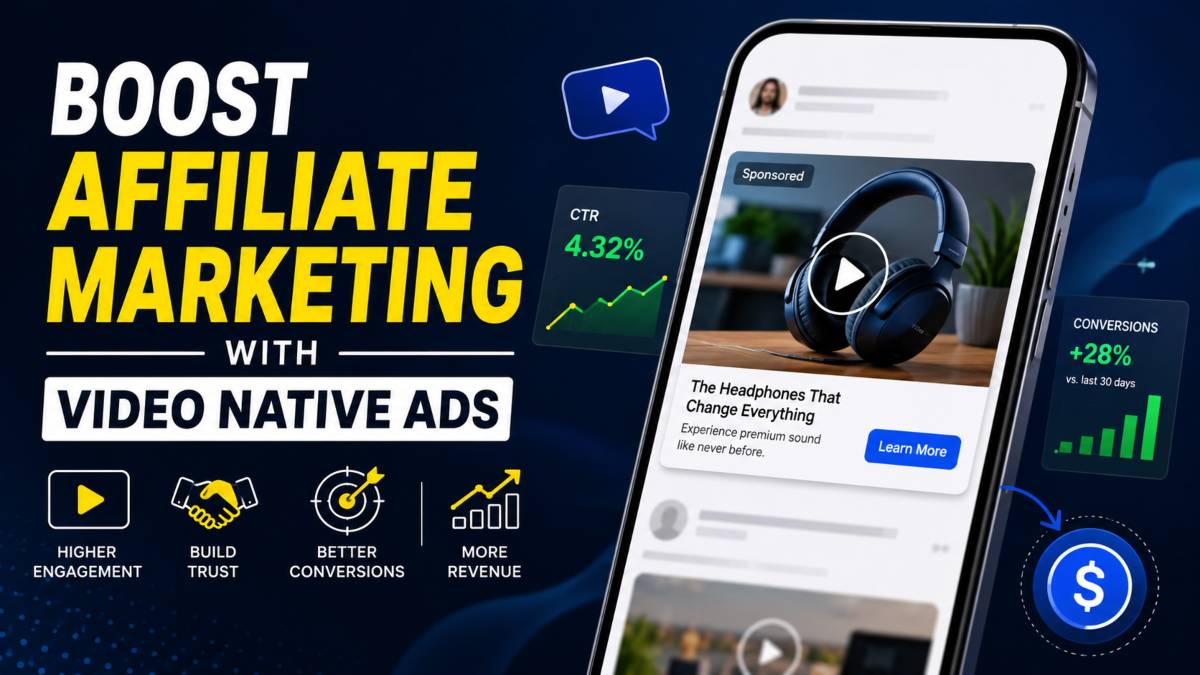
Video native ads in affiliate marketing are video promotions that match the look and feel of the platform where they appear. Instead of interrupting the user, they sit inside the content feed, right between posts, stories, or articles. The goal is simple. Make the ad feel like part of the experience, not a break from it.
For affiliates, this format changes everything. You are not pushing a link into someone’s face. You are placing a story where people are already paying attention.
How Video Native Ads Blend Into Content Feeds
Unlike traditional ads that interrupt videos or block content, video native ads appear in the same style as organic posts. Think of a short clip on a social feed that looks just like any other video, except for a small sponsored label.
The visuals, tone, and format follow the platform. On short video apps, that means quick cuts and vertical framing. On blogs, it might be a clean video placed inside an article. The result is a smoother experience where users do not feel pulled away from what they came to see.
Why Users Engage More With Native Video Content
People scroll fast, but they stop for content that feels familiar. Native video ads work with that behavior instead of fighting it. They show up in the natural flow, so users are more likely to watch, even if only for a few seconds.
Trust also plays a big role. When content looks like something users already enjoy, it feels more real. Add a simple story or a relatable moment, and the viewer is no longer watching an ad. They are watching something that makes sense in their world, which makes them more open to clicking and taking action.
Why Video Native Ads Work So Well for Affiliate Marketing
Affiliate marketing lives or dies on one thing. Attention that turns into action. Video native ads close that gap faster than most formats because they meet users where they already are, in the middle of content they chose to consume.
They do not shout for clicks. They earn them.
Higher Click Through Rates and Purchase Intent
The difference shows up quickly in performance. Video native ads pull in up to 40 percent higher click through rates compared to standard social ads. More people stop, watch, and take that next step.
It does not end at the click. Purchase intent also rises, with data showing around 18 percent higher intent from users who engage with native video. That means viewers are not just curious. They are closer to making a decision.
For affiliates, this is where things get interesting. Better clicks paired with stronger intent creates traffic that actually converts, not just traffic that looks good on a dashboard.
Trust Factor: Why Viewers Believe Native Content More
People trust what feels real. Native video ads lean into that by using a style that mirrors everyday content. No hard sell. No aggressive push. Just a product placed inside a story or a real situation.
Around 63 percent of users say they trust reviews more than other types of content. When a video feels like a review or a personal take, it builds confidence without forcing it.
This editorial style delivery gives affiliates an edge. Instead of acting like marketers, they come across as guides. That shift makes viewers more open to listening and more willing to act.
Beating Banner Blindness With Video
Most users have trained themselves to ignore display ads. Around 86 percent tune them out completely. Static banners fade into the background before they even register.
Video native ads break that pattern. Movement catches the eye. Story holds attention. Placement inside the feed keeps the experience smooth.
Instead of being pushed aside, the content becomes part of the scroll. That small shift changes everything. It turns passive viewers into active participants, which is exactly where affiliate marketing starts to pay off.
Best Video Native Ad Formats for Affiliate Campaigns
Not all video native ads play the same role. Some grab attention. Others build trust. The smart move is knowing which format fits where in the journey from first glance to final click.
In Feed Social Video Ads
These are the clips people see while scrolling through apps like TikTok, Instagram, and Facebook. They sit between organic posts and feel like part of the feed.
The goal here is simple. Stop the scroll. Quick visuals, tight pacing, and a clear hook in the first seconds make all the difference. This format works best at the awareness stage, where you introduce a product or idea without pushing too hard.
If it feels like content people already enjoy, it gets watched. If it feels like an ad, it gets skipped.
In Article Video Ads for Product Education
Placed inside blog posts or online articles, these videos show up right when the reader is already focused on a related topic.
This is where you explain, not just tease. Show how the product works, break down key benefits, or answer a common problem. The context does most of the heavy lifting, so the message lands with more clarity.
This format fits the middle of the funnel, where users are thinking and comparing before they act.
Sponsored Reviews With Embedded Video
This is where trust starts to turn into conversions. A full review with a video gives space to be honest, balanced, and useful.
A simple structure works best. Start with a problem people recognize. Walk through the experience. Then bring in the product as a solution that fits naturally into the story.
When viewers feel they are getting a real opinion, they are far more likely to follow the recommendation.
Recommendation Widget Video Ads
These appear in sections like “You may also like” or “Recommended for you” on websites. They blend into the layout and rely on curiosity to pull clicks.
The strength here is timing. Users are already exploring, already open to new ideas. A short video paired with a strong headline can guide them toward your offer without friction.
This format often delivers solid conversion rates because it reaches people when they are already in discovery mode.
7 Proven Ways to Improve Video Native Ad Performance
Good video native ads do not rely on luck. They follow patterns that match how people watch, scroll, and decide. Get these right, and your campaigns start pulling real results instead of just views.
Hook Attention in the First 2 Seconds
The opening decides everything. If nothing grabs attention right away, the viewer is gone.
Start with movement. A quick action, a close up, or something unexpected. Add a hint of curiosity or tension. Make the viewer think, “Wait, what is happening here?”
Skip slow intros. No logos. No buildup. Drop straight into the moment that makes people pause.
Follow the 70 30 Content Rule
People do not show up to watch ads. They show up for value.
Keep around seventy percent of your video focused on something useful, interesting, or entertaining. The remaining thirty percent can guide toward the product.
This balance keeps the content watchable while still doing its job. Push too hard, and people scroll away. Give value first, and they stay long enough to care.
Keep Videos Short and Mobile First
Most users watch on their phones, often without sound. Your video needs to fit that reality.
Aim for six to thirty seconds depending on the goal. Short clips work well for quick attention. Slightly longer ones help explain the product.
Use vertical or square formats so the video fills the screen. Add clear subtitles so the message lands even with the sound off.
Use Story Driven Video Instead of Direct Selling
People connect with stories, not sales pitches.
Show a simple situation they recognize. A problem, a small frustration, or a daily task. Then bring in the product as part of the solution, not the center of attention.
This approach feels natural. It keeps viewers engaged and makes the product easier to accept.
Add Clear and Direct Calls to Action
Once you have attention, do not leave people guessing.
Tell them what to do next. Learn more. Try it. Shop now. Keep it simple and easy to follow.
Use on screen text or a closing frame to guide the action. A clear next step often makes the difference between interest and conversion.
Test Multiple Creatives at Once
One video is not enough. Different audiences respond to different angles.
Run five to seven variations at the same time. Change the hook, the visuals, the length, or even the message. Mix short clips with longer ones. Try different formats to see what clicks.
The data will show you what works. Then you can double down on the winners.
Refresh Content Frequently
Even strong ads lose their edge over time. People get used to them and stop paying attention.
Update your creatives often. Small changes in visuals, hooks, or pacing can keep things fresh. A weekly update cycle works well for many campaigns.
Fresh content keeps your ads alive and helps maintain steady performance instead of watching it fade.
Key Metrics to Track for Affiliate Video Native Ads
Running video native ads without tracking the right numbers is like driving with no dashboard. You might be moving, but you have no idea if you are heading in the right direction. The key is to focus on metrics that show real engagement and actual buying intent, not just surface level views.
Engagement Metrics That Actually Matter
Start with how people watch your content. View through rate tells you how much of your video people actually see. Are they dropping off early, or staying until the end? This gives a clear signal of how strong your hook and message are.
Watch time goes deeper. It shows how long viewers stay engaged. A higher watch time means your content is holding attention, which often leads to better results later in the funnel.
If people are watching more, they are more likely to trust what they see.
Conversion Focused Metrics
Clicks are where affiliate marketing starts to pay off. Click through rate shows how many viewers take action after watching your video. A strong rate means your message and call to action are working together.
Cost per completed view adds another layer. It tells you how much you are paying for viewers who stay until the end. This helps you understand if your budget is being used wisely, especially when testing different creatives.
Together, these metrics show not just interest, but intent.
Measuring Real Impact Beyond Clicks
Not every result shows up as an instant sale. Some ads build awareness that leads to action later.
Brand lift measures how your content changes perception. Do people remember the product? Do they feel more open to it? These shifts matter, especially in competitive niches.
Multi touch attribution tracks the full journey. A user might see your video first, then return later through another channel. This metric helps you see the bigger picture, so you do not underestimate the role your video ads play in driving conversions.
30 Day Plan to Launch Video Native Ads for Affiliate Marketing
A strong start makes everything easier. Instead of guessing your way through campaigns, a simple thirty day plan gives structure, speed, and clear direction. Each week builds on the last, turning ideas into data and data into results.
Week 1: Audience and Content Audit
Start by understanding who you are talking to. Look at your target audience and break down what they watch, click, and engage with. Focus on patterns. What kind of videos hold attention? What topics get shared or saved?
Next, study the platforms you plan to use. Scroll through feeds and observe what feels natural there. Pay attention to video style, pacing, and tone. This step is less about creating and more about noticing what already works.
The goal is simple. Learn the environment before placing your content in it.
Week 2: Strategy and Creative Planning
Now turn insights into a plan. Build simple content templates that you can repeat and adjust. These might include quick problem solution videos, short reviews, or before and after style clips.
Choose where your ads will appear. Look for platforms and publishers that match your audience and content style. The closer the fit, the better the performance.
Keep your ideas flexible. You are not looking for one perfect ad. You are building a system that allows testing and improvement.
Week 3: Launch and Test Campaigns
This is where things go live. Launch multiple video variations at the same time. Change hooks, visuals, and lengths to see what connects.
Do not wait for perfection. Early data matters more than polished ideas. Watch how people respond. Which videos hold attention? Which ones get clicks?
The goal this week is learning fast. Every view and click gives you direction.
Week 4: Optimize and Scale Winning Ads
Now focus on what works. Identify the videos that perform best and push more budget toward them. At the same time, refine weaker creatives by adjusting hooks, visuals, or calls to action.
Run simple split tests to compare versions. Small changes can lead to better results over time.
Once you see clear winners, scale them across platforms or audiences. This is where campaigns move from testing to growth, turning steady performance into consistent affiliate revenue.
Common Mistakes to Avoid in Video Native Affiliate Ads
Even strong ideas can fall flat when execution slips. Video native ads reward subtlety and speed. Miss either, and performance drops fast.
Over Promotional Content That Feels Like Ads
The quickest way to lose attention is to sound like a sales pitch. When a video pushes too hard, viewers scroll past without thinking twice.
Keep the focus on value. Show a real situation, offer something useful, and let the product fit into the story. When it feels natural, people stay longer and trust more.
Weak Hooks That Fail to Stop the Scroll
If the first seconds do not grab attention, nothing else matters. A slow or unclear opening gives viewers no reason to pause.
Start with something that creates instant interest. Movement, a bold statement, or a moment that feels unfinished. Give people a reason to stay and see what happens next.
Ignoring Mobile Optimization
Most viewers watch on their phones. If your video is not built for that, it struggles from the start.
Use vertical formats, clear visuals, and subtitles so the message works even without sound. Keep everything easy to follow on a small screen.
Not Testing Enough Variations
Relying on one or two videos limits your chances of success. Different audiences respond to different styles, hooks, and formats.
Run multiple versions at once and compare results. The more you test, the faster you find what works and the easier it becomes to improve performance.
Final Thoughts
Attention is easy to get. Turning it into revenue is where most affiliate strategies fall apart. Video native ads close that gap by meeting users in a space where they already feel comfortable, already engaged, and already open to discovering something new.
This format works because it respects the viewer. It blends into the experience, delivers value first, and builds trust before asking for action. That shift from pushing products to presenting solutions is what drives real results.
But none of this works without execution. Strong hooks, clear storytelling, consistent testing, and smart tracking all play their part. When these pieces come together, views stop being just numbers. They become clicks, and clicks turn into commissions.
The opportunity is sitting right in the feed. The only question is whether you are ready to use it.