Walk onto a construction site ten years ago and you would find the same pattern everywhere. Emails piling up, spreadsheets passed around, drawings lost between versions, and decisions slowed down by gaps in communication. It worked, but only just.
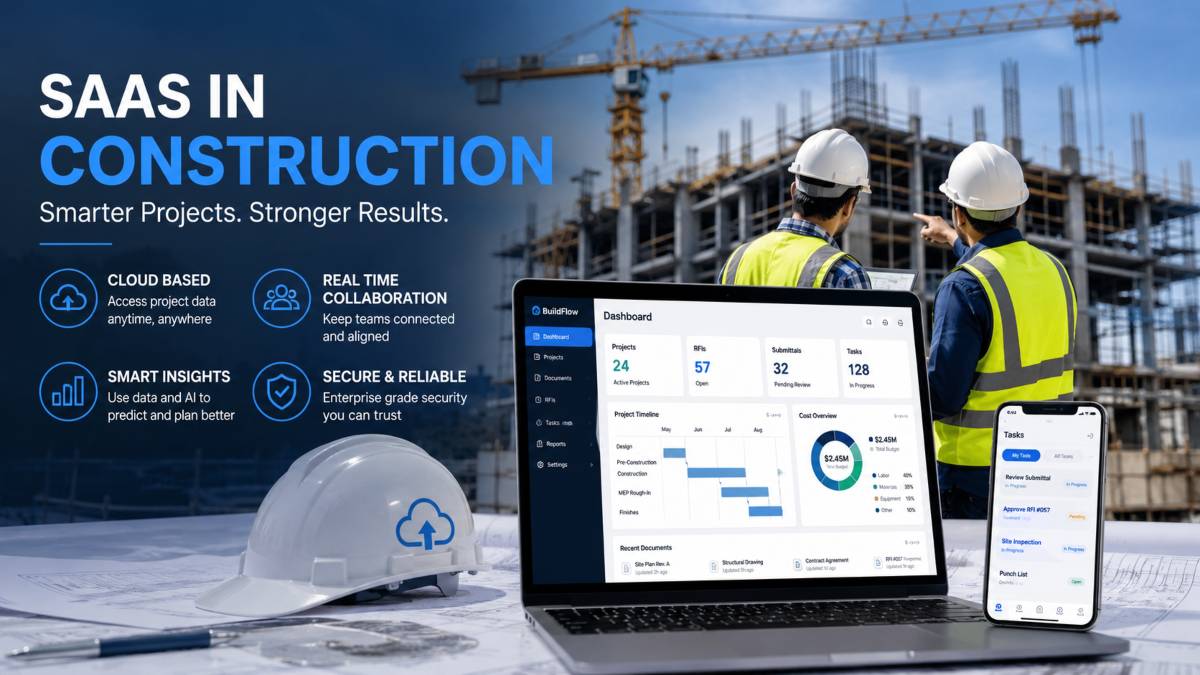
Now that rhythm is shifting. SaaS tools in construction are replacing scattered workflows with connected systems that bring everything into one place. Plans, updates, approvals, and reports live inside cloud platforms where every team member can access the latest version without confusion.
This change is not about convenience alone. It is about speed and control. Teams can respond faster, track progress in real time, and spot issues before they grow into delays. Visibility improves across the entire project, from site activity to budget performance.
Instead of chasing information, teams work from a shared source of truth. The result feels tighter, more organized, and far less reactive. Construction is still complex, but the way it is managed is becoming far more precise.
What SaaS Means for Construction Today
Construction has always been busy, layered, and hard to keep in sync. For years, teams relied on emails, paper trails, and scattered tools to manage work. It got the job done, but it often came with delays, confusion, and too many versions of the same file floating around.
SaaS changes that structure from the ground up. It brings order to what used to feel fragmented and slow.
From Fragmented Workflows to Connected Systems
The old system was a patchwork. Drawings sat in inboxes, RFIs moved through long email chains, and approvals took time to track. Teams spent as much effort chasing information as they did working on the project itself.
Now everything sits in one platform. Drawings, RFIs, contracts, and approvals are stored and updated in real time. Everyone works from the same set of data, which removes confusion and cuts down on mistakes. The process feels cleaner and far more controlled.
Real Time Communication Across Teams
Construction projects involve many moving parts. Owners, engineers, contractors, and site teams all need to stay aligned. Without clear communication, small issues can grow quickly.
SaaS tools keep everyone connected. Updates are shared instantly, and changes are visible to all relevant teams at the same time. This reduces back and forth and keeps decisions moving forward.
The result is fewer delays, clearer communication, and a project that runs with more rhythm and less friction.
How SaaS Tools Change Daily Construction Work
The real shift shows up in the day to day grind. Not in theory, but in how teams move through tasks, solve problems, and keep projects on track. SaaS tools do not just sit in the background. They shape how work flows from morning briefings to end of day reports.
Centralized Document and Data Management
Before SaaS, finding the right document could feel like a job on its own. Drawings lived in inboxes, contracts sat in folders, and updates were passed around without clear control. One wrong version could lead to costly mistakes on site.
Now everything sits in one place. Drawings, contracts, and updates are stored in a shared system that updates in real time. When a change is made, it is visible to everyone who needs it. There is no guessing which file is current.
This kind of clarity removes friction. Teams spend less time searching and more time building. It also reduces errors that come from working with outdated information.
Workflow Automation on Site and in Office
Repetitive tasks used to slow projects down. Approvals waited in inboxes, reports took time to compile, and tracking progress required constant follow up.
SaaS tools handle much of that work automatically. Approvals move through set workflows, project updates are logged as they happen, and reports can be generated without manual effort. Alerts keep teams informed without the need for constant checking.
The effect is simple but powerful. Less chasing, less waiting, and more forward movement. Teams can focus on decisions and execution instead of routine admin tasks that once ate up valuable time.
Key Benefits of SaaS in Construction Projects
When SaaS enters a construction project, the shift is not subtle. It shows up in how fast teams move, how clearly they see progress, and how well they control cost. The gains build across the entire project, from early planning to final delivery.
Faster Collaboration and Communication
Speed matters on site. Delays often come from slow updates or missed information. SaaS tools keep everyone in sync with instant updates across teams. A change in drawings or a site issue can be shared right away, without long email chains or waiting for calls.
This keeps work moving. Decisions happen faster, and teams stay aligned without constant back and forth.
Better Cost Control and Planning
Cost control becomes sharper with digital tools. SaaS platforms support forecasting, budgeting, and resource planning in one place. Teams can track spending as it happens and compare it against the plan.
When issues appear, they are easier to spot early. This helps avoid surprises and keeps budgets closer to target.
Scalability Across Projects
Construction projects vary in size and complexity. SaaS tools adapt to both. A small build can use the same system as a large multi site program without major changes.
This flexibility means teams do not need new tools for every project. The system grows with the work, keeping processes consistent.
Data Driven Decision Making
Every action inside a SaaS platform creates data. Over time, this builds a clear picture of performance. Analytics tools turn that data into insights that help teams make better decisions.
AI can also support planning by spotting patterns and predicting risks. This gives teams a stronger base for decisions, rather than relying on guesswork.
Common Use Cases of Construction SaaS Tools
SaaS tools earn their place not through theory, but through everyday use on real projects. They step into the gaps where delays, confusion, and missed updates used to slow everything down. From planning to reporting, these tools shape how teams stay organized and keep work moving.
Project Scheduling and Tracking
Keeping a project on schedule is one of the toughest parts of construction. With multiple teams and shifting timelines, even small delays can ripple across the entire build.
SaaS platforms give clear visibility into timelines. Teams can see what is on track, what is falling behind, and what needs attention right away. Updates happen in real time, so schedules stay current instead of outdated.
This helps teams adjust quickly and keep progress steady.
Document Management and RFIs
Communication in construction often runs through documents and RFIs. When these are scattered, things get messy fast.
SaaS tools bring order to that flow. All documents and RFIs are stored in one system, where they can be tracked, updated, and reviewed without confusion. Every change is logged, and every response is easy to find.
This keeps communication clean and reduces the risk of missed details.
Contract and Compliance Management
Contracts and compliance tasks require accuracy and clear records. Managing them through emails or paper can lead to gaps and delays.
With SaaS, approvals move through digital workflows. Each step is recorded, creating a clear audit trail. Teams can track who approved what and when, which improves accountability and keeps processes on track.
Quality Control and Reporting
Quality checks and site reporting are critical for keeping standards high. Without a clear system, issues can slip through or take too long to address.
SaaS tools allow teams to log updates directly from the site. Issues can be recorded, assigned, and tracked until they are resolved. Reports can be generated quickly, giving a clear view of project health at any moment.
The result is tighter control, faster response to problems, and a clearer picture of how the project is progressing.
Real World Example of SaaS in Action
The real test of any tool is how it performs when things change on site. And in construction, change is constant. A revised drawing, a new request, a shift in scope. Without a clear system, these moments can turn into confusion fast.
Managing Changes Without Chaos
Picture this. A contractor receives an updated drawing from the design team. Instead of sending emails back and forth, the file is uploaded into the platform.
The system alerts the relevant team members right away. Site staff, engineers, and project managers all see the update at the same time. No waiting, no missed messages.
Next comes approval. The revised change is routed through the right people. Each step is tracked, and decisions are recorded as they happen. There is no need to chase signatures or confirm who signed off.
Once approved, everything is logged in one place. The update, the decision, and the timeline are all stored together. Anyone can check the history without digging through old emails.
What used to take days now happens in a smooth flow. Less confusion, fewer delays, and a clear record of every step taken.
Why SaaS Matters for the Future of Construction
Construction is catching up. For years, other industries moved ahead with digital systems while building projects stayed tied to slower methods. SaaS is closing that gap and pushing the industry into a more connected and data driven way of working.
Closing the Digital Gap in Construction
The shift is already visible. Teams are moving away from paper trails and disconnected tools toward platforms that bring everything together. This change is not just about keeping up with trends. It is about staying competitive.
Projects run faster when information flows without delay. Decisions improve when everyone works from the same data. SaaS helps construction move in step with modern expectations.
AI and Predictive Planning
AI is starting to work inside these platforms, adding another layer of value. Instead of reacting to problems after they appear, teams can see patterns early.
Software can flag risks, estimate delays, and forecast costs based on past data and current progress. This gives project teams more time to adjust and avoid issues before they grow.
Planning becomes more informed, and outcomes become more predictable.
Improving Safety and Accountability
Safety and accountability improve when information is clear and easy to track. SaaS platforms keep records of actions, approvals, and updates in one place.
If an issue arises, teams can trace what happened, when it happened, and who was involved. This level of visibility supports better decisions and stronger responsibility across the project.
The result is a work environment that feels more controlled, where risks are easier to manage and standards are easier to maintain.
Challenges of Using SaaS in Construction
SaaS brings structure and speed, but it is not a smooth ride from day one. The shift from old habits to digital systems can feel uncomfortable, especially in an industry that relies on routine and proven methods. The value is clear, but the transition needs care.
Adoption and Training Issues
The first hurdle is people. Teams that have worked with paper, calls, and spreadsheets for years do not switch overnight. New tools can feel unfamiliar, even frustrating at the start.
Training becomes key. Without it, systems sit unused or used the wrong way. When teams understand how the platform fits into their daily work, adoption improves. Until then, resistance can slow progress.
Data Security and System Dependence
Moving project data to the cloud raises valid concerns. Sensitive files, contracts, and financial details all sit inside digital systems. Teams want to know that information is safe and controlled.
There is also the question of dependence. When everything runs through one platform, any issue with access or system downtime can disrupt work. Reliable providers and clear backup plans help reduce that risk.
Integration with Existing Systems
Construction companies often rely on older tools that still play a role in operations. Bringing new SaaS platforms into that setup is not always simple.
Systems may not connect easily, and data may need to be moved or adjusted. This can take time and planning. Without proper integration, teams may end up juggling multiple systems, which reduces the benefits of going digital.
The key is to approach adoption step by step, making sure each part of the system fits together and supports the way teams work.
Best Practices for Using SaaS in Construction Projects
SaaS works best when it is set up with intent. The tool alone does not fix problems. The way teams use it makes the difference. A clear approach from the start helps avoid confusion and gets better results over time.
Choose the Right Platform for Your Needs
Not every platform fits every project. Some focus on scheduling, others on document control or cost tracking. The goal is to match the tool to the way your team works.
Look at project size, team structure, and key tasks before choosing. A good fit feels natural in daily use, not forced.
Keep Data Clean and Updated
Data is the backbone of any SaaS system. If the information is wrong or outdated, decisions will suffer.
Make sure drawings, reports, and updates are accurate and current. When teams trust the data, they rely on the system more and use it with confidence.
Train Teams Early and Consistently
Training should start before the platform goes live and continue as the project moves forward. Teams need to know not just how to use the tool, but why it matters.
Short sessions, clear guidance, and regular support help build confidence. When people feel comfortable, they use the system the right way.
Monitor Performance and Usage
Even with a strong setup, it is important to keep an eye on how the platform is used. Check if teams are active, if workflows run smoothly, and if any gaps appear.
Adjust when needed. Small changes can improve how the system performs and keep everything running in sync.
Conclusion
Construction is moving into a more connected way of working, and SaaS sits at the center of that shift. It brings order to complex projects, keeps teams aligned, and makes daily work easier to manage. What once felt scattered now runs through a clear system that supports better decisions and smoother progress.
That does not mean everything changes overnight. The smartest approach is gradual. Start with one area, build confidence, and expand from there.
SaaS is not just another tool added to the stack. It becomes the backbone of how projects are planned, tracked, and delivered. When used with care and consistency, it helps teams stay in control and move forward with more clarity.