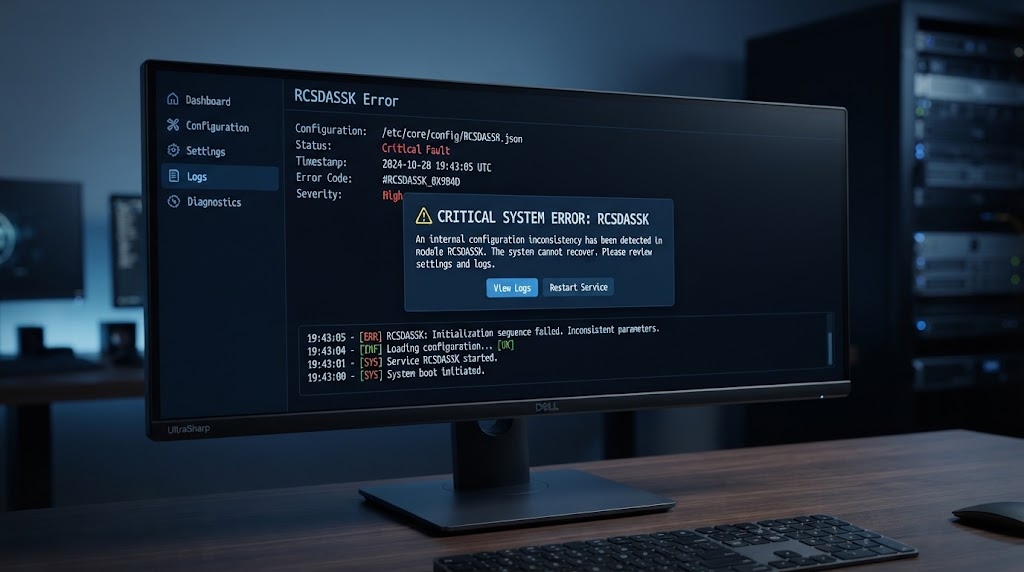
Codes error rcsdassk is a software error term that may appear when an application has trouble loading its configuration, required files, dependencies, or connected services. Based on the available research, RCSDASSK does not appear to have one confirmed definition linked to a single software vendor. Instead, different reports associate it with several types of software and system problems.
The error may appear in desktop applications, developer tools, cloud services, automation systems, or other software environments. Common causes include damaged files, incorrect configuration settings, missing dependencies, limited permissions, authentication problems, and communication failures between an application and a remote service.
The exact cause depends on the software displaying the message and what was happening when the error appeared. Checking the application logs, recent changes, configuration files, and system settings can help identify the source before applying a specific fix.
What Does Codes Error RCSDASSK Mean?
Codes error RCSDASSK refers to a software or system error message that may appear when an application cannot load a required component, read its settings, access a resource, or communicate with another service. The term is used across different troubleshooting sources, but it does not appear to have one confirmed meaning that applies to every application.
For some users, the problem may involve a damaged installation or an incorrect configuration file. In other cases, the application may be unable to access a required folder, library, service, API, or authentication credential. A software update can also create a version mismatch that prevents connected components from working together.
The most useful way to understand an RCSDASSK error is to look at where it appears and what happened immediately before it. An error shown during startup may point toward files or configuration, while an error that appears during an online request may involve authentication or network communication.
Is RCSDASSK an Official Error Code?
The supplied sources do not establish RCSDASSK as one universal error code belonging to a specific software vendor. Different websites connect the term with configuration problems, runtime failures, missing dependencies, authentication issues, permissions, and communication problems.
Because there is no single confirmed definition in the supplied material, users should avoid assuming that every RCSDASSK message has the same cause. The surrounding error message, application name, system logs, and recent changes can provide more useful clues.
Some sources suggest possible meanings for the letters in RCSDASSK, but these interpretations are not confirmed by a single official source. They should therefore be treated as suggestions rather than established definitions.
What Can Trigger an RCSDASSK Error?
Several technical problems may result in an RCSDASSK message. A configuration file could contain an incorrect value, missing setting, or invalid path. An application may also fail when a required module or dependency is missing or damaged.
Permissions can cause problems when software cannot read or write the files it needs. Older software, libraries, drivers, or incompatible versions may also create conflicts. In cloud or developer environments, an invalid API key, expired token, or authentication failure can prevent a service from working correctly.
Network communication is another possible factor, especially when software depends on a remote server. Damaged system files may also interfere with application startup or normal operation. The exact cause needs to be checked within the affected software and system.
Common Causes of the RCSDASSK Error
The RCSDASSK error can have several possible causes because the term is not tied to one confirmed software product. In many reported cases, the problem appears when an application cannot access a required file, load a component, read its settings, or communicate with another service. Finding the cause usually starts with checking what changed before the error appeared.
Corrupted or Incomplete Software Installation
An interrupted installation or failed software update can leave important files missing or damaged. The application may then fail when it tries to load a module or library that is no longer available. Reinstalling or repairing the affected software can replace damaged files and restore missing components.
Configuration File Problems
Incorrect configuration settings can also cause an RCSDASSK error. Files such as .env, YAML, and JSON files may contain missing values, incorrect paths, spelling mistakes, or invalid settings. Environment variables can also cause problems when they point to the wrong location or contain outdated information. Checking recent configuration changes can help identify the source.
Permission and Access Problems
Software needs permission to read files, write data, access folders, and use certain system resources. If those permissions are restricted, the application may fail during startup or while performing a specific task. Security software or operating system rules can also block access to required files or network resources.
Dependency and Version Conflicts
Applications often rely on libraries, SDKs, drivers, and other components. An outdated or incompatible version can prevent these parts from working together. This may happen after a software update when one component changes but another remains on an older version. Checking application requirements and updating related components can help.
API and Authentication Failures
Cloud based applications may depend on APIs and remote services. An expired token, invalid API key, incorrect authentication setting, or client server mismatch can stop the connection. Network problems can make the situation worse by preventing the application from reaching the required service.
System File or Registry Problems
Damaged system files can interfere with applications and their supporting services. On Windows, incorrect or damaged application related registry entries may also cause software failures. System file checks, application repair tools, or restoring a recent working configuration may help when these problems are suspected.
Common Symptoms of Codes Error RCSDASSK
The symptoms linked with a codes error rcsdassk message can vary depending on the application, operating system, and task being performed. Some users may notice the problem as soon as software starts, while others may only see it when a particular feature or online service is used.
Common signs can include:
- Application crashes during startup: The software may close shortly after launch because a required file or component cannot load.
- Software freezes: The application may stop responding while loading settings, modules, or connected services.
- Repeated RCSDASSK messages: The same error may appear each time the affected action is performed.
- Services fail to start: A required background service may stop or fail during startup.
- Features disappear after an update: Certain functions may stop working when a new version introduces compatibility problems.
- Authentication requests fail: The application may reject an API key, token, or login request.
- Configuration errors appear in logs: Log files may show invalid settings, missing values, or failed configuration checks.
- Software becomes slow or unstable: The application may take longer to respond or behave unpredictably.
- Required modules fail to load: A missing, damaged, or incompatible dependency may prevent specific features from working.
These symptoms are not unique to RCSDASSK. Similar behavior can result from many software problems. Checking application logs, recent system changes, configuration settings, and the exact error message can help identify the actual cause.
How to Fix Codes Error RCSDASSK
Fixing a codes error rcsdassk message starts with identifying what the affected application was trying to do when the problem appeared. Since RCSDASSK does not have one confirmed definition tied to a single software vendor, there is no single fix that works in every case. The steps below cover common causes such as temporary software problems, damaged files, configuration mistakes, permission restrictions, outdated components, authentication failures, and system file issues.
1. Restart the Application and System
Start with a simple restart before making major changes. Close the affected application completely, then open it again. If the error remains, restart the computer or device. A restart can clear temporary processes, release locked files, and reconnect background services that may not have started correctly.
You can also clear the application’s cache if it provides a safe option for doing so. Avoid deleting important data folders unless you know what they contain. If the error appeared only once, restarting and clearing temporary data may be enough to resolve it.
2. Update the Software and Operating System
An outdated application or system component can create compatibility problems. Check whether a newer version of the affected application is available. Also check for operating system updates through the normal system settings.
On Windows, use Windows Update. On macOS, check Software Update. Linux users can use the package manager supported by their distribution. Check drivers for important hardware when the error appears during graphics, networking, or other hardware related tasks.
Developer tools should also be checked for newer SDKs, libraries, and dependencies. Download updates from the software developer, operating system vendor, or another trusted source. Avoid unofficial installers that could introduce additional problems.
3. Repair or Reinstall the Application
If the application has a Repair option, try it before removing the software. A repair process can replace damaged files while keeping some existing settings and data.
If repair does not work, consider a clean reinstall. Before uninstalling, back up important documents, configuration files, project data, and other information connected to the application. Remove the application through its normal uninstall process, restart the system if required, and install a fresh copy from the official source.
A clean installation can replace missing modules and damaged application files. It can also remove configuration problems that were created during an earlier installation or update.
4. Check Configuration Files
A configuration problem can cause an RCSDASSK error when software cannot read the settings it needs. Check files such as .env, YAML, and JSON files for missing variables, incorrect paths, invalid syntax, or incorrect values.
Review any configuration changes made shortly before the error appeared. An environment variable may point to an old location, while a setting may reference a service that no longer exists.
If the application worked correctly before a recent configuration change, restore a known working version when you have a reliable backup. For developer projects, version control can make this process easier. Keep sensitive information such as passwords, API keys, and tokens out of publicly shared configuration files.
5. Check File and Application Permissions
Applications need suitable access to read configuration files, save data, load modules, and use required system resources. If access is blocked, the software may fail with a general error message.
On Windows, try running the application with administrator permissions when this is appropriate for the software. Also check whether the affected folders allow the required read and write access.
On Linux, inspect file ownership and permissions before making changes. Avoid giving an application broad permissions simply to make the error disappear. Grant only the access required for the application to perform its normal tasks.
Security software and operating system policies can also restrict access. Check whether a security tool has blocked an application file or process.
6. Check API Keys and Authentication Tokens
If the affected software connects to a cloud platform or remote service, check its authentication settings. An expired token, revoked credential, incorrect API key, or wrong environment variable can prevent the connection from working.
Sign in to the relevant service through its official dashboard and confirm that the required credentials are active. If a credential has expired or been revoked, create a new one according to the service provider’s instructions.
Also check authentication settings and TLS or SSL compatibility when the application communicates with a remote server. Never publish API keys, passwords, access tokens, or private credentials in screenshots, support posts, public repositories, or error reports.
7. Run Windows System File Checks
Windows users can check for damaged system files when other troubleshooting steps have not resolved the problem. Open Command Prompt with administrator permissions and run:
sfc /scannow
Allow the scan to finish before closing the window. System File Checker can find and repair certain protected Windows system files.
If Windows component problems are suspected, you can also run:
DISM /Online /Cleanup-Image /RestoreHealth
These commands are mainly useful when the problem involves Windows system components rather than an application specific configuration problem. Restart the computer after the checks finish and test the affected application again.
8. Check Application and System Logs
Logs can provide more useful information than the RCSDASSK message itself. Look for entries created immediately before or after the error appeared.
Windows users can check Event Viewer for application and system events. Linux users can review relevant entries with journalctl. macOS users can use Console to inspect system and application messages. Many applications also keep their own log files.
Look for messages related to missing modules, configuration parsing, permission failures, authentication, network timeouts, or service connection problems. Record the relevant details before changing settings so you can compare the results of later troubleshooting steps.
9. Test for Software Conflicts
Another application or background service may interfere with the affected software. On Windows, a Clean Boot can help determine whether a startup program or service is responsible.
You can also review recently installed applications, browser extensions, plugins, and background tools. Security software may sometimes block files or connections required by an application.
Temporarily testing the software in a clean environment can help narrow down the source. Make one change at a time and test the application after each change. This makes it easier to identify which component is connected to the problem.
10. Restore a Previous Working State
If the RCSDASSK error started immediately after an update or configuration change, returning to a previous working state may help. Windows users can consider System Restore when a suitable restore point exists.
Developers may also have snapshots, backups, or earlier configuration versions available. Restore only from a source you trust and back up current data before making the change.
This approach is most useful when you can identify a clear point in time when the software worked normally.
11. Contact the Software Provider
If the error continues after these checks, contact the software provider through its official support channel. Give the support team enough information to reproduce or investigate the problem.
Include the exact RCSDASSK message, application name and version, operating system, recent changes, relevant log entries, and the troubleshooting steps you have already tried.
Remove passwords, API keys, access tokens, and other private information before sending logs or screenshots. This gives the support team useful technical details without exposing sensitive credentials.
How to Find the Actual Cause of an RCSDASSK Error
Finding the real cause of an RCSDASSK error is often easier when you look at what happened immediately before it appeared. Instead of changing several settings at once, narrow down the problem step by step.
Identify When the Error Appears
Start by noting exactly when the error occurs. Does it appear while the application is starting, after you log in, during a software update, or when you connect to an API? It may also appear when you open one specific feature.
The timing can point toward the source. A startup error may relate to missing files or configuration settings, while an API related error may involve credentials or network access.
Check What Changed Before the Error
Think about anything that changed shortly before the problem started. Check for:
- Software updates
- New drivers
- Configuration edits
- New plugins
- Changed credentials
- Operating system updates
If the error appeared immediately after one of these changes, that change gives you a useful starting point for troubleshooting.
Read the Error Log Before Changing Settings
Check the application’s error log or system log before making major changes. Look for file names, module names, permission messages, version details, connection failures, or authentication messages.
Record the original error message and save a copy of the relevant log. It is also wise to back up configuration files before editing them. This gives you a way to restore the previous setup if a change creates another problem.
By combining the error timing, recent changes, and log details, you can narrow down the likely cause without changing multiple settings at once.
How to Prevent Future RCSDASSK Errors
Preventing future RCSDASSK errors starts with simple maintenance habits. Keeping software organized and tracking changes can reduce the chance of configuration, dependency, and system problems returning.
Keep Software and Dependencies Current
Install software updates and dependencies from trusted sources and use versions that are known to work with your application. Avoid installing random or untested versions, especially when several components depend on each other. Test major updates before applying them to a working setup when possible.
Validate Configuration Changes
Check configuration files after making edits and before deploying them. Look for incorrect paths, missing values, invalid settings, and formatting problems. For projects that use version control, keep known working configurations so you can compare changes or restore an earlier version when needed.
Maintain Backups and Restore Points
Recent backups can make recovery much easier after a failed update or configuration change. Keep copies of important configuration files and application data. On supported systems, restore points can also provide a useful recovery option when a system change causes unexpected problems.
Monitor System Resources
Keep an eye on available disk space and memory. Low resources can cause applications to behave unexpectedly. Reviewing application and system logs regularly can also help you spot errors before they become recurring problems.
When Should You Contact Technical Support?
Some RCSDASSK errors may require help from the software provider, especially when standard troubleshooting does not identify the cause. Contact technical support if the error continues after restarting, updating, repairing, or reinstalling the application.
Support is also worth contacting when the software handles important business data, or when the problem involves authentication, server settings, or access to remote services. If system files appear damaged or the error returns after a fresh installation, professional assistance may help identify a deeper issue.
Check the application logs before contacting support and keep the original error message available. If the logs show an application specific failure that general troubleshooting cannot explain, share those details with the support team.
When available, use the vendor’s official support channel rather than relying on unofficial fixes. Include the software version, operating system, recent changes, exact error message, and relevant log details to help the support team investigate the problem.
Conclusion
Codes error RCSDASSK does not appear to have one confirmed meaning across all software. The term is used in different troubleshooting reports for problems involving configuration files, damaged application files, missing dependencies, permissions, authentication, and software conflicts.
The best approach is to identify when the error appears, check what changed before the problem started, and review the available logs before changing system settings. Simple steps such as restarting the application, updating compatible software, checking configuration files, reviewing permissions, and repairing or reinstalling the affected application can help resolve many common causes.
If the error keeps returning, avoid making repeated changes without checking the logs. Back up important files, record the original message, and contact the software provider when the issue involves server settings, authentication, damaged system files, or an application specific failure. This gives you a clearer path toward finding the actual cause instead of treating RCSDASSK as a single fixed error.
Frequently Asked Questions About Codes Error RCSDASSK
What is codes error RCSDASSK?
Codes error RCSDASSK is a term used in troubleshooting material for different software problems. Based on the available research, it does not appear to have one universal definition from a single software vendor. The exact meaning can depend on the application, system, and situation in which the message appears.
Is RCSDASSK a virus?
There is no evidence in the supplied research that RCSDASSK itself is malware. An error message alone cannot confirm that a system is infected. If you suspect a security problem, run a trusted security scan and check the source of the affected software.
Why does the RCSDASSK error appear?
The error may appear because of configuration problems, damaged files, missing dependencies, permission issues, authentication failures, or conflicts between software components. The application logs can help narrow down the cause.
How do I fix the RCSDASSK error?
Start with a system and application restart, then check for software updates, configuration problems, permission issues, and relevant logs. If the problem continues, repair or reinstall the affected application after checking its files and settings.
Can outdated software cause RCSDASSK?
Yes. Version mismatches between an application, its dependencies, or the operating system are among the causes reported in the supplied research. Updating compatible components may resolve the problem.
Can a configuration file cause RCSDASSK?
Yes. Incorrect syntax, missing values, wrong file paths, and environment variables can prevent an application from starting or accessing required resources.
Should I reinstall software when RCSDASSK appears?
Reinstallation can help when application files are damaged or incomplete. However, check the likely cause first when possible, especially if the software contains important settings or data.
What should I do if RCSDASSK keeps returning?
Review the error logs, recent system changes, dependencies, permissions, and authentication settings. If the problem continues, contact the software provider through its official support channel and provide the exact error message and relevant diagnostic details.
Read More: Geekzilla.io Technology