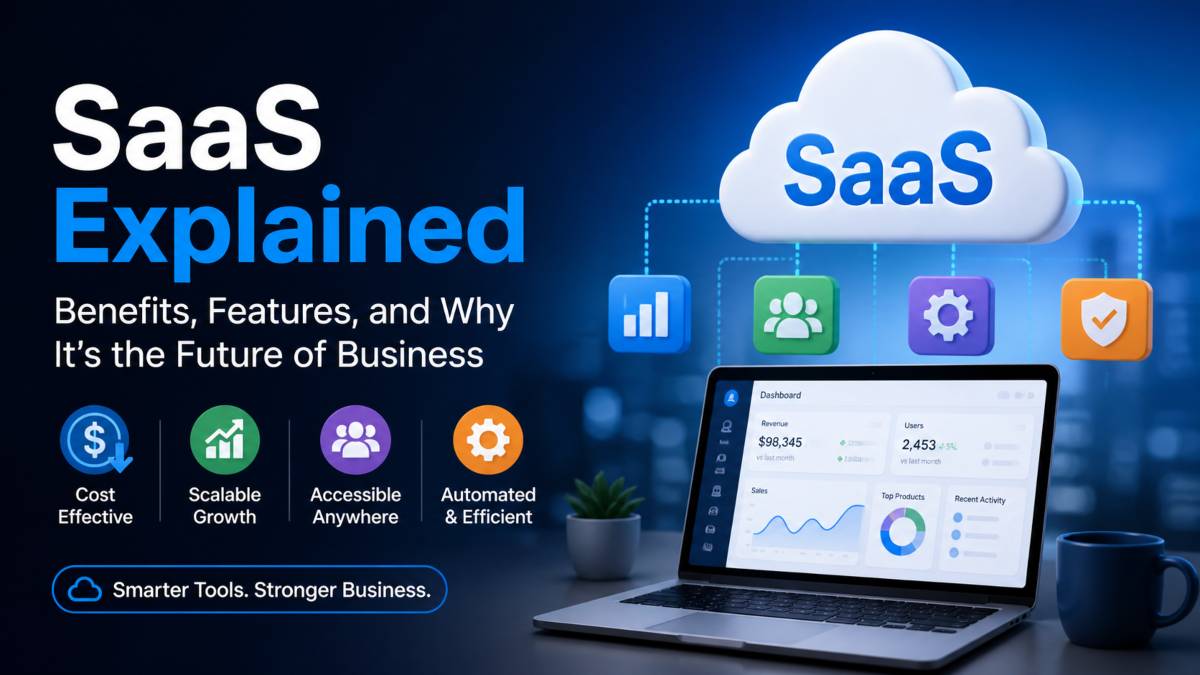
Walk into any modern company and you will notice one clear shift. Software no longer sits on office machines or hidden servers in a back room. It lives online, ready to use from anywhere. This is where SaaS, or Software as a Service, comes in. It is a cloud based model where businesses access tools through a subscription instead of buying and installing them locally.
This shift has changed how companies operate. Traditional software often meant high upfront costs, long setup time, and ongoing maintenance headaches. SaaS removes that friction. Teams can sign up, log in, and start working almost immediately using tools that are flexible and easy to manage.
The real value shows up in everyday work. Businesses spend less, move faster, scale without stress, automate routine tasks, and make decisions based on real data instead of guesswork.
What SaaS Platforms Are and How They Work
SaaS platforms are software tools that run online instead of being installed on a computer. You open them in a browser, log in, and start working. The provider manages everything behind the scenes, including servers, updates, and security. Businesses pay a monthly or yearly fee, which keeps costs simple and predictable.
This model makes software easier to access and use. Teams do not need complex setups or large IT support. As long as there is an internet connection, work can continue from almost anywhere.
SaaS vs Traditional Software
Traditional software usually needs to be installed on a specific device or company server. SaaS runs in the cloud, so there is no need for local installation. This means less setup and fewer technical issues.
Cost is another big difference. Traditional tools often require a one time purchase, which can be expensive upfront. SaaS spreads the cost over time with a subscription, making it easier for businesses to manage budgets.
Maintenance also shifts completely. With traditional software, updates and fixes are handled by the company using it. With SaaS, the provider takes care of everything, so users always have access to the latest version.
Common SaaS Examples
SaaS platforms are used across almost every part of a business. Customer management tools help track leads and sales. HR platforms manage hiring, payroll, and employee records. Accounting tools handle finances, invoices, and reports. Marketing tools support email campaigns, analytics, and customer engagement.
Popular tools include Google Workspace for documents and collaboration, Microsoft 365 for office tasks, Salesforce for customer management, Slack for team communication, and Zoom for meetings. These tools show how SaaS fits into daily business operations without adding complexity.
Lower Costs and Faster Setup for Businesses
One of the biggest reasons businesses move to SaaS is simple. It saves money and gets teams up and running without delay. Traditional software often comes with large upfront costs, long setup cycles, and ongoing expenses that are hard to predict. SaaS changes that by offering a smoother and more affordable path.
No Heavy Upfront Investment
With SaaS, businesses do not need to spend large amounts on licenses, servers, or IT infrastructure. Instead, they pay a subscription fee, usually monthly or yearly. This keeps costs steady and easier to manage.
There is also no need to buy or maintain hardware. The provider handles hosting, storage, and system performance. This removes the burden from internal teams and allows businesses to use high quality tools without major financial pressure.
Quick Deployment
Speed is another major advantage. Instead of waiting weeks or months for installation and setup, teams can start using SaaS tools within days. In many cases, it takes just a few hours to create an account, add users, and begin work.
This is especially useful for small and growing businesses. Startups and SMEs can move fast, test ideas, and adapt without being slowed down by complex systems. It gives them the flexibility to focus on growth rather than setup.
Scalability That Matches Business Growth
Growth rarely follows a straight line. Some months bring a surge in demand, others require a lean setup. SaaS platforms give businesses the freedom to adjust without friction. Instead of planning months ahead for capacity, companies can respond in real time and keep operations running smoothly.
Flexible Resource Management
SaaS tools allow businesses to add or remove users whenever needed. If a team expands, new members can be onboarded in minutes. If demand slows, access can be reduced just as quickly. This keeps costs aligned with actual usage.
Storage and features can also be adjusted without disruption. Businesses can upgrade plans, unlock new tools, or scale back depending on their needs. This flexibility is especially useful for startups, seasonal businesses, and companies entering new markets.
No Infrastructure Stress
With SaaS, there is no need to manage servers, storage systems, or performance issues. The provider handles everything in the background, from system capacity to uptime.
This removes a major burden from internal teams. Instead of dealing with technical maintenance, they can focus on core business tasks like growth, customer service, and strategy.
Supporting Remote and Hybrid Work
Work is no longer tied to a single office. Teams are spread across cities, countries, and time zones. SaaS platforms make this shift possible by keeping tools and data accessible online. Employees can log in, pick up tasks, and stay connected without being in the same physical space.
This flexibility helps businesses stay active at all times. It also gives teams more freedom in how and where they work, which can lead to better focus and smoother daily operations.
Access from Anywhere
SaaS tools can be opened from laptops, tablets, or even mobile phones. As long as there is an internet connection, work can continue without interruption.
There are no location limits or device restrictions. Whether someone is at home, in a shared workspace, or traveling, they can access the same tools and data as the rest of the team. This keeps everyone aligned and reduces delays.
Real Time Collaboration
SaaS platforms bring teams together through shared documents, messaging, and online meetings. Multiple people can work on the same file at the same time, see updates instantly, and leave comments without switching tools.
Communication also becomes faster and more direct. Messages, updates, and discussions happen in one place, which helps teams move quickly and stay on track.
Automation That Saves Time and Reduces Errors
Every business runs on tasks that repeat every day. Sending emails, updating records, tracking leads, processing invoices. Done manually, these tasks eat up time and leave room for mistakes. SaaS platforms change this by building automation directly into the workflow.
Instead of relying on constant human input, businesses can set rules once and let the system handle the rest. This keeps operations smooth and reduces the chance of missed steps or incorrect data.
Workflow Automation
SaaS tools can take over routine tasks with simple triggers and actions. For example, when a new lead enters a system, it can be assigned, scored, and followed up without manual effort. Emails can be sent automatically based on user actions. Invoices can be generated and delivered on schedule.
These automated flows run in the background, keeping processes active even when teams are busy with other priorities.
Improved Productivity
With fewer manual tasks, teams can focus on work that needs attention and creativity. This leads to faster output and better use of time.
Operations also become more consistent. Tasks are completed the same way every time, which reduces errors and improves overall efficiency.
Data Driven Decision Making with SaaS
Modern businesses run on information. The more clearly they understand their performance, the better choices they can make. SaaS platforms make this possible by collecting and presenting data in real time, so teams are never working in the dark.
Instead of waiting for monthly reports or manual updates, decision makers can see what is happening as it happens. This gives companies a clearer view of sales, marketing activity, and overall operations in one place.
Built In Analytics and Dashboards
Most SaaS platforms come with built in dashboards that turn raw data into simple visuals. These dashboards show real time updates on key business areas like sales performance, customer behavior, and operational activity.
Teams can track progress without switching tools or digging through spreadsheets. Everything is organized in one place, which makes it easier to understand trends and spot changes quickly.
Smarter Business Decisions
With clear data in front of them, businesses can plan budgets with more confidence. They can see where money is working and where it is not, then adjust spending based on real results.
Performance tracking also becomes easier. Teams can measure goals, compare results, and refine strategies based on actual numbers instead of guesswork. This leads to more stable growth and better long term planning.
Security, Updates, and Compliance Made Simple
Security and maintenance are constant concerns for any business using digital tools. SaaS platforms reduce that pressure by handling updates, protection, and compliance in the background. This allows companies to stay secure without managing every technical detail on their own.
With everything managed by the provider, businesses get a system that stays current, stable, and aligned with modern security practices.
Automatic Updates
One of the key advantages of SaaS is that updates happen automatically. There is no need for manual installation or scheduled downtime for upgrades. New features, performance improvements, and fixes are applied by the provider and made available instantly.
This means businesses always use the latest version of the software without extra effort. It also reduces delays caused by outdated systems or incompatible versions across teams.
Built In Security Features
SaaS platforms include built in security tools that help protect business data. Access control allows companies to decide who can view or edit specific information, reducing the risk of unauthorized access.
Many platforms also follow established compliance standards used across industries. This helps businesses meet legal and regulatory requirements without building complex security systems from scratch.
Integration and Flexible Tech Stack
Modern businesses rarely rely on a single tool. Instead, they use multiple platforms for sales, marketing, finance, and communication. SaaS makes this setup work smoothly by allowing different systems to connect and share data without friction.
This creates a flexible tech environment where tools work together instead of operating in isolation. The result is better coordination, fewer manual transfers, and cleaner workflows across teams.
API Based Connections
Most SaaS platforms offer API connections that allow different tools to communicate with each other. This means data can move automatically between systems without manual entry.
For example, a new customer added in a CRM can be synced with an email marketing tool or billing system instantly. This reduces duplication and keeps information consistent across platforms.
Custom Workflows
SaaS also allows businesses to design workflows that fit their needs. Instead of building systems from scratch, teams can combine existing tools and configure them to match their process.
This makes it easier to experiment, adjust operations, and scale systems over time without heavy development work.
AI and Low Code Expanding SaaS Capabilities
SaaS platforms are no longer limited to basic business tools. Many now include AI and low code features that change how companies build, analyze, and improve their systems. These additions make advanced technology easier to use across teams, not just for technical experts.
This shift helps businesses move faster, test ideas quickly, and respond to customer needs with more precision.
AI Features in SaaS
Artificial intelligence is now built into many SaaS tools to help businesses make better use of their data. These features can predict trends, suggest actions, and personalize customer experiences based on behavior.
AI also improves customer insights by analyzing large amounts of data and highlighting patterns that would be hard to notice manually. This helps teams understand what customers need and how they interact with products or services.
Low Code Tools for Non Tech Users
Low code platforms allow users to build apps and workflows without needing deep programming knowledge. Instead of writing complex code, users can work with visual tools and simple configurations.
This makes it easier for non technical teams to create solutions, automate tasks, and test new ideas. It also speeds up execution since changes can be made quickly without waiting for development cycles.
Why SaaS Is a Smart Choice for Modern Businesses
SaaS has become a practical choice for companies that want to grow without unnecessary complexity. It brings together cost savings, fast setup, scalability, automation, and strong security in one model that is easy to adopt.
Instead of managing software in a traditional way, businesses can focus on what actually matters. Teams spend less time on maintenance and more time on improving performance and serving customers.
SaaS also supports long term growth by giving companies flexibility to adapt as needs change. Whether it is expanding teams, improving workflows, or adopting new tools, everything can be adjusted without heavy technical effort.
Conclusion
SaaS platforms have changed how modern businesses operate by removing many of the limits tied to traditional software. They reduce costs, speed up setup, support remote work, and make scaling much easier for growing companies.
Beyond convenience, SaaS also brings structure to daily operations through automation, real time data, and built in security. This helps teams work faster, make clearer decisions, and stay focused on results instead of technical maintenance.
As business needs continue to evolve, SaaS stands out as a practical model that supports flexibility, efficiency, and long term growth in a simple and accessible way.