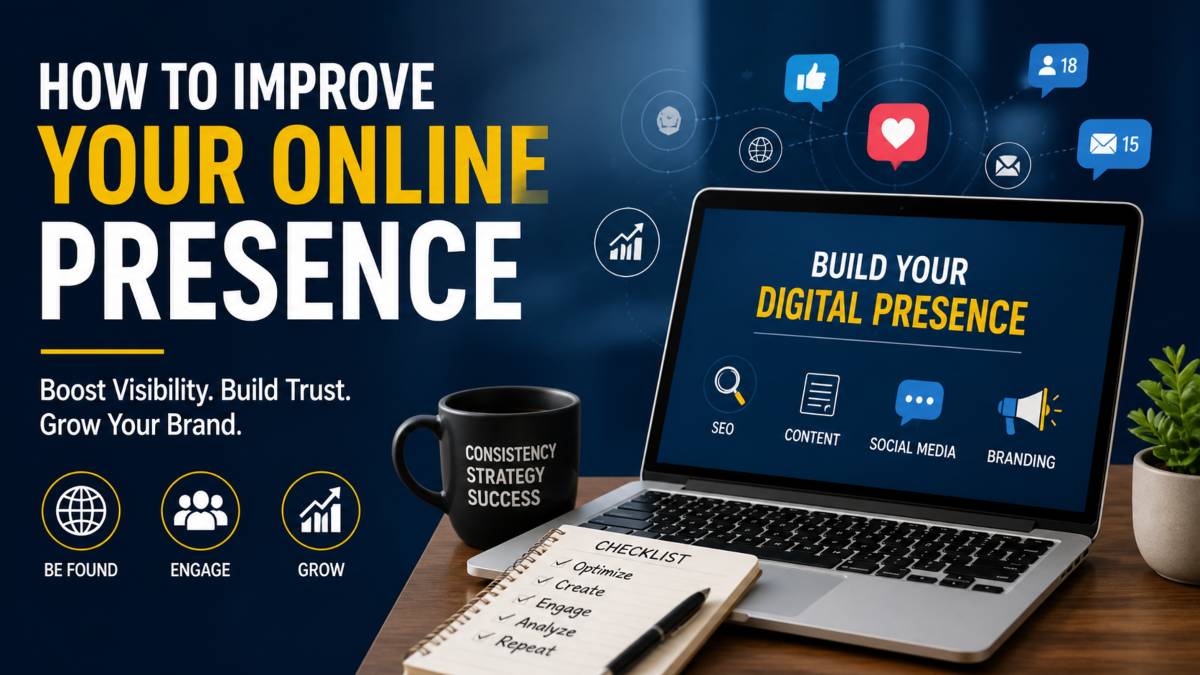
You can be good at what you do and still feel invisible online. That is the quiet frustration most people never say out loud. You post, you tweak your profile, maybe even launch a website, and still nothing moves. No traction, no real audience, no momentum. The problem is not effort. It is direction.
If you are trying to figure out how to improve your online presence, the answer is not more noise. It is better structure. Clear signals. Consistent actions that actually connect.
This guide cuts through the clutter and gives you practical steps you can use right away. No vague theory. No recycled advice. Just a focused way to show up, get noticed, and stay relevant where it counts.
Build a Website That Actually Works for You
Your website is your home base. Social platforms come and go, but this is the one space you control. If you want to build online presence that lasts, your site needs to do more than exist. It needs to work.
Make It Clean, Fast, and Easy to Navigate
People decide in seconds whether to stay or leave. A cluttered layout or slow load time pushes them out before they even read a line. Keep your design simple. Make sure it loads quickly on both desktop and mobile. Navigation should feel obvious. Visitors should not have to guess where to click next. The smoother the experience, the longer they stay.
Show Who You Are Clearly
Confusion kills interest. When someone lands on your site, they should instantly understand who you are and what you offer. Add a clear bio, a professional photo, and a focused portfolio if relevant. Make your contact details easy to find. Trust signals such as testimonials or client logos help people feel confident about choosing you.
Keep It Alive With Fresh Content
A static website fades into the background. Regular updates keep it visible and relevant. Blogging is one of the simplest ways to improve website optimization and attract traffic. Write about topics your audience cares about and link related pages together so visitors can explore more. This keeps people engaged and helps search engines understand your site better.
Create Content People Actually Want
Content is where most online efforts either click or collapse. You can post every day and still go nowhere if what you share does not connect. A strong content marketing strategy is less about volume and more about relevance. If your goal is to improve online visibility, your content needs to earn attention, not demand it.
Solve Real Problems Not Imaginary Ones
Start with your audience, not your ideas. What are they struggling with right now. What questions keep coming up. Content that answers real problems builds trust fast. Think practical, specific, and useful. The more directly you help, the more likely people are to come back. The Ultimate Guide to Better Online Presence points to the same truth. Value first, everything else follows.
Stay Consistent Even When It Is Quiet
Results are rarely instant. This is where most people lose momentum. They post for a week, see little response, then disappear. Consistency matters more than perfection. A simple schedule you can stick to beats bursts of effort that fade out. Over time, steady output builds recognition and keeps you visible.
Mix Formats to Keep Attention
Not everyone consumes content the same way. Some read, some watch, some scroll quickly and move on. Use a mix of blogs, short videos, quick polls, and bite sized posts to reach different habits. This variety keeps your content fresh and gives people more ways to engage with you without feeling repetitive.
Optimize Your Social Media Profiles
Your social profiles are often the first impression. Before someone visits your website, they check your profile. If it looks scattered or unclear, you lose them. Strong social media optimization brings everything into focus and strengthens your personal branding online.
Use Strong Visual Identity
People recognize visuals faster than words. Use a clear profile photo that reflects you or your brand. Keep your cover image clean and relevant. Stick to a consistent set of colors across platforms so your presence feels connected. When someone moves from one platform to another, it should feel like the same voice, not a different person each time.
Write Bios That Say Something
Your bio is not a space to be vague. Say exactly what you do and who you help. Keep it simple, direct, and useful. Add a few relevant keywords so your profile is easier to find. A strong bio answers one question fast. Why should someone follow you.
Stay Active and Join Conversations
Posting alone is not enough. You need to be part of the space. Use relevant hashtags to reach new people. Comment on posts in your field and add something meaningful to the discussion. The more visible and active you are, the more your presence grows naturally.
Engage Like a Human Not a Broadcast Channel
Most people treat online platforms like a loudspeaker. They post, walk away, and wonder why nothing comes back. That approach kills momentum. Real audience engagement online comes from interaction, not one way updates. If you want people to care, you have to show up and respond like a real person.
Reply Fast, Reply Smart
When someone comments or sends a message, that is an opening. Do not leave it hanging. A quick, thoughtful reply shows you are present and paying attention. It also signals to the platform that your content is active, which can help it reach more people. Keep replies simple, clear, and genuine.
Ask Questions That Invite Response
If you want engagement, give people a reason to speak. Ask direct questions that are easy to answer. Skip anything complicated. A simple prompt like what do you think or which one would you choose can spark more interaction than a long post with no clear hook.
Use User Generated Content
When people share your work or talk about your brand, do not ignore it. Repost it. Acknowledge it. This kind of content builds trust because it comes from real users, not just you. It also expands your reach without extra effort, as people are more likely to engage with content that feels authentic.
Use SEO and Paid Ads to Expand Reach
If your content is solid but no one sees it, you have a distribution problem. This is where SEO for beginners and paid ads step in. One builds steady traffic over time. The other gives you a faster push when you need it. Together, they help increase brand visibility online without relying on luck.
Start With Keyword Basics
Think about how people search, not how you describe your work. What words would they type when looking for what you offer. That is search intent. Use those phrases naturally in your titles, headings, and key sections. Avoid stuffing keywords everywhere. Clear placement works better than repetition.
Write Content That Ranks
Search engines favor content that is easy to read and well structured. Break your writing into clear sections with useful headings. Keep paragraphs short. Focus on answering questions directly. The guide from Word Stream on ways to increase online presence reinforces this point. Clarity and structure make content easier to find and easier to trust.
Run Targeted Ads When Needed
Organic reach takes time. Ads can speed things up when you want quick visibility. Platforms like Google, Instagram, and LinkedIn let you target specific groups based on interests, location, and behavior. Start small, test what works, and adjust based on results. The goal is not to spend more, but to spend smarter.
Manage Your Online Reputation Before It Manages You
What people find about you online shapes their decision before you ever speak to them. That is the reality. Online reputation management is not damage control after something goes wrong. It is a steady habit of paying attention and responding with intent.
Monitor Mentions and Feedback
You cannot manage what you do not see. Set up simple alerts for your name or brand so you know when people are talking about you. Keep an eye on comments, reviews, and tags across platforms. According to 10 Proven Strategies to Boost Online Presence, staying aware of these signals helps you act early instead of reacting late.
Respond Professionally to Reviews
Not every review will be positive. That is normal. What matters is how you respond. Thank people for good feedback and keep it brief. For negative comments, stay calm and address the issue clearly. Avoid getting defensive. A thoughtful response shows others that you take feedback seriously and handle it well.
Build Trust With Consistent Communication
Trust grows through steady contact. Email newsletters, updates, or simple check ins keep your audience connected to you. Share useful information, not just promotions. Over time, this consistency builds familiarity, and familiarity builds confidence.
Tools That Make Managing Your Online Presence Easier
You do not need dozens of tools. You need a few that save time and keep things organized. The right digital presence tools help you stay consistent without feeling overwhelmed.
Content Scheduling Tools
Posting manually every day is not realistic for most people. Scheduling tools let you plan content in advance and stay active even when you are busy. A platform like Buffer keeps your posts lined up across different channels so you are not starting from scratch each time.
Analytics Tools
If you are not tracking results, you are guessing. Analytics tools show what is working and what is not. Look at traffic, clicks, and engagement levels. These numbers tell you where to focus your effort and what to adjust.
SEO Tools
SEO tools help you understand what people are searching for and how your content performs. Use them to find keywords, check rankings, and spot gaps in your content. You do not need advanced features to start. Even basic insights can guide smarter decisions.
Common Mistakes That Kill Online Presence
Most people do not fail because they lack effort. They fail because they repeat the same avoidable mistakes. If you want to improve online presence, start by cutting what is quietly holding you back.
Inconsistent Branding
One day you sound formal, the next day casual. Different profile photos, different tones, different messages. It feels scattered. People cannot recognize you, so they do not remember you. Consistency is what turns random content into a clear identity.
Ignoring SEO Basics
You can write great content, but if no one can find it, it goes nowhere. Skipping simple SEO steps like using relevant keywords, clear headings, and readable structure makes your content invisible. It is not about gaming the system. It is about being easy to discover.
Posting Without Strategy
Posting just to stay active is noise. No direction, no purpose, no result. Every piece of content should have a reason behind it. Who is it for. What should they take from it. Without that clarity, you are filling space instead of building presence.
Final Thoughts
Online presence is not a one time effort. It is a system you build and refine over time. The people who win here are not the loudest. They are the most consistent and the most clear about what they offer.
Focus on what actually moves the needle. A solid website, useful content, active engagement, and a reputation you protect. Keep showing up, even when growth feels slow. That is where most people quit, and where you start pulling ahead.