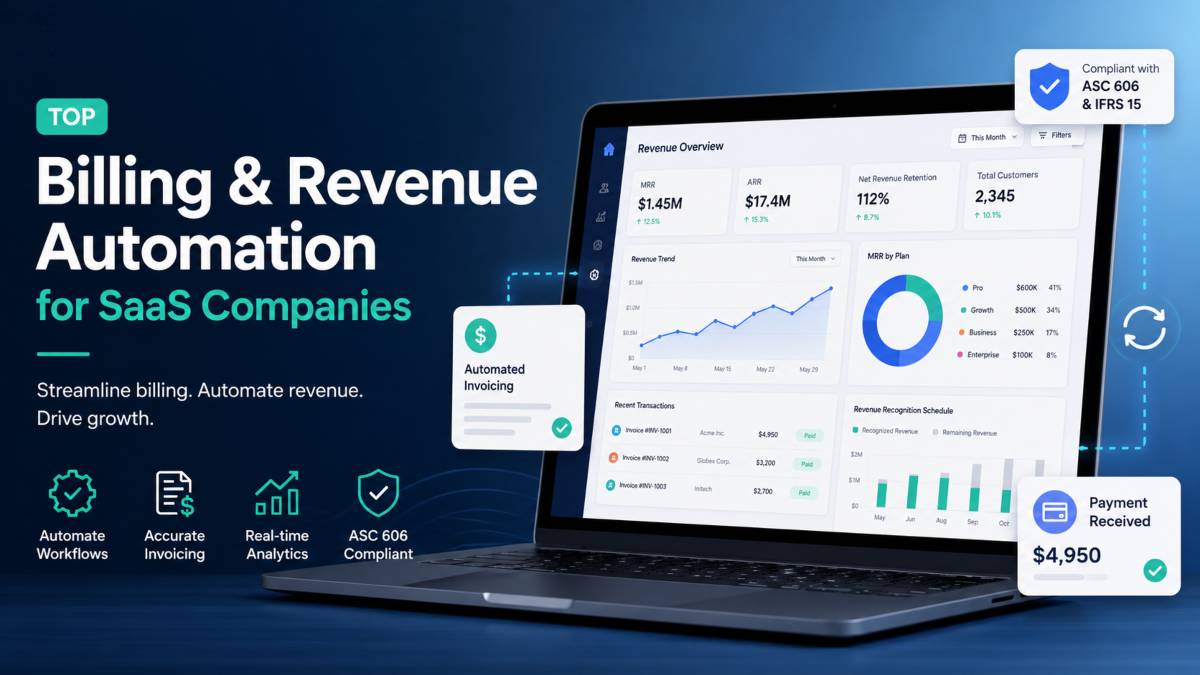
Manual billing looks manageable at first. Then it grows teeth. Invoices get missed, numbers stop matching, and revenue starts slipping through cracks you did not even know existed. What felt like control turns into constant cleanup. That is where billing and revenue automation for SaaS companies changes the game.
Instead of chasing spreadsheets and fixing errors after the fact, automation builds a system that handles the work as it happens. Subscriptions update on their own. Payments flow without friction. Revenue data stays accurate and ready when you need it.
This guide is built to give you clarity, not theory. You will see how the right setup brings order to billing, connects your financial data, and gives you a practical path to scale without losing control.
What Billing and Revenue Automation Means for SaaS
SaaS billing automation is not just about saving time. It is about building a system that keeps your revenue clean, visible, and under control. When you automate SaaS billing, you move from patchwork processes to a setup where billing, payments, and reporting work together without constant manual fixes.
From Spreadsheets to Connected Systems
Most SaaS teams start with spreadsheets. It works for a while, then cracks appear. Data gets out of sync, updates are missed, and tracking becomes messy. Automation replaces this with connected systems where subscriptions, invoices, and payments update in one place. Instead of chasing numbers, you see them clearly as they happen.
Why Automation Changes Financial Control
Manual work invites errors. A missed invoice or wrong entry can throw off your entire picture. Automation reduces these risks by handling routine tasks with consistency. It also gives you faster access to reports, so you can see revenue trends without waiting for end of month fixes. As noted in Alguna’s guide on revenue automation, this shift helps teams move from reactive work to steady control.
The Role of Compliance in SaaS Finance
SaaS revenue is not recorded all at once. It is recognized over time based on what you deliver. Standards like ASC 606 and IFRS 15 set the rules for this. Automation tools handle these calculations in the background, so your revenue stays accurate without manual tracking. This keeps your financial data reliable and ready for audits or reporting when needed.
Core Features of a High Performing SaaS Billing System
A strong billing system is not just a tool. It is the engine behind your revenue. The right setup brings structure to pricing, accuracy to billing, and clarity to financial data. This is where SaaS billing automation and modern subscription billing software for SaaS separate serious companies from those still patching things together.
Flexible Pricing and Subscription Management
SaaS pricing rarely stays simple. You might start with a flat plan, then add usage based tiers, bundles, or add ons. Your billing system needs to handle all of it without friction. Recurring plans, usage based charges, and hybrid models should work side by side. When customers upgrade, downgrade, or switch mid cycle, proration should happen automatically without manual adjustments.
Automated Invoicing and Payment Workflows
Invoices should not depend on manual input. A solid system generates invoices as soon as a subscription or usage event is recorded. Discounts and coupons apply without extra steps, and payments sync directly with your gateway. Failed payments are not ignored. Smart retry logic sends reminders and attempts recovery at the right time, which helps reduce lost revenue and keeps cash flow steady, a point reinforced by platforms like Chargebee.
Usage Tracking and Real Time Billing
Modern SaaS products often charge based on usage. That means tracking events such as API calls, storage, or compute units. A capable system ingests this data and converts it into billable amounts in near real time. This keeps billing accurate and builds trust, since customers can see that charges match actual usage, a capability highlighted by platforms like Tabs and Vayu.
Contract to Cash Automation
Billing should not exist in isolation. Contract to cash automation connects your sales agreements with billing and revenue logic. When a contract changes, pricing, billing schedules, and revenue timelines adjust automatically. Some advanced systems even extract contract details and apply them without manual entry, reducing errors and saving time.
Revenue Recognition and Compliance
In SaaS, revenue is earned over time, not when payment arrives. This means your system must track delivery and allocate revenue accordingly. Automation handles this behind the scenes, keeping your numbers aligned with standards such as ASC 606 and IFRS 15. According to Stripe and Afino resources, this reduces reporting errors and keeps your financial records ready for review without extra cleanup.
Analytics, MRR, ARR, and Forecasting
Numbers are only useful when they are clear. A high performing system gives you instant visibility into metrics like MRR, ARR, churn, and customer behavior. Instead of waiting for reports, you can see trends as they develop. This allows you to adjust pricing, track growth, and make decisions based on real data rather than assumptions.
Benefits of Billing and Revenue Automation for SaaS Companies
When billing runs on manual effort, small gaps turn into real losses. SaaS revenue automation tightens those gaps and brings structure to how money flows through your business. The impact is not abstract. It shows up in cleaner numbers, steadier cash flow, and fewer surprises.
Reduce Manual Work and Errors
Manual billing leaves too much room for mistakes. A missed invoice or wrong adjustment can ripple across your reports. Automation handles repeat tasks with consistency, so invoices, payments, and updates happen without constant oversight. This reduces errors and frees your team to focus on higher value work instead of fixing issues after they appear.
Improve Cash Flow Predictability
Cash flow becomes easier to track when billing follows a clear system. Recurring charges run on schedule, payments are collected on time, and failed transactions trigger retries automatically. This gives you a more reliable view of incoming revenue and helps you plan with more confidence.
Gain Real Time Financial Insights
Waiting until the end of the month to understand your numbers slows decision making. Automation gives you access to live data. You can see trends in revenue, customer activity, and churn as they happen. This makes it easier to spot changes early and respond before they turn into larger problems.
Support Complex Pricing Models
As your product grows, your pricing often becomes more layered. Usage based plans, add ons, and custom deals can quickly become difficult to manage manually. Automation handles this complexity without breaking your system. It keeps billing accurate even as your pricing evolves, so growth does not create chaos behind the scenes.
Best Practices for Implementing SaaS Billing Automation
Rolling out automation is not just a tool decision. It is a system change. If you rush it, you trade one set of problems for another. A strong SaaS billing strategy starts with structure, then moves into tools that support how your business actually works.
Define Revenue Rules Before Tools
Before you touch any platform, get clear on your revenue logic. How do you handle subscriptions, usage charges, discounts, and contract changes. What happens when a customer upgrades mid cycle or cancels early. These rules should be mapped out in plain terms. As noted in the Alguna revenue automation guide, clarity at this stage prevents confusion later when systems start processing data automatically.
Start With High Volume Processes
Do not try to automate everything at once. Begin with the areas that repeat often and follow clear patterns. Recurring invoices, standard billing cycles, and routine reports are the easiest wins. Automating these first builds confidence in your setup and reduces immediate workload without adding risk.
Run Parallel Systems Before Full Switch
Switching fully to automation without testing is risky. For at least one full cycle, run your automated system alongside your existing process. Compare invoices, revenue numbers, and reports. Stripe resources stress this step because it helps catch gaps early and ensures your automated outputs match what you expect.
Integrate With ERP and CRM Systems
Billing does not sit alone. It connects to sales, finance, and reporting. Your automation setup should sync with your ERP and CRM so data flows cleanly between systems. When a deal closes, billing updates. When billing updates, financial records stay aligned. This removes manual data entry and reduces mismatches.
Choose Tools That Match Your Pricing Model
Not every tool can handle every pricing structure. If your model includes usage based charges, custom contracts, or layered plans, your system must support that without heavy workarounds. Rigid tools create friction as you grow. Choose a setup that fits your current model and can adapt as your pricing evolves.
Example SaaS Billing and Revenue Automation Stack
A solid SaaS finance stack is not about stacking tools for the sake of it. It is about connecting the right pieces so billing, payments, and revenue data move together without friction. When done right, most of your billing workload runs in the background while your numbers stay clean and reliable.
Billing and Subscription Platforms
Start with a billing engine that can handle your pricing model without constant workarounds. Tools like Chargebee, Vayu, and Tabs manage subscriptions, usage tracking, invoicing, and plan changes in one place. These platforms form the core of your SaaS billing tools setup.
Payment Gateways
Billing needs a reliable way to collect money. Payment providers like Stripe and PayPal connect directly to your billing system. They handle transactions, retries, and global payments so cash flow stays steady without manual follow up.
ERP and Accounting Systems
Once payments are processed, your financial records need to stay accurate. Systems like NetSuite, QuickBooks, and Xero track your books, manage reports, and keep everything aligned for financial review. This layer gives structure to your SaaS finance stack.
Revenue Recognition Tools
Revenue does not stop at billing. It needs to be recorded correctly over time. Platforms like Afino sit between billing and accounting to manage revenue schedules automatically. They keep your data aligned with reporting standards and remove the need for manual adjustments.
When these pieces connect properly, you get a system that runs quietly in the background while giving you full control over your revenue.
Common Mistakes SaaS Companies Make
Most SaaS billing problems are not complex. They are repeated habits that go unchecked. Fix these, and half the chaos disappears.
Over Relying on Spreadsheets
Spreadsheets feel safe because they are familiar. But they break under pressure. One wrong formula or missed update can throw off your entire revenue picture. As volume grows, manual tracking turns into a liability, not a solution.
Choosing Tools That Cannot Scale
Picking a tool that works today but fails tomorrow is a costly mistake. As pricing evolves and usage grows, weak systems start to crack. You end up patching gaps instead of building a system that supports growth from the start.
Ignoring Revenue Recognition Rules
Revenue is not just cash in. Recording it incorrectly creates serious reporting issues. Skipping proper revenue timing might seem harmless early on, but it leads to confusion when numbers need to be reviewed or audited.
Lack of Integration Across Systems
When billing, payments, and accounting tools do not talk to each other, data gets messy fast. Teams spend time fixing mismatches instead of moving forward. A disconnected setup slows everything down and creates errors that should not exist.
Final Thoughts
Tools matter, but they are not the answer on their own. The real shift happens when you build a system where everything connects and runs with intent. Billing, payments, and revenue should not feel like separate tasks. They should work as one flow that you can trust.
Start simple. Fix the core. Then expand. Waiting for the perfect setup slows you down more than starting with a clear structure.
Take one step now. Clean up one process. Connect one system. That is how control builds, and once it does, growth stops feeling chaotic and starts feeling planned.