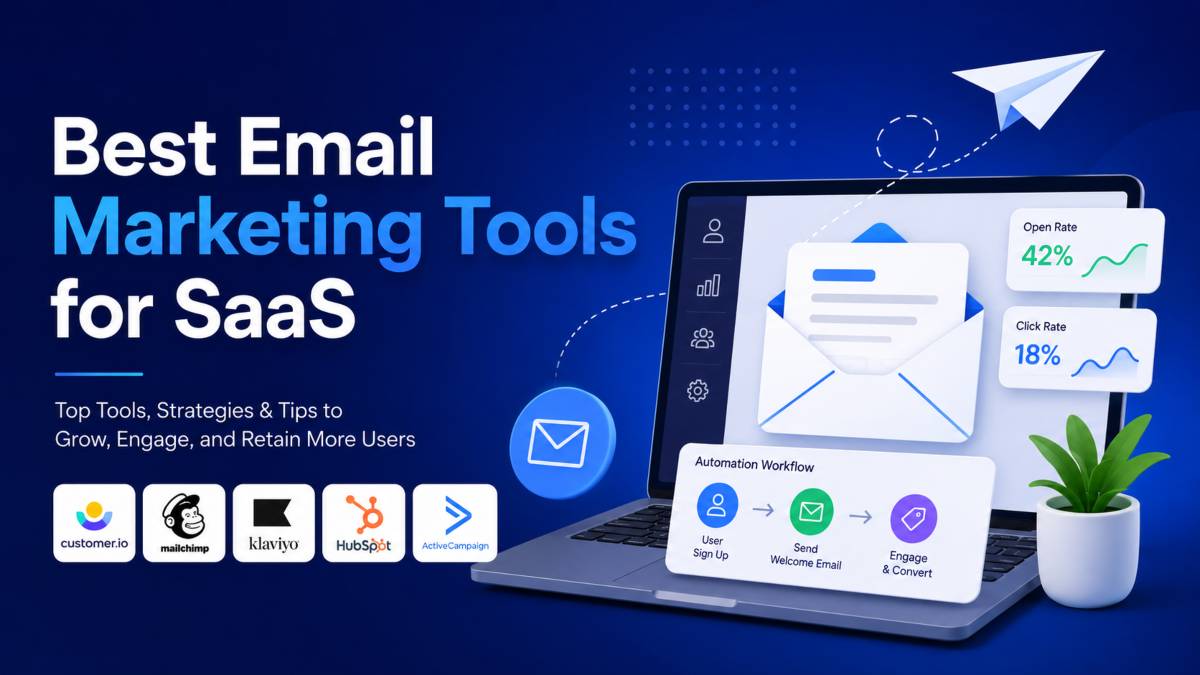
Email still sits at the center of SaaS growth, but not in the way most people think. It is not just about sending newsletters or product updates. It is about guiding users through every step of their journey, from first sign up to long term retention.
In 2026, email works like a quiet engine behind your product. It welcomes new users, nudges them to take action, reminds them when they drift, and brings them back when they leave. Done right, it turns trials into paid users and keeps customers engaged without constant effort.
For SaaS companies, this matters more than ever. Growth is not only about getting new users. It is about keeping them active and helping them see value quickly. Email plays a direct role in that process.
The tools you choose shape how well this system runs. The right platform helps you send the right message at the right time, without adding complexity. That is what this guide is here to break down.
Why Email Marketing Still Drives SaaS Growth
Email as a Revenue Engine
Email does more than keep users informed. It moves revenue. Every stage of the SaaS journey can be shaped through well timed messages.
When someone signs up for a trial, email guides them toward key actions. It shows them what to do next, what features matter, and why the product is worth paying for. This is where trial users turn into paying customers.
After that, email continues to work in the background. It introduces upgrades, highlights useful features, and keeps users engaged over time. A well placed message can turn a basic user into a higher value customer. It can also prevent users from drifting away by reminding them why they signed up in the first place.
What Makes SaaS Email Different
SaaS email is not about sending the same message to everyone. It responds to what users do inside the product.
Behavior based triggers drive this system. If a user signs up but does not complete a key action, they get a prompt. If they use a feature often, they might get tips to go further. Every message connects to real activity.
Product led communication takes this even further. The email is not separate from the product. It extends the experience. Each message helps the user move forward, not just stay informed.
Key Features to Look for in SaaS Email Tools
Choosing an email tool for SaaS is not about sending campaigns. It is about building a system that reacts to user behavior and supports growth at every stage. The right features make that possible without adding friction.
Lifecycle Automation
Lifecycle automation is the backbone of SaaS email. It allows you to guide users from sign up to long term use without manual work.
Onboarding emails welcome new users and show them what to do first. Trial reminders keep them active and focused before their access ends. Win back emails reach out to users who drift away and bring them back with clear reasons to return.
These flows run in the background, but they shape how users experience your product.
Behavioral Segmentation
Not every user should get the same message. Behavioral segmentation lets you group users based on what they actually do.
You can track feature usage to see who is active and who needs help. You can also segment by subscription status, which helps you send the right message to free users, trial users, and paying customers.
This level of targeting keeps your emails relevant and useful.
Integrations That Matter
Your email tool should connect with the rest of your stack.
Payment systems like Stripe allow you to trigger emails based on billing events. Failed payments, upgrades, and renewals can all be handled automatically.
Analytics tools add another layer. They help you understand how users behave and allow your email system to react in real time.
Deliverability and Analytics
Sending emails is one thing. Getting them into the inbox is another.
Strong deliverability ensures your messages reach users instead of getting lost in spam folders. This is critical if you rely on email for key actions.
Analytics help you track what works. Open rates, clicks, and revenue data show how your emails perform. Over time, this helps you refine your approach and improve results without guesswork.
Best Email Marketing Tools for SaaS Companies
Tools for Early Stage SaaS
Early stage SaaS companies do not need bloated systems or endless setup. They need tools that help them move quickly, automate core flows, and keep users engaged without draining time or budget.
That is why simple onboarding, behavior based emails, and clean automation matter so much in the early stage.
Sequenzy
Sequenzy is built with SaaS workflows in mind. It focuses heavily on lifecycle automation, which makes it useful for onboarding users, recovering failed payments, and sending upgrade reminders. Stripe integration is one of its strongest features because it connects billing activity directly to email flows. (Pipedrive)
The platform also keeps setup simple. Founders can launch onboarding sequences and product emails without spending days building complex systems. That balance between automation and usability makes it a strong fit for small SaaS teams trying to grow fast.
Loops
Loops takes a lighter approach. It is clean, fast to learn, and built for founders who want straightforward SaaS email automation without extra layers.
The platform works well for onboarding emails, feature announcements, and trial conversion campaigns. Its interface feels approachable, which matters when teams are moving quickly and do not want to spend weeks learning enterprise software.
For bootstrapped founders, that simplicity can be a real advantage. You spend less time managing tools and more time improving the product itself.
Why These Tools Work for Early Stage SaaS
Early stage companies need clarity more than complexity. The best tools at this stage focus on core actions such as onboarding users, driving activation, and turning free trials into paying customers.
Behavior based email flows and onboarding sequences remain some of the highest impact systems a SaaS company can build early on.
Simple tools often win because they help teams move faster without getting buried under features they do not yet need.
Tools for Growing SaaS Teams
As a SaaS company grows, email becomes more than onboarding and welcome flows. Teams need deeper automation, stronger segmentation, and tighter control over how users move through the product journey.
This is where more advanced platforms start to matter.
Customer.io
Customer.io is built for teams that want detailed control over user communication. It connects closely with product data, which allows companies to trigger emails based on real user behavior inside the app.
That means you can send messages tied to feature usage, account activity, subscription changes, or drop off points. For SaaS companies with technical teams, this level of precision creates far more personalized campaigns.
The platform also works well with analytics tools such as Mixpanel and Amplitude, which helps marketing and product teams stay connected.
MailerLite
MailerLite focuses on simplicity without stripping away useful automation features. The interface is clean, the learning curve stays manageable, and the automation builder covers most core SaaS workflows.
It works especially well for growing teams that want stronger segmentation and campaign management without moving into heavy enterprise software.
Landing pages, pop ups, and automation flows are included, which gives smaller marketing teams more flexibility without increasing costs too quickly.
Moosend
Moosend sits in a useful middle ground. It offers advanced automation and segmentation features while remaining accessible for mid sized SaaS companies.
The visual workflow builder makes it easier to create onboarding journeys, re engagement campaigns, and upgrade flows without technical overhead. Its segmentation tools also allow teams to group users based on actions, activity, and engagement patterns.
For SaaS companies that want deeper automation without stepping into expensive enterprise systems, it fills a practical role.
Tools for Advanced and Enterprise SaaS
As SaaS companies grow, email systems become tied to sales, customer success, analytics, and revenue operations. At this stage, the goal is no longer simple automation. It is coordination across the entire customer journey.
That is where larger platforms start to earn their place.
ActiveCampaign
ActiveCampaign blends email automation with CRM functionality, which makes it useful for SaaS teams managing both marketing and sales workflows. Its visual automation builder allows teams to create detailed customer journeys tied to user behavior, engagement, and pipeline activity.
The platform also includes lead scoring, site tracking, SMS tools, and sales automation. For growing SaaS companies, this creates a more connected system between marketing and customer management.
One of its biggest strengths is segmentation. Teams can build highly targeted campaigns based on actions users take inside the product, which helps improve retention and upgrade conversion over time.
HubSpot
HubSpot sits on the enterprise side of the market. It combines email marketing, CRM, customer support, analytics, and automation into one large ecosystem.
For larger SaaS companies, that centralization matters. Marketing teams can track customer activity across multiple touchpoints without jumping between disconnected tools. Reporting also becomes stronger because product engagement, sales activity, and email performance live inside the same system.
HubSpot works best for companies with dedicated marketing and operations teams. The platform offers deep functionality, but it also comes with a heavier setup process and higher costs compared to lighter SaaS focused tools.
Why These Tools Work for Enterprise SaaS
At scale, SaaS email marketing becomes less about sending campaigns and more about managing relationships across the entire customer lifecycle.
Platforms like ActiveCampaign and HubSpot help teams connect marketing, sales, and customer data in one place. That creates better visibility, tighter automation, and more personalized communication as the company grows.
Multi Purpose and Hybrid Tools
Not every SaaS company wants a tool built only for SaaS. Some need flexibility. They run marketing campaigns, send product emails, test landing pages, and manage customer communication across different channels. That is where multi purpose platforms come in.
These tools are not locked into one use case. They give you room to experiment, adjust, and build systems that fit your workflow rather than forcing you into one path.
Mailchimp
Mailchimp remains one of the most widely used email platforms, and for good reason. It offers a clean interface, strong campaign tools, and a wide range of integrations that make it easy to plug into different stacks.
For SaaS companies, Mailchimp works well for newsletters, onboarding emails, and basic automation flows. It includes segmentation tools, A B testing, and audience management features that help refine messaging over time.
Its biggest strength is accessibility. Teams can launch campaigns quickly without technical setup. That makes it a strong option for companies that want a reliable system without needing deep customization.
The tradeoff shows up as your product grows. More advanced SaaS workflows, such as detailed behavior tracking or product driven triggers, can feel limited compared to more specialized platforms. Costs can also increase as your contact list expands.
GetResponse
GetResponse positions itself as an all in one marketing system. It combines email automation, landing pages, funnels, webinars, and CRM features inside a single platform.
For SaaS teams, this can reduce tool sprawl. You can manage campaigns, build pages, and run automated email sequences without switching between multiple tools.
The platform includes pre built templates and automation flows, which helps teams get started quickly. It also supports segmentation and behavior based messaging, though not always at the same depth as more technical platforms.
Where GetResponse stands out is in its range. If your SaaS product relies on multiple marketing channels, it gives you a single place to manage them. That can simplify operations, especially for small teams.
Klaviyo
Klaviyo is often associated with ecommerce, but its strength in data driven messaging makes it useful for certain SaaS models, especially those tied to usage based billing or transaction heavy workflows.
The platform excels at segmentation. You can group users based on behavior, purchase patterns, and engagement, then send highly targeted campaigns. This level of control helps create more personalized email experiences.
Klaviyo also provides detailed analytics. You can track open rates, clicks, and revenue tied to each campaign, which helps you understand what drives real results.
For SaaS companies with complex customer data or strong ties to payments and usage events, Klaviyo offers a powerful option. The downside is that it may feel heavier than needed for simpler products.
Brevo
Brevo, formerly known as Sendinblue, blends marketing emails with transactional messaging. This makes it useful for SaaS products that need both system emails and promotional campaigns in one place.
You can send account notifications, password resets, and billing alerts alongside marketing emails without switching platforms. That creates a more unified communication system.
Brevo also includes SMS, chat tools, and CRM features, which adds another layer of flexibility. Its pricing model is based on emails sent rather than contact count, which can be more cost efficient for certain SaaS businesses.
The platform works best for teams that want one tool to handle multiple communication needs without building a complex stack.
Why Multi Purpose Tools Work
Flexibility is the main advantage here. These platforms allow SaaS companies to test different approaches, run varied campaigns, and adapt as their product grows.
They are especially useful for teams that are still finding their rhythm. Instead of committing to a highly specialized tool early on, you can use a broader platform and adjust over time.
The tradeoff is depth. While these tools cover many use cases, they may not match the precision of platforms built specifically for SaaS lifecycle automation.
Choosing between flexibility and specialization comes down to your product, your team, and how much control you need.
Best Email Tools by SaaS Growth Stage
The right email tool depends on where your company stands today. What works for a solo founder will not always fit a scaling team. The goal is to match your tools to your current needs, not your future wish list.
Pre Revenue and Bootstrapped
At this stage, speed and simplicity matter most. You are testing ideas, refining your product, and trying to get your first users to stick.
Sequenzy works well because it focuses on core SaaS flows like onboarding, trial reminders, and billing related emails. It connects easily with payment systems, which helps early teams automate key moments.
Loops keeps things light and easy to manage. It is a good fit for founders who want clean automation without dealing with complex setups.
Both tools help you move quickly without adding extra layers.
Seed to Series A
As your SaaS grows, your email system needs to become more precise. You are now tracking user behavior, improving conversion rates, and building stronger engagement.
Customer.io becomes valuable here. It allows you to trigger emails based on real product activity, which leads to more targeted communication.
Sequenzy and Loops can still work at this stage, especially if your setup is already built around them. The difference is how deep you want to go with automation and segmentation.
Series B and Beyond
At a larger scale, email connects with sales, support, and customer data. You need a system that brings everything together.
HubSpot offers a full ecosystem that links email with CRM, analytics, and customer management.
ActiveCampaign provides similar value with strong automation and segmentation tools.
At this stage, the focus shifts from sending emails to managing the entire customer journey in one connected system.
Email Marketing Strategies That Actually Work for SaaS
Tools matter, but strategy is what turns emails into growth. The best SaaS companies use email to guide users, not just inform them. Each message has a clear role in moving the user forward.
Onboarding Sequences That Activate Users
The first few days decide everything. If users do not see value early, they leave.
Onboarding emails should focus on simple actions. Show users what to do first, then what to do next. Keep each message focused on one step. A clean sequence across the first week can turn confusion into clarity and push users toward activation.
Trial Expiry and Upgrade Emails
Free trials create urgency, but only if users feel it.
Reminder emails should come at the right moments. A few days before expiry, one day before, and on the final day. Each message should highlight what the user will lose and what they gain by upgrading.
Clear value beats pressure. Show results, not just deadlines.
Dunning Emails for Failed Payments
Failed payments happen more often than most teams expect. Without a system in place, you lose revenue quietly.
Dunning emails fix that. They notify users when a payment fails and guide them to update their details. Keep the tone simple and direct. Include a clear action link so users can resolve the issue quickly.
A strong dunning flow can recover a large share of lost revenue without extra effort.
Feature Adoption Emails
Not every user explores your product fully. Many stick to one feature and miss the rest.
Feature emails help expand usage. When a user completes one action, you can guide them to the next step. If they use a feature often, you can show advanced tips.
These emails turn casual users into engaged ones, which increases retention over time.
Win Back Campaigns
Some users will leave. That is part of SaaS. What matters is how you bring them back.
Win back emails should feel relevant, not generic. Remind users what they signed up for. Show what has improved. Offer a clear reason to return.
Timing matters here. Reach out after a short gap, not too late. A well timed message can bring back users who were close to staying.
Each of these strategies works best when tied to user behavior. The more your emails reflect real actions, the more they feel useful rather than intrusive.
How to Choose the Right Email Tool for Your SaaS
Choosing an email tool is less about features and more about fit. The right choice should match where you are today while leaving room to grow without friction.
Match Tool to Your Growth Stage
Your stage sets the tone.
If you are early, you need speed. A simple tool that lets you launch onboarding emails and trial flows is enough. You do not need a system built for large teams.
As your product grows, your needs change. You start tracking user behavior, building segments, and refining conversion flows. At that point, a more advanced tool becomes useful.
The mistake is choosing for the future too early. Build for now, then upgrade when the need becomes real.
Balance Simplicity and Control
Every tool sits somewhere between ease and flexibility.
Simple platforms help you move quickly. You can set up flows, send campaigns, and adjust without technical effort. This works well when your focus is speed.
More advanced tools give you control. You can create detailed workflows, connect product data, and fine tune how messages are sent. This matters when your SaaS becomes more complex.
The goal is balance. Too simple, and you hit limits. Too complex, and you slow down.
Look Beyond Price
Price can be misleading if you look at it alone.
A cheaper tool may cost more in time if it lacks key features. A more expensive platform can save effort if it handles automation and segmentation well.
It is better to think in terms of value. Does the tool help you convert users, retain customers, and reduce manual work?
The right tool pays for itself through better results.
Common Mistakes SaaS Companies Make with Email Tools
Email tools can drive growth, but only when used with intent. Many SaaS teams run into the same problems, not because the tools are weak, but because the setup lacks focus.
Overpaying for Features You Do Not Use
It is easy to choose a tool packed with features. Dashboards look impressive. Options feel endless. But most teams use only a small part of what they pay for.
This creates drag. You spend more money and more time managing a system that does not match your needs. A simpler tool that covers your core flows often works better in the early stages.
Ignoring Automation Setup
Some teams rely too much on one off campaigns. They send updates and announcements, but skip automation.
That means missed chances. No onboarding flow to guide new users. No reminders for trial users. No follow ups when users drop off.
Automation handles these moments without manual effort. Once set up, it keeps your product active in the user’s mind.
Poor Segmentation
Sending the same email to everyone is a fast way to lose attention.
Users are at different stages. Some are new, some are active, some are about to leave. Each group needs a different message.
Good segmentation fixes this. It lets you send emails based on real actions and user status. That keeps your messages relevant and improves results over time.
The Future of Email Marketing for SaaS
Email is shifting from scheduled campaigns to responsive systems. The next phase is less about sending messages and more about reacting to what users do in real time.
AI Driven Personalization
AI is changing how emails are written and when they are sent. Instead of fixed sequences, messages adjust based on user behavior, timing, and context.
Content can shift for each user. Subject lines, copy, and even the offer can change based on past actions. This makes emails feel less like broadcasts and more like direct conversations.
Behavior First Email Systems
The old model relied on timelines. Day one email, day three email, day seven email. That model is fading.
New systems focus on behavior. If a user signs up but does nothing, they get guidance. If they engage deeply, they get advanced tips. Every message connects to an action, not a schedule.
This approach keeps communication relevant and reduces noise.
Deeper Product Integration
Email is becoming an extension of the product itself.
Actions inside the app trigger messages instantly. Updates, alerts, and suggestions move between product and inbox without delay. In some cases, users can even take action directly from the email.
This tighter connection creates a smoother experience. Users do not feel like they are switching between tools. It all feels like one continuous flow.
Conclusion
Email still earns its place because it connects every part of a SaaS journey. It brings users in, keeps them active, and nudges them toward real value. When it works, growth feels steady rather than forced.
The tools you choose shape that experience. A good platform helps you send the right message at the right moment without slowing you down. A poor fit creates noise and missed chances.
There is no single best tool for every SaaS company. The right choice depends on your stage, your product, and how your team works. What matters is clarity. Know what you need, keep your setup focused, and build from there.
Email does not need to be complex to work. It needs to be timely, relevant, and tied to real user behavior. Get that right, and it becomes one of the strongest drivers of growth in your stack.