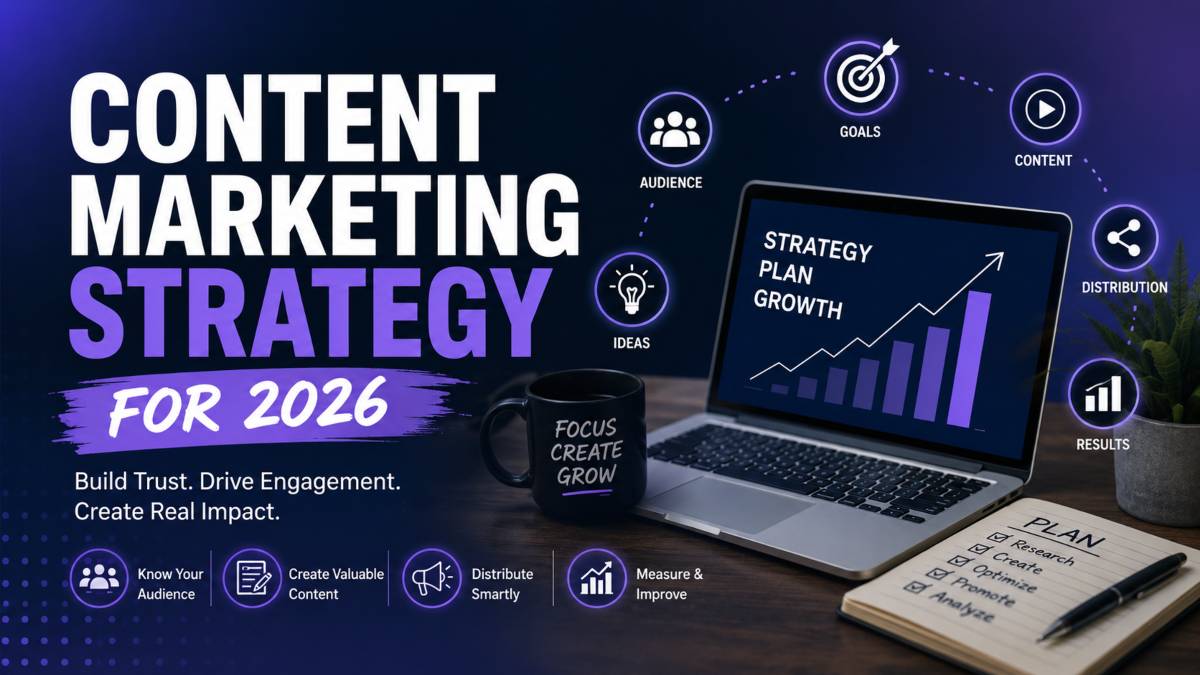
Content marketing in 2026 is no longer about pushing out endless posts and hoping something sticks. The game has changed. Attention is scarce, audiences are sharper, and only content with purpose earns a place on the screen.
A strong content marketing strategy now blends smart use of AI with human creativity. One brings speed, the other brings edge. Together, they create content that feels relevant, timely, and worth engaging with.
But tools alone are not the answer. The real shift is toward understanding people. What they search, what they skip, what they trust. Brands that listen closely and respond with clear, useful content will lead.
This guide walks you through a strategy built for results. Not just traffic, but real growth. You will learn how to plan, create, and share content that connects with the right audience and turns attention into action.
What Has Changed in Content Marketing for 2026
AI and Human Creativity Working Together
AI is now part of the workflow, not a novelty. It drafts outlines, suggests topics, and speeds up research. Tools like Jasper AI and ChatGPT can turn a rough idea into a structured piece in minutes.
But speed is not the win. Sameness is the risk. Content that leans only on AI often reads flat and forgettable. The edge comes from human input. Tone, opinion, and lived context turn a basic draft into something worth reading.
A practical setup looks like this. AI builds the first layer. A human refines it, adds examples, sharpens the voice, and cuts what feels generic. That blend is what sets strong brands apart in 2026.
Shift Toward Intent Based Search
Search is no longer about stuffing pages with keywords. It is about matching intent. What does the user really want when they type a query
For example, someone searching “best content strategy 2026” is not looking for a definition. They want steps, proof, and clear direction. Content that answers that intent wins.
Search engines now favor pages that solve problems fast. Clear headings, direct answers, and useful structure matter more than ever. Content that wastes time gets ignored.
Why Quality Beats Volume Now
Publishing more no longer guarantees reach. In fact, it often does the opposite. Audiences scroll past content that feels rushed or repetitive.
One strong piece can outperform ten average ones. A detailed guide, a sharp video, or a well told case study can drive traffic for months.
Brands are now posting less but thinking more. Each piece has a role. Each idea connects to a bigger plan. That shift from noise to precision is what defines content marketing in 2026.
Setting Clear Goals That Drive Results
How to Define SMART Marketing Goals
A content plan without clear goals is just activity. In 2026, every piece of content needs a job. That starts with SMART goals. Specific, measurable, achievable, relevant, and time bound.
Instead of saying “get more traffic,” set a target like “increase qualified leads by 25 percent in three months.” That level of clarity shapes what you create and how you measure it.
Strong teams focus on outcomes tied to growth. Lead generation, customer retention, and sales pipeline. A realistic benchmark is 20 to 30 percent improvement when content is aligned with clear goals and consistent execution.
Linking Content to Revenue and Retention
Content is no longer a top of funnel experiment. It plays a direct role in revenue. A guide that answers buyer questions can shorten the sales cycle. A case study can remove doubt and push a decision forward.
Retention matters just as much. Email sequences, onboarding content, and product tutorials keep customers engaged after the first purchase. When content supports the full journey, it increases lifetime value, not just clicks.
The key is mapping content to each stage. Awareness brings attention. Consideration builds trust. Decision drives action. When each stage is covered, results become predictable.
Tracking Performance with Analytics Tools
Tracking must go beyond surface numbers. Page views and likes look good but do not tell the full story. The focus should be on conversions, engagement depth, and cost of acquiring a customer.
Tools like Google Analytics 4 help track how users move from content to action. You can see which pages lead to sign ups, which channels bring buyers, and where people drop off.
Set clear benchmarks. Engagement rate above five percent. Conversion rate above two percent. Then test and refine. Small changes in headlines, formats, or calls to action can shift results quickly.
Content that performs is not accidental. It is measured, adjusted, and built to deliver real outcomes.
Understanding Your Audience in 2026
Using Zero Party Data for Better Insights
Guesswork is out. Direct input wins. Zero party data is information people choose to share with you. Think quick quizzes, polls, or simple preference forms. It tells you what they want in their own words.
For example, a short quiz on your site can sort users by goals. A beginner sees simple guides. An advanced user sees deeper content. Same brand, different experience.
Tools like Typeform make this easy to run and scale. The payoff is clarity. You stop creating content for a vague crowd and start speaking to real needs.
Mapping Pain Points Through Social Listening
Your audience is already telling you what is wrong. You just have to listen. Comments, reviews, and forum threads are full of problems waiting to be solved.
Watch how people talk on TikTok and Reddit. Notice the questions that repeat. Save the phrases they use. Those become your content angles and headlines.
Say you see creators asking how to grow without ads. That is your cue to build a guide, a short video series, and a case example around that exact issue. Real language, real demand.
Building Communities That Stick
Attention is rented. Community is owned. In 2026, strong brands gather people in focused spaces where conversation continues after the post.
Private groups on Discord or WhatsApp work well for this. Keep the group tight and useful. Share early ideas, answer questions, and invite feedback.
Gen Z and Gen Alpha expect two way interaction. They comment, remix, and co create. Give them a role. Run challenges, feature user content, and reply fast.
When people feel heard, they stay. When they stay, they trust. And trust turns content into action.
Building Strong Content Pillars
Choosing 3 to 5 Core Themes
A scattered content plan leads to scattered results. Content pillars fix that. They give your brand a clear lane and make every piece feel connected.
Start by choosing three to five themes that match your audience needs and your offer. For example, a marketing brand might focus on strategy, growth tactics, case results, and tools. Each pillar answers a specific type of question your audience already has.
Keep them tight. If a topic does not fit a pillar, it does not get published. This discipline builds authority over time and makes your content easier to trust and follow.
Types of Content That Perform
Not all content pulls the same weight. In 2026, a mix of formats works best, each with a clear role.
Educational guides solve real problems. A step by step article or video can bring steady traffic for months.
Case studies show proof. They answer the question, “Does this actually work?” with real numbers and outcomes.
Brand storytelling builds connection. It gives people a reason to care beyond features or price.
Trend analysis keeps your content fresh. It shows you understand what is happening now and what is coming next.
Product demos close the gap between interest and action. They show exactly how something works and why it matters.
When these formats sit under clear pillars, your content stops feeling random and starts working as a system.
Turning One Idea into Multiple Formats
One strong idea should not live in one place. Repurposing turns a single piece into a full content cycle.
Start with a detailed blog post. Break it into short clips for TikTok or Instagram. Turn key points into a carousel. Record a quick audio version for a podcast. Share insights through email.
For example, a guide on content strategy can become ten short videos, a checklist, a newsletter, and a live Q and A session. Same idea, different formats, wider reach.
This approach saves time and keeps your message consistent. Instead of chasing new ideas every day, you build depth around the ones that already work.
Using AI Without Losing Your Brand Voice
Where AI Fits in Content Creation
AI has earned its place in the workflow. It is fast, consistent, and useful for early stage work. You can use tools like Jasper AI or ChatGPT to generate ideas, outlines, and first drafts in minutes.
It also helps with research, keyword grouping, and content briefs. Instead of starting from a blank page, you start with structure. That alone saves hours.
But AI works best as a starting point. It gives you speed, not distinction.
Why Human Editing Still Matters
Content created only by AI often feels flat. It repeats patterns, avoids strong opinions, and lacks a clear voice. Readers can sense that. They skim, then move on.
Human editing changes that. It adds tone, clarity, and intent. A good editor cuts filler, sharpens examples, and brings in real context.
For example, an AI draft might explain a concept in general terms. A human adds a real case, a sharp line, or a point of view that makes it memorable. That is the difference between content that fills space and content that holds attention.
Balancing Automation and Creativity
The strongest approach in 2026 is a blend. Let AI handle the heavy lifting at the start. Use it for drafts, outlines, and variations. Then step in and shape the final piece.
A simple flow works well. AI builds the base. You refine the message, adjust the tone, and add insight. This keeps output efficient without losing personality.
The goal is not to replace people. It is to remove friction. When used well, AI supports creativity instead of flattening it.
Choosing the Right Content Channels
Pick channels based on what they deliver, not what feels popular. Each platform has a job. When you match the channel to the goal, results get clearer and easier to scale.
Short Form Video for Reach
Short video is built for attention. Platforms like TikTok, YouTube Shorts, and Instagram Reels push content to new audiences fast.
Use quick tips, hooks in the first two seconds, and clear takeaways. This format works best for awareness. It brings people in, then directs them to deeper content.
Long Form Content for Trust
Long form content builds depth. Blog posts, podcasts, and detailed videos give space to explain ideas and show expertise.
A well written guide can rank on search and bring steady traffic over time. A podcast episode can build loyalty with regular listeners. This is where trust grows.
Use this format to answer real questions, share examples, and guide decisions.
Email for Conversions
Email stays close to the audience. It reaches people who already showed interest. That makes it strong for driving action.
Use sequences to guide readers step by step. Start with value, then introduce your offer. Add simple calls to action and keep the message clear.
Personalization helps here. Send content based on behavior, not guesswork. The more relevant the message, the higher the response.
Collaboration and Co Posting
Working with others expands your reach without starting from zero. Partner with creators or brands that share your audience.
Co posting on platforms like LinkedIn or Instagram lets you tap into an existing community.
For example, a joint post or video can introduce your content to a new group in one step. Add one collaboration each month and track what brings the best response.
Creating a Content Calendar That Works
A strong calendar keeps your content focused and consistent. It turns ideas into action and removes last minute guesswork. In 2026, teams plan ahead but stay flexible enough to adjust when needed.
Quarterly Planning with Monthly Sprints
Start with a clear plan for the next three months. Set themes based on your content pillars and business goals. Then break that plan into monthly sprints.
Each month should have a clear focus, a set number of pieces, and defined outcomes. This structure keeps your team aligned while allowing quick changes if something is not working.
Balancing Evergreen and Timely Content
Not all content has the same lifespan. Some pieces bring value over time, while others respond to current trends. A simple split works well. Aim for 70 percent evergreen content and 30 percent timely content.
Evergreen content includes guides, tutorials, and core topics that stay useful. Timely content reacts to trends, updates, or industry shifts. This balance keeps your strategy stable while still feeling fresh.
Batch Production for Efficiency
Creating content in batches saves time and keeps quality steady. Instead of switching tasks daily, focus on one type of work at a time.
For example, record several videos in one session or write multiple articles in one sitting. This reduces friction and improves output.
Tools like Notion help organize your calendar, track progress, and keep everything in one place. With a clear system, your content stays consistent and easier to manage.
Distribution That Actually Gets Attention
Publishing is only half the job. Distribution is what puts your content in front of people who care. In 2026, reach comes from smart placement and shared audiences, not just paid ads.
Cross Posting and Partnerships
One piece of content can travel far when shared across the right platforms. Post your content in more than one place, but adapt it to fit each channel. A short video for TikTok can be reshaped for Instagram or LinkedIn with a different hook or caption.
Partnerships take this further. Work with creators or brands that already have your audience. A joint post or shared live session can double your reach in a single move. Keep it simple and focused on value.
Using Micro Influencers
Micro influencers bring trust and strong engagement. Their audiences are smaller but more active. That makes their recommendations feel real.
Instead of chasing big names, work with several smaller creators in your niche. Ask them to use your product, share a result, or walk through a quick example.
For instance, a creator might post a short demo showing how your service solves a problem. That kind of content feels natural and often performs better than polished ads.
Optimizing for Zero Click Search
Search behavior has changed. Many users now get answers without leaving the results page. Your content needs to show up in that space.
Structure your content with clear headings, direct answers, and short sections. This helps it appear in featured snippets and AI summaries.
For example, answer a common question in two or three lines right under a heading. Use simple language and get to the point fast.
The goal is clear. Make your content easy to find, easy to read, and easy to act on. That is how you win attention without relying on paid reach.
Measuring What Matters
You cannot improve what you do not track. In 2026, smart teams focus on numbers that show real progress, not surface level activity. The goal is simple. Know what works, fix what does not, and move fast.
Key Metrics to Track
Start with a small set of metrics that connect to results.
Engagement rate shows if people care. Are they reading, watching, or interacting with your content. Aim for more than five percent as a strong baseline.
Conversion rate tells you if content drives action. This could be sign ups, downloads, or purchases. A solid target is above two percent, depending on your niche.
Customer acquisition cost shows how much you spend to gain a new customer. Lowering this number means your content is doing its job more efficiently.
Use tools like Google Analytics 4 to track how users move from content to action. Focus on what leads to results, not just what looks good on a report.
Testing and Improving Content
Content improves through testing. Small changes can lead to better outcomes.
Try different headlines, formats, or calls to action. For example, test two versions of a title and see which one brings more clicks. Change the structure of a page and track how long users stay.
Run tests often and keep them simple. One change at a time makes it easier to see what works.
Using Data to Adjust Strategy
Data should guide your next move. If a topic performs well, create more around it. If a format falls flat, adjust or replace it.
Look at patterns, not just single results. Which channels bring conversions. Which content keeps users engaged. Use these insights to refine your plan.
The process is ongoing. Track, test, adjust, repeat. That is how strong content strategies stay effective.
Final Thoughts
Strip it all back and one truth remains. Content marketing in 2026 is a discipline, not a gamble. The scattergun approach is done. What works now is intent, precision, and a clear point of view.
You are not here to flood feeds. You are here to earn attention. That means fewer pieces, stronger ideas, and content that respects the reader’s time. Every post should answer a question, solve a problem, or move someone closer to a decision. If it does not, it does not go out.
The edge is not in tools. Everyone has access to those. The edge is in how you think, how you frame ideas, and how consistently you show up with something worth consuming.
Stay close to your audience. Watch what they respond to. Build around what works. Cut what does not. Repeat.
Do that well, and your content stops being noise. It becomes a system that drives growth.